
UK Considers China EV Tariffs to Keep Its Plants in Europe's 'Made in Europe' Fold
London is weighing the introduction of import duties on Chinese-built electric vehicles, a move reportedly designed less to shield British drivers from cheap imports than to keep UK car plants eligible for the European Union’s emerging subsidy regime. According to reporting by The Times, the government has offered only a terse line on the matter, saying tariffs remain under review. Officials have been notably quiet about the scope, timing or legal mechanism of any levy, and a charge aimed solely at EVs would leave a conspicuous gap: the hybrid models that account for a large share of Chinese-brand growth in Britain.
The backdrop is Brussels and its planned Industrial Accelerator Act, whose local-content requirements resemble the rules-of-origin architecture of the USMCA. Under such a framework, subsidies could be reserved for vehicles assembled inside the bloc, potentially shutting out UK factories operated by Jaguar Land Rover and Nissan. Europe has already been collecting duties of up to 45% on Chinese-made EVs since October 2024, and EU policymakers worry that Britain, like Hungary or Turkey, could serve as a side door into the single market. UK business and trade officials say they have not imposed tariffs on Chinese EVs and are consulting industry so that policy reflects both sectoral and national interests.
For Westminster the calculation is uncomfortable. Retaliation against JLR is a genuine concern, but exclusion from Made in Europe is judged to be far more damaging, according to The Times. Mike Hawes, chief executive of the UK’s Society of Motor Manufacturers and Traders, framed the priority as a practical agreement that treats Britain as a trusted Made in Europe partner, warning that shutting out UK-built vehicles would harm both highly integrated industries and put the roughly EUR80bn trading relationship at risk. Any tariff would also mark a departure from the previous Starmer government’s China posture and would not happen quickly: the EU needed 13 months from opening its investigation to imposing duties. Whether London can move faster with a blueprint already in place, and how Beijing might respond, remain open questions.
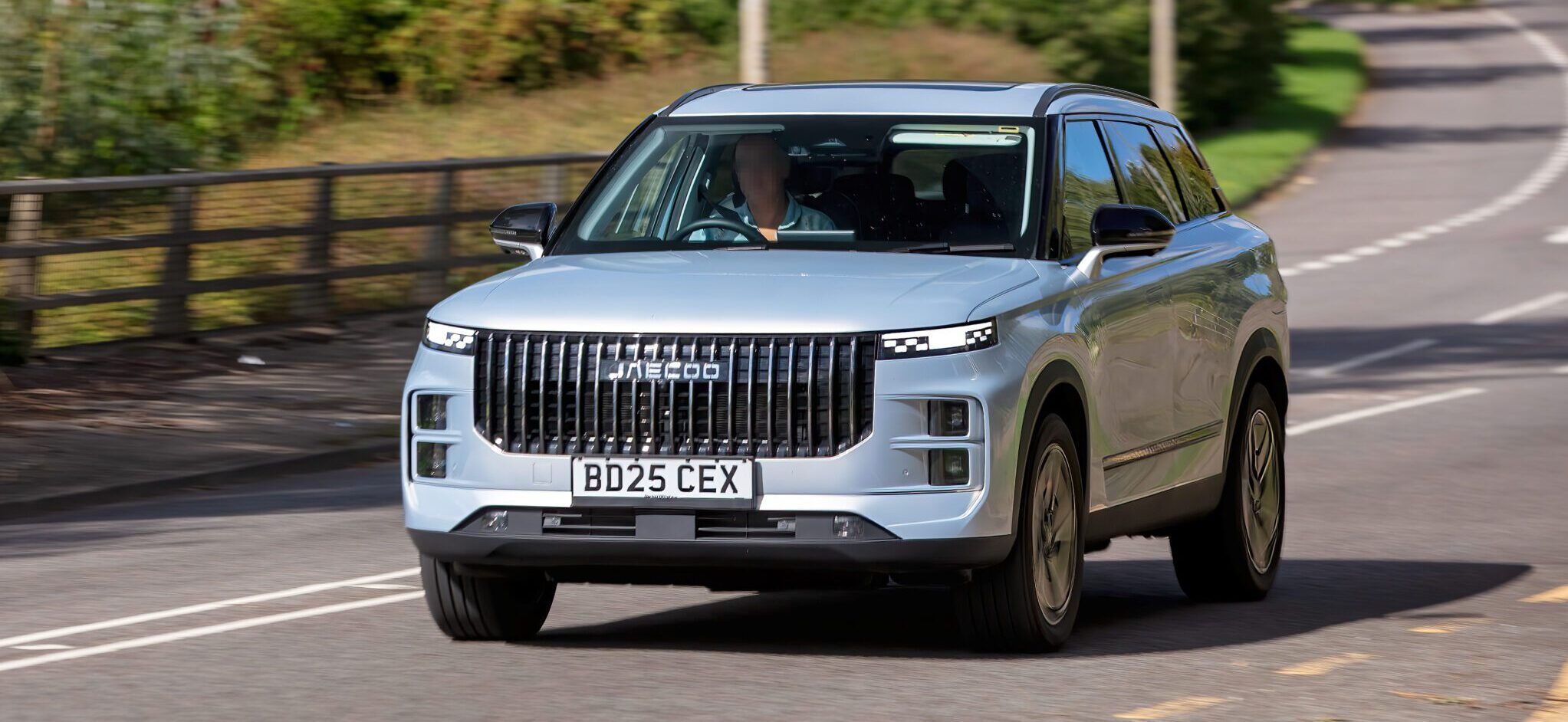
Chinese brands have moved swiftly into Britain’s tariff-free space. The Jaecoo 7, a Chery model priced from around GBP30,000 and frequently likened to a budget Range Rover, has topped the UK’s new car sales charts in several months of 2026, and Jaecoo has shifted 58,000 units this year alone. BYD’s September market share nearly doubled to 5.75%, taking its year-to-date volume to 68,000 against BMW’s 91,000, while Leapmotor climbed 765% to more than 13,000. Much of that momentum would slip past an EV-only duty. The Jaecoo 7 sells predominantly as an internal combustion or plug-in hybrid model, and Chinese brands are already leaning on hybrids in the EU precisely because current duties do not reach them. A UK levy mirroring the EU’s scope would inherit the same loophole, leaving the country’s best-selling Chinese model untouched.
The more durable answer may be local assembly. Europe treats Chinese manufacturers that build within its borders as a lesser threat, which is why BYD’s Hungarian plant will sidestep import duties. Nissan’s chair for Europe, Massimiliano Messina, has warned that the region cannot allow a Trojan horse through which Chinese players flood the market, yet Nissan is itself in talks to build Chery vehicles at Sunderland, an arrangement that would still satisfy Made in Europe criteria. Victor Zhang, UK managing director of Jaecoo and Omoda, has said tariffs come and go but will not alter the company’s investment plans, adding that the brands are in Britain for the long term. The likely outcome, then, is not whether Chinese brands sell in the UK but how: more hybrids now, more British-built metal later, with the trade barriers that triggered the shift quietly serving London’s interests in Brussels.
What do you think?