
Two Tesla Semi Fires, One Closed Freeway, and a Hard Lesson for Silicon Valley
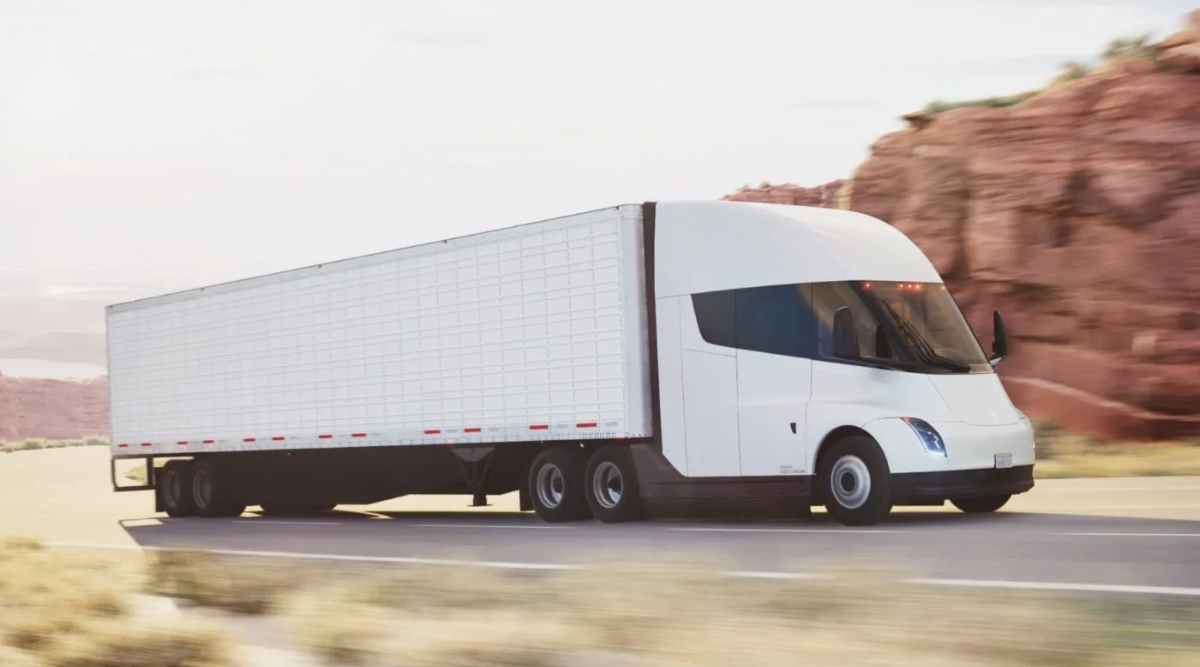
A Tesla Semi burned to the frame on Interstate 880 in Hayward, California, during a Tuesday evening commute — and no crash caused it. The driver sensed trouble, pulled over near Highway 92, and walked away. Then the pack went into thermal runaway, and crews spent the night managing it.
By morning, the tractor was reduced to its rear axles and a heap of ash. The California Highway Patrol closed the freeway in both directions over fears of toxic smoke; the southbound side stayed shut for close to ten hours. It’s the second time in roughly two years that a single Semi has taken out a major California interstate for the better part of a day, following the August 2024 incident near Emigrant Gap on I-80.
That is not a statistic anyone can wave away. But it also isn’t proof that electric trucks are rolling bombs, whatever the loudest voices on either side would like to claim.
What the Fire Numbers Actually Say
The National Fire Protection Association counts about 15,000 large truck fires a year in the US — roughly 40 diesel rigs per day. Blown turbos, seized wheel bearings, dragging brakes: diesel trucks burn constantly.
The difference is the aftermath. A diesel tractor fire is usually knocked down by a volunteer crew with an engine tank and foam inside an hour, towed clear, and traffic flows again. A commercial battery pack at 800-plus kWh is another animal. Its cells produce their own oxygen as they break down, so responders can’t simply drown the fire — they either pour water for hours or hold back defensively and let it consume itself while the county gridlocks.
By the Numbers: ~15,000 US large truck fires per year · 800+ kWh battery pack · 2 Tesla Semi fires in about two years · up to 10-hour interstate closures
Add the sample size problem. There are around 4 million Class 8 diesel trucks on American roads; Tesla’s active Semi fleet is estimated at somewhere between 150 and a few hundred pilot and early-production tractors. Two fires in a fleet that small skews any safety record badly. Two fires in a fleet that small also can’t be brushed off.
The Startup Curse Isn’t Unique to Tesla
Nikola ran into the same wall in the summer of 2023, when several Tre battery-electric trucks caught fire — one at the Phoenix headquarters, another in customer testing. Outside investigators traced it to a coolant leak inside battery packs from supplier Romeo Power that caused an internal short. Nikola recalled all 209 trucks it had built.
The pattern here is cultural. Newcomers design trucks like consumer electronics: clean sheet, maximum aero efficiency, custom monolithic structures, fast iteration. Class 8 duty cycles punish that mindset. A rig flexes under 80,000 pounds, twists over uneven loading docks, and shakes across millions of frost heaves. A coolant quick-connect that’s slightly loose, a busbar flexing half a millimeter under torsional load — commercial duty cycles find those problems. And they don’t let go.
Why the Old Guard Isn’t Burning Down
Freightliner eCascadias and Volvo VNR Electrics aren’t magically fireproof. They run lithium-ion cells from the same tier-one suppliers as everyone else. In 2023, Volvo and Mack filed recalls with NHTSA covering hundreds of electric trucks over two supplier manufacturing flaws: coolant lines not fully locked in, and over-torqued internal fasteners that could snap into loose metallic debris. Both created short-circuit risk.
The reason you never saw those trucks ablaze on the shoulder comes down to process. Volvo caught the issue when a small fire broke out inside a pack at the factory. It stayed contained — and instead of explaining it away, the company put a stop-ship order on the packs within a week and called in trucks already on the road for a swap.
That glacial pace tech fans love to mock is scar tissue from a century of hard lessons. For electric Class 8 trucks, the question isn’t whether batteries can be made safe. It’s whether the companies building them can learn to slow down before the freeway does it for them.
Photo: Tesla / CleanTechnica · Official Press Kit / Editorial (Editorial / Press Kit)
Source: CleanTechnica
Curious how this compares to other EVs? Try our comparison tool →What do you think?