
The 2027 Chevy Bolt's Highway Range Secret: Slow Down, Go Farther
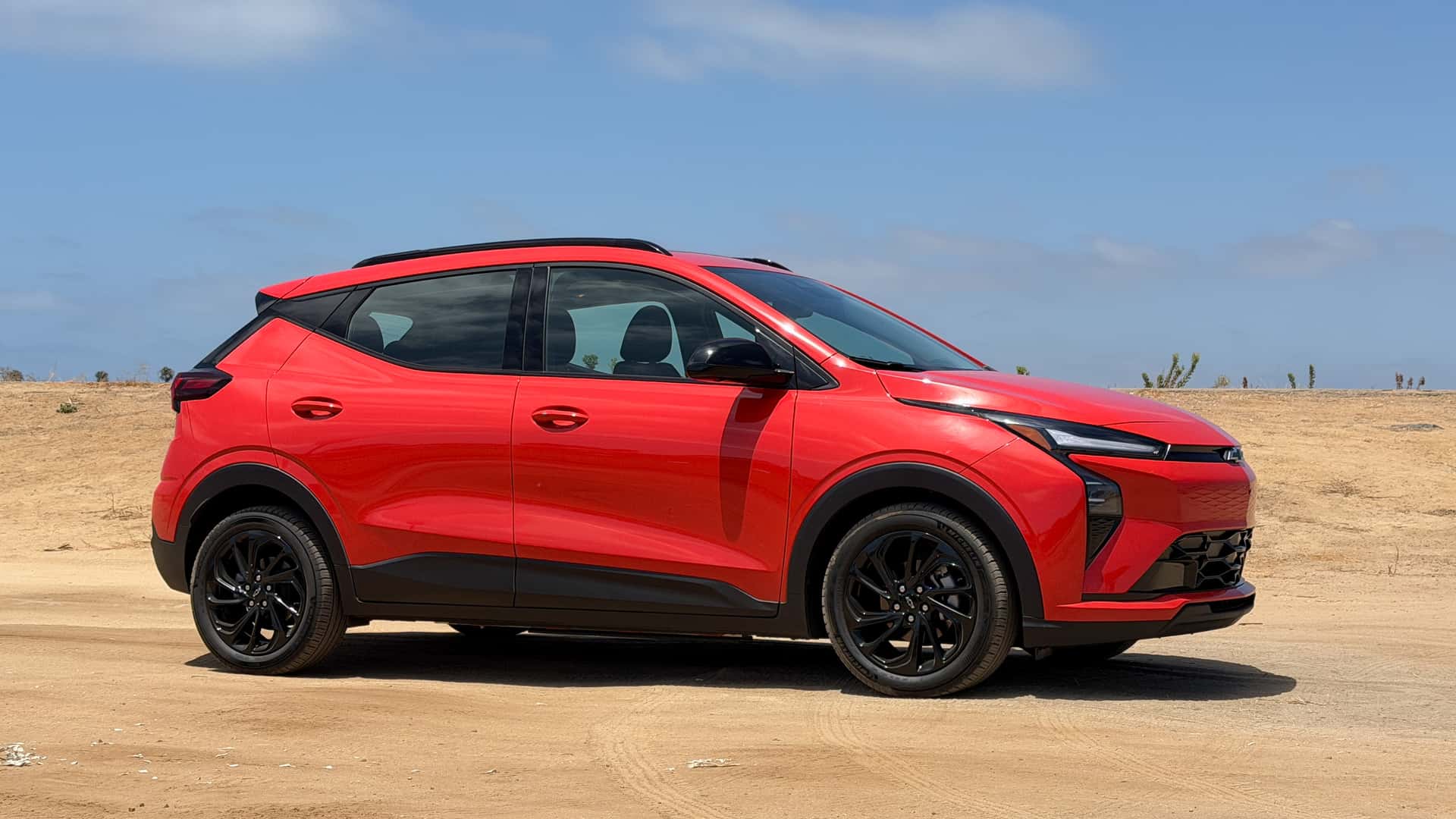
Driving an EV at a steady 60 mph on an open highway can feel painfully slow, especially when everyone else blows past you. But for the 2027 Chevrolet Bolt, that leisurely pace translates into a surprisingly large range gain — enough to reach a charger that would otherwise be far out of reach.
The numbers come from a fresh highway range test conducted by Tom Moloughney, host of the State of Charge channel. He took his new 2027 Bolt onto the New Jersey Turnpike and ran it from a full charge down to zero at a constant 60 mph. Conditions were close to ideal: a sunny morning with ambient temperatures between 52 and 63 degrees Fahrenheit and light traffic that made it easy to hold speed. Using Super Cruise for much of the run, he covered 280.3 miles on the car’s 65 kWh lithium iron phosphate pack. That is nearly 50 miles beyond the EPA’s 232-mile highway estimate and just shy of the agency’s 294-mile city figure, with a combined rating of 262 miles. Average efficiency at 60 mph came in at 4.1 miles per kWh.
The picture changes as speed climbs. The same test at 70 mph delivered 243.1 miles, a drop of roughly 37 miles, with consumption falling to 3.6 miles per kWh. At 80 mph, the Bolt managed 219.3 miles and 3.2 miles per kWh. Interestingly, the penalty from 70 to 80 mph was smaller than the hit taken between 60 and 70 mph. Temperatures were slightly warmer during the faster runs, but not enough to explain the results on their own.
Put simply, shaving 20 mph off highway cruising speed adds about 60 miles of usable range in this car, while dropping from 70 to 60 mph alone is worth roughly 40 extra miles. Those gains matter most on long trips where a charging stop is uncertain or inconvenient. They also underscore a broader truth about electric vehicles: aerodynamic drag rises sharply with speed, so the faster you go, the more energy each mile consumes. For Bolt owners willing to accept a modest pace, the payoff is real — and it may be the difference between reaching a charger comfortably and sweating the final few miles.
Moloughney’s test adds a practical data point to the ongoing discussion about real-world EV range, which often diverges from lab-tested figures. It also arrives as the Bolt nameplate returns to the market in updated form, a model line that has long been positioned as an affordable entry point into electric driving. The takeaway for drivers is straightforward: if range anxiety is a concern, easing off the throttle is one of the cheapest remedies available.
What do you think?