
Tesla's Roadster Thrusters: Seconds of Boost, Hours of Waiting at a Nitrogen Station
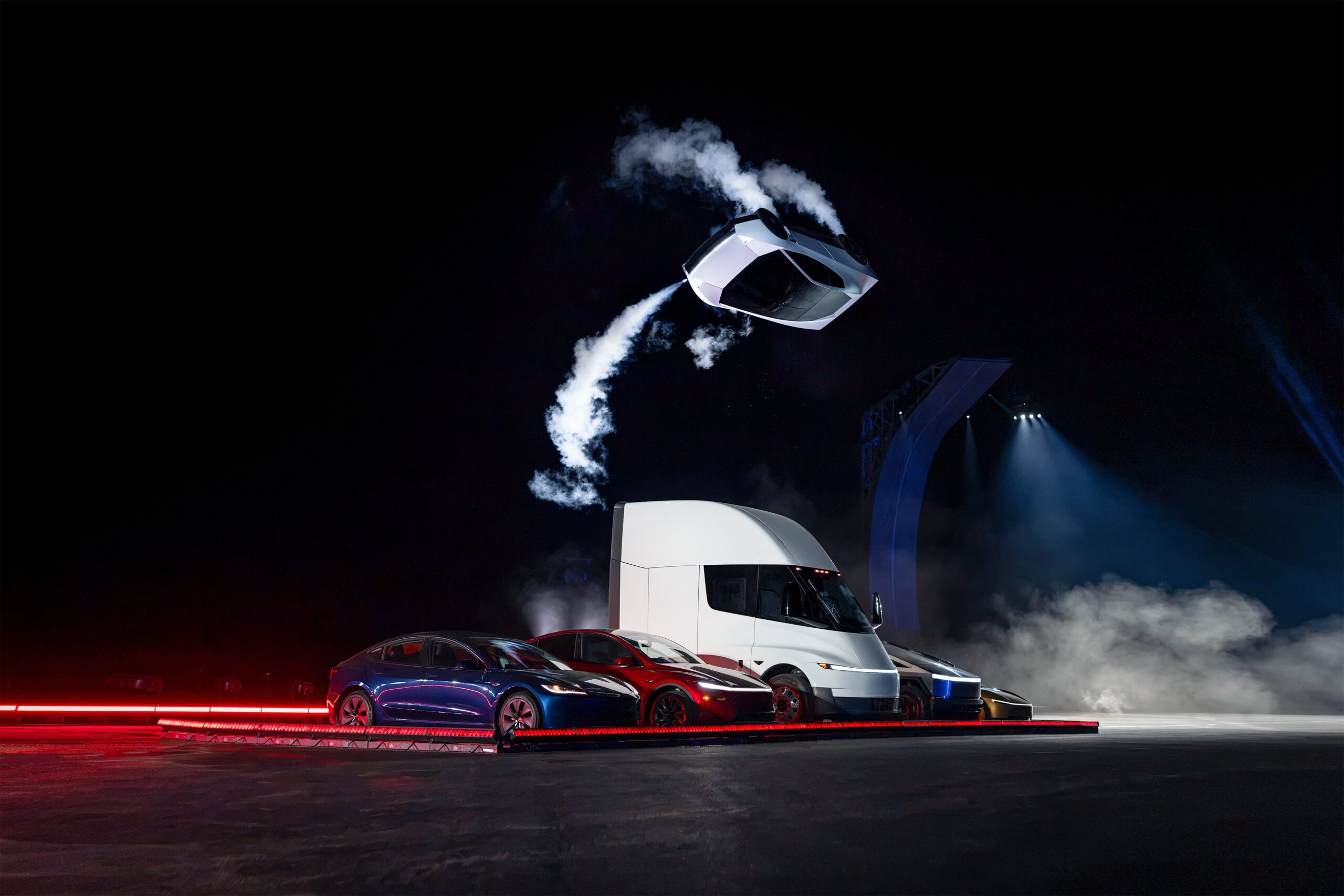
Tesla has finally pulled back the curtain on one of the most talked-about features of its second-generation Roadster — the cold-gas thruster package — and the details reveal a system built for spectacle rather than daily driving. According to vehicle engineering chief Lars Moravy, the thrusters deliver their punch for only a handful of seconds before the onboard tank is spent, and topping it back up is anything but a quick pit stop.
Short-Lived Burst — The nitrogen thrusters fire for roughly five seconds, covering the opening two-thirds of a quarter-mile sprint, before the supply is exhausted. One Shot Per Fill — Once deployed, the system cannot be reused until the vehicle is serviced — meaning each launch consumes the entire charge. Slow Recharge — Pressurizing the composite vessel takes between two and six hours at a dedicated nitrogen station capable of reaching extreme pressures. Tesla hopes to cut that wait to around 30 minutes with a new system still in development. Version-Specific Hardware — A base “Performance” trim skips thrusters entirely and uses the freed space for luggage, while the mid-tier “Thrust” model carries a 200-liter tank and the top “Rocket” variant packs a 600-liter vessel that occupies the passenger seat, turning it into a single-seater. Invite-Only Rocket — Tesla says the range-topping Rocket edition won’t be available to just anyone with the cash — orders will be limited to a select group the company invites directly.
Moravy and design head Franz von Holzhausen shared these caveats during in-depth conversations with Top Gear and Hagerty, and the reaction from presenters was a mix of awe and amusement. One interviewer described the setup as “beautifully pointless,” capturing the tension between the Roadster’s staggering acceleration claims and the practical realities of owning one.
The numbers help explain why Tesla lists multiple figures for the same car. Acceleration from 0 to 60 mph spans announcements of 0.5, 0.85 and 1.6 seconds, while top speed claims range across 210, 240 and 350 mph — each tied to a different trim level. Even the refill window differs by version, with smaller tanks taking roughly two hours and the largest requiring up to six.
For SpaceX, which already runs industrial gas infrastructure for its rockets, filling high-pressure vessels is routine. For a private owner paying well over $250,000, the experience is rather different: launch once, then find a specialized station and wait hours before repeating the trick.
The engineering is undeniably ambitious, but it raises a familiar question about halo features — do buyers want a party trick they can barely use, or performance they can enjoy on demand? Tesla clearly believes the former has its own appeal, at least for the small circle invited to order the Rocket version.
Source: Torque News
Curious how this compares to other EVs? Try our comparison tool →What do you think?