
Tesla Q3 2026: Revenue Lands Where Wall Street Expected, Profit Per Share Edges Higher
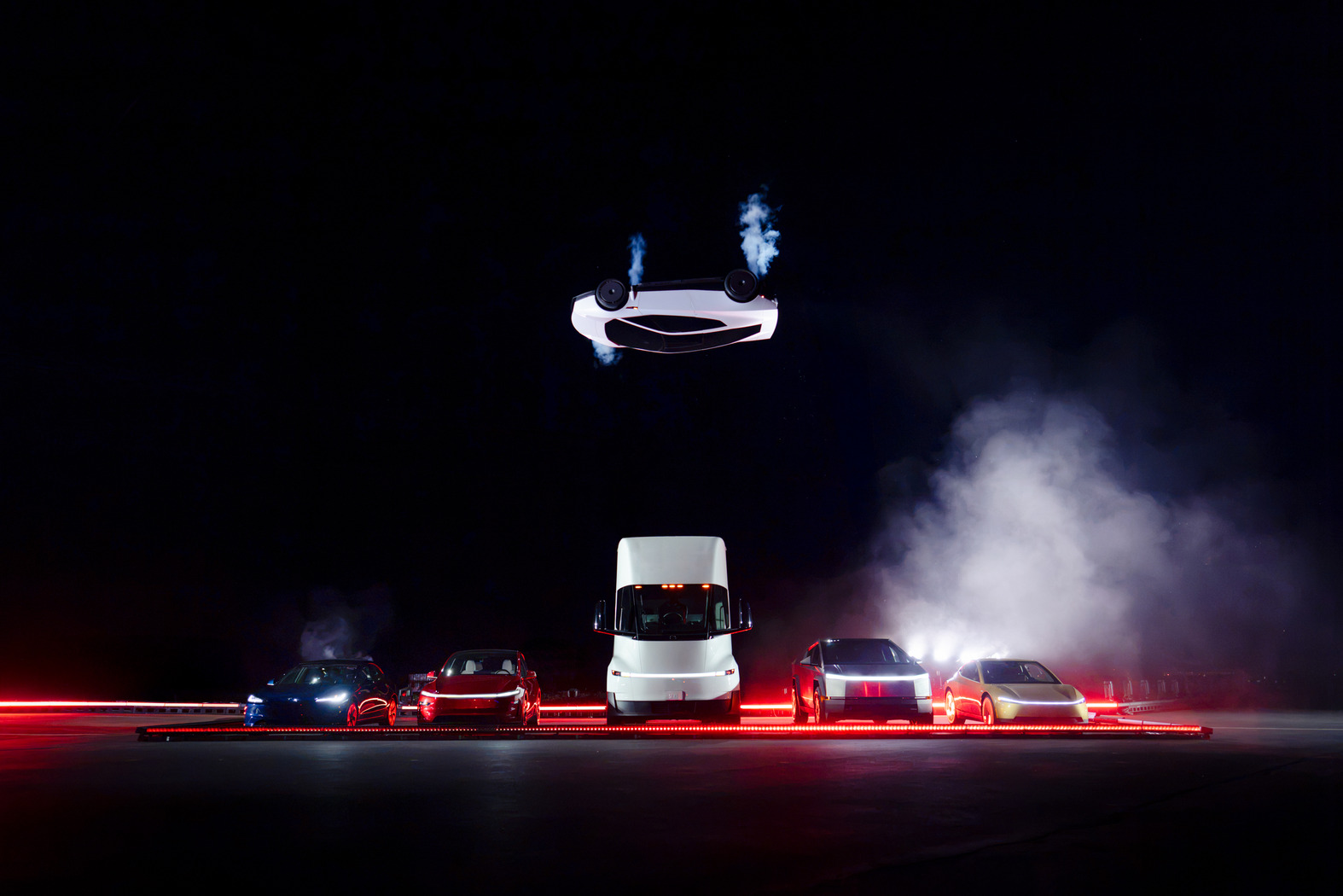
Tesla’s third-quarter scorecard is in, and it reads like a company holding its line rather than breaking new ground. Revenue came in at **$28.046 billion** against an analyst consensus of $28.34 billion — close enough to call in-line, even if it technically fell a hair short. The profit side was kinder: non-GAAP earnings per share hit **$0.48**, a few cents above the $0.45 the Street had penciled in.
Operating margin landed at 2.6%, marginally better than the 2.5% expected. Operating income of $718 million essentially matched the $721 million forecast. Then there’s the line item that raised eyebrows — free cash flow of **$1.531 billion**, a swing of billions from the roughly negative $4.51 billion analysts had modeled.
Q3 2026 by the numbers: $28.046B revenue · $0.48 non-GAAP EPS · 2.6% operating margin · $718M operating income · $1.531B free cash flow
Tesla still had an investor call on the calendar for 5:30 p.m. ET, where executives were set to take questions on the quarter.
FSD Is Doing the Heavy Lifting
The most interesting disclosure in the report isn’t a financial figure at all. Tesla says the take rate for Full Self-Driving (Supervised) in North America has climbed past 75% of new deliveries — up almost twenty percentage points from the prior quarter. That’s a striking attach rate for a paid software feature, and the company is framing it as a demand driver in markets where the system is approved. Regulators elsewhere remain the bottleneck.
Semi Finally Ships in Volume
After years of prototypes and delays, Tesla confirmed it has started volume production of the Tesla Semi, its Class 8 heavy-duty hauler. The headline variant is rated for 500 miles at a full 82,000 lbs gross combination weight, returning 1.7 kWh per mile.
- Efficiency claim: roughly one-third the energy of a comparable diesel truck hauling the same load
- Why it matters: energy is one of the biggest slices of cost per mile in freight
- The pitch: lower running costs for operators who sign up
That last point is where Tesla expects to win fleets over. Whether real-world routes back up the 1.7 kWh/mile figure is a question only customer deployments will answer.
Cybercab Joins the Robotaxi Fleet
On autonomy, Tesla says it has begun deploying the Cybercab into its Robotaxi operation in Austin. The service has now logged close to two million cumulative unsupervised miles as of quarter’s end. Austin operating hours run from 6 a.m. to midnight, and Tesla says it will cut wait times by adding fleet supply and sharpening its dispatch algorithms.
There’s also a Grok angle — the AI assistant is now available inside Cybercab, with voice access to inboxes, calendars, files and tasks. Tesla is pitching the vehicle as part transport, part mobile office, part entertainment space.
Compute and the Austin Fab
Behind all of this sits silicon. Tesla plans to reach 400 MW of training compute by year’s end, split between vehicle autonomy and the Optimus humanoid program. Construction on the Austin Fab continues, with equipment commissioning targeted for 2027.
Taken together, the quarter looks less like a growth story and more like a company tightening operations while betting its next chapter on software, robotaxis and heavy trucks. The revenue line was flat against expectations. The narrative, though, is anything but.
Source: Teslarati
What do you think?