
Tesla FSD Keeps Getting Better, But Five Stubborn Gaps Still Hold It Back
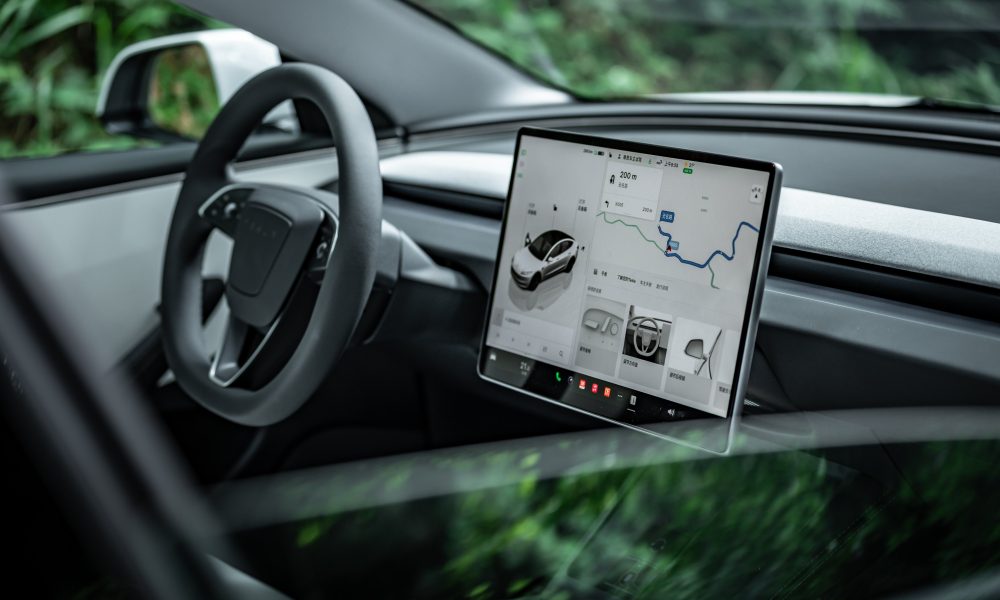
Tesla’s Full Self-Driving software has matured to the point where many owners now lean on it for the overwhelming majority of their daily miles. One long-time user reports relying on the system for roughly three-quarters of their driving since version 14 arrived about a year ago, calling it the preferred way to travel — while still reserving the genuinely entertaining roads for manual control. Even so, the same recurring shortcomings keep forcing drivers to step in, either with a gentle nudge or a full takeover.
Speed limit handling remains the most persistent headache. The system sometimes carries far more speed than local rules allow, particularly on residential streets and around school zones. In one recent example, a vehicle entering a school zone was still traveling 34 mph despite a posted 15 mph limit, and even the most conservative driving profile failed to bring it down far enough. On ordinary roads the fix is usually mild — a quick scroll to a slower driving profile — but school zones demand a complete manual takeover, which undercuts the whole point of the feature.
Parking has improved dramatically, and the latest builds handle pulling into or backing out of a space with far less fuss than a year ago. The remaining complaint is less about execution and more about judgment: the car often selects spots that a human would avoid, such as sliding in beside a vehicle parked sloppily across two spaces when plenty of open stalls sit nearby. Tesla’s planned Parking Preferences are expected to address much of this by letting owners express where they actually want the car to stop. More complex still is the ability to pick a specific charger at a store that offers charging — an issue that will need solving before unsupervised operation becomes realistic.
Navigation continues to be the most unpredictable element. Despite a year of interventions, voice notes and manual overrides, the system still occasionally plots routes that break local traffic rules, such as turning left out of a neighborhood where only right turns are permitted. Tesla’s Preferred Routes feature, introduced with the Summer Update, has chipped away at some of these problems, and owners have developed their own workarounds to keep drives hands-free, but the request is simple: learn preferred routes faster and apply them more consistently.
Highway driving is where the suite shines, handling dense traffic and long, monotonous trips with little fatigue — a genuine quality-of-life gain on multi-hour journeys. Two odd behaviors still stand out, though. Approaching an exit, the car will sometimes abandon a pass in progress, brake sharply, cut into the slow lane and tuck in behind slower traffic with a mile still to go, adding needless congestion instead of finishing the maneuver cleanly. It also tends to linger in the left lane, which is illegal in some states. Until these habits are ironed out, full supervision-free driving remains a step away.
What do you think?