
Tesla Brings Home Backup Power to Model 3 and Model Y
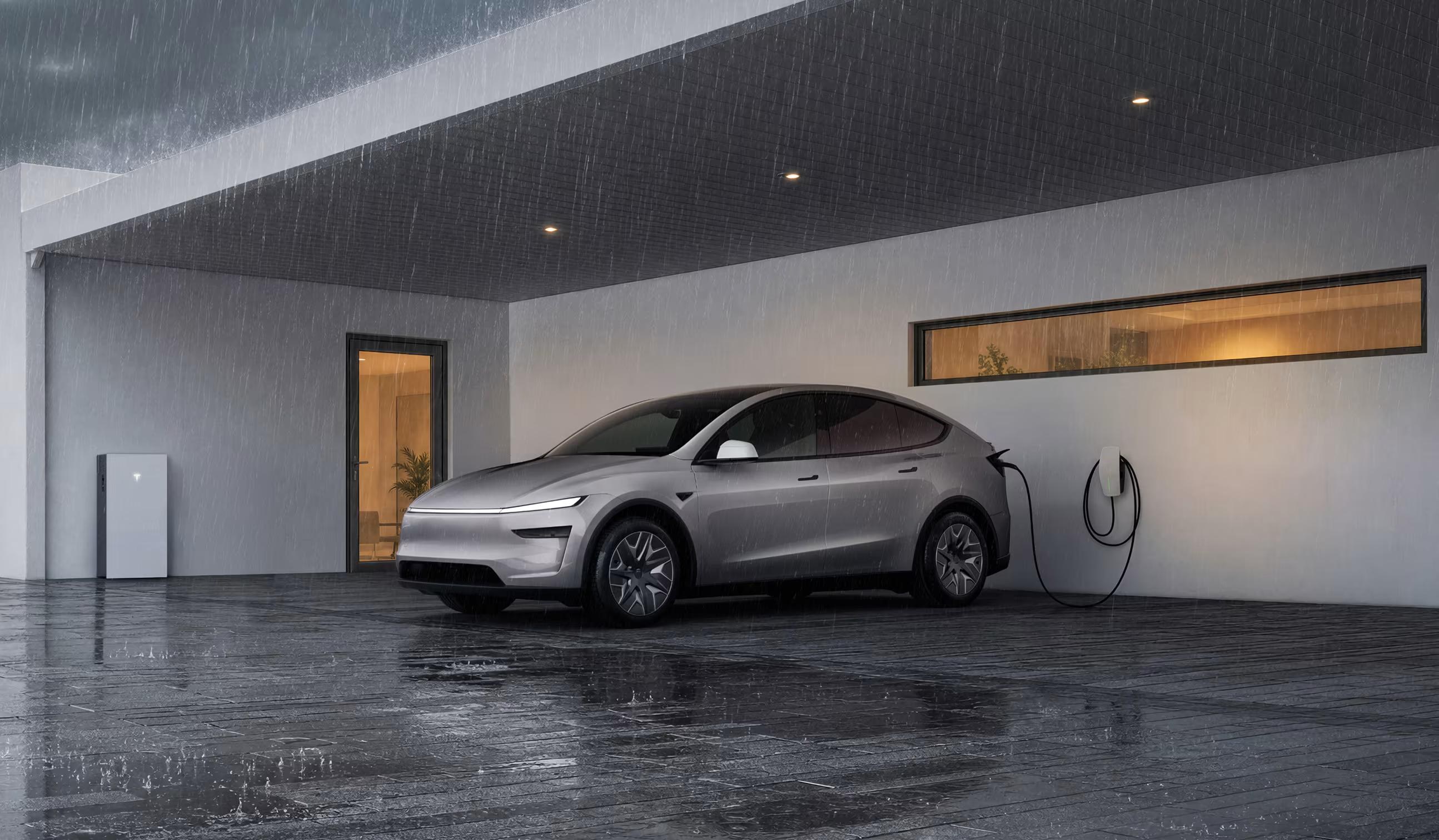
Tesla is widening the reach of its Powershare Home Backup feature beyond the Cybertruck. Model 3 and Model Y owners can now lean on their vehicle’s battery to keep household essentials running when the grid goes down, provided they also have a Powerwall 3 installed at home. Until now, the capability was tied exclusively to the Cybertruck, so this marks the first time Tesla’s two highest-volume models can double as emergency power reserves.
The practical payoff depends on which version of the car you drive. Tesla says Premium and Performance variants of the Model 3 and Model Y can stretch home backup coverage past two days, a figure that trails the “over three days” the company promises from the Cybertruck’s larger pack. Support for the Powerwall 2 and Powerwall Plus is described as arriving soon, which would open the door for households running older Tesla energy hardware.
There is an important hardware caveat. Tesla is only guaranteeing the feature on Model 3 and Model Y units ordered from October 1st onward, because earlier builds don’t all carry the PCS2 Lite inverter that the system relies on. Availability is likewise limited by geography: the feature is listed for the United States and Puerto Rico, with no mention of Canada, and it has not been extended to the larger Model S or Model X.
Tesla is not charting new territory here. Kia and GM both already offer vehicle-to-home power on select models, and Nissan’s Leaf was delivering power-to-grid charging years before bidirectional setups became a talking point. What sets Tesla’s approach apart is how tightly it weaves the car into an existing home energy ecosystem, turning a parked EV into an extra battery for the house rather than a standalone gadget. Analysts have long argued that bidirectional charging could be one of the most tangible everyday benefits of EV ownership, letting drivers extract value from a battery that would otherwise sit idle overnight.
For now, the company is keeping its more advanced Powershare Grid Support tool exclusive to the Cybertruck, meaning owners of the newly supported models get backup power but not participation in grid services. Whether that changes as Tesla refines its energy strategy is an open question, but the expanded rollout suggests the company sees home backup as a feature worth pushing down from its flagship truck into the mainstream lineup.
What do you think?