
Tesla Backs Massive 450 MW Solar-Plus-Storage Hub in the Mojave
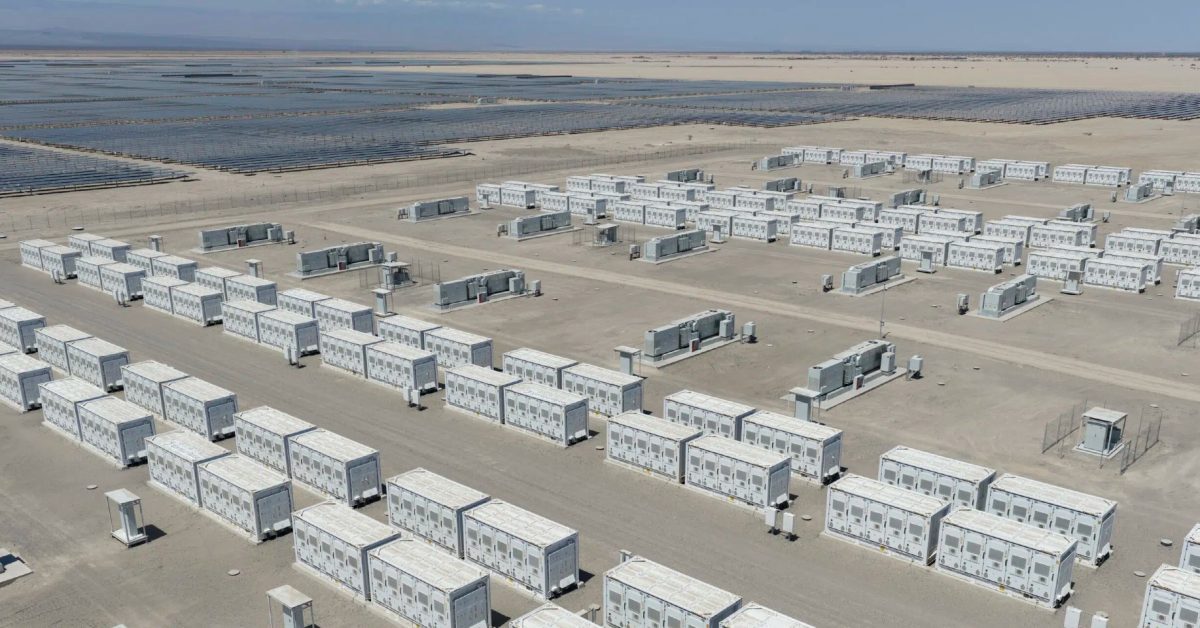
Construction has begun on what will become one of Arizona’s largest clean energy complexes, and Tesla has already committed to buying the bulk of what it produces. ContourGlobal broke ground on October 6 for Project Sterling, a solar and battery installation located roughly 20 miles north of Lake Havasu City in Mohave County. The site spreads across more than 2,000 acres of Mojave Desert and is targeted to begin operating in 2028.
The numbers behind Sterling are substantial. More than 760,000 solar panels will be installed, totaling 509 MW of DC capacity that converts to 450 MW of AC power delivered to the grid. Backing that up is a battery fleet of over 300 containers capable of discharging up to 360 MW, with roughly 1.4 GWh of stored energy — enough to run at full output for about four hours. ContourGlobal says the combination will let the plant supply clean electricity for as much as 16 hours per day. The storage units rely on lithium iron phosphate (LFP) chemistry, equipped with liquid cooling and built-in fire suppression.
Tesla’s role here is as an offtaker rather than a builder. The company holds a long-term power purchase agreement covering about 1 TWh annually along with associated renewable energy certificates — approximately 90% of Sterling’s projected yearly generation of more than 1.1 TWh. That arrangement gives Tesla a large, steady block of renewable power and the certificates that go with it. For ContourGlobal, Sterling will stand as its biggest renewable asset anywhere in the world.
A portion of the electricity can also reach California. Sterling ties into the Western Area Power Administration’s transmission network and has locked in transmission rights to sell into the California Independent System Operator market. ContourGlobal expects roughly 400 workers to be employed on the build through 2028, with local crews handling civil works, roads, and site logistics — including a new 5.2-mile access road linking the project to historic Route 66. The project is privately financed, supported by an equity bridge loan from a group of international banks to cover ContourGlobal’s investment during construction.
The development underscores how solar-plus-storage projects are increasingly structured around large corporate buyers rather than utility ratepayers alone. By pairing daytime generation with four-hour batteries and contracted offtake, Sterling aims to smooth out the intermittency that has long limited solar’s role on the grid — and to keep power flowing well past sunset.
What do you think?