
Ask the Experts: Where Can You Mount the Wall End of a Type 2 Charging Cable?
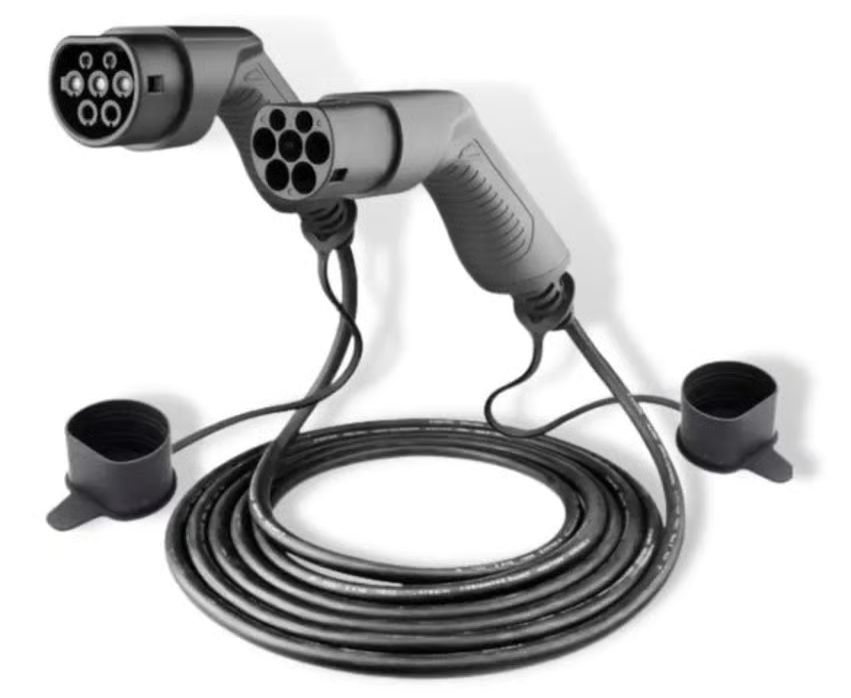
A question that many electric vehicle owners eventually run into is what to do with the two ends of a Type 2 charging cable when the car is not plugged in. One reader recently raised exactly this problem, asking whether a plug holder exists for the male connector that goes into the wall unit rather than the larger female end that clicks into the car.
As it turns out, a dedicated holster for the wall-side connector appears not to be a product that is currently on the market. The typical cable holders sold through online EV shops are shaped around the bulkier car-end plug, so they are simply too big to grip the smaller male connector that meets the wall socket. Even staff at several EV retailers were reportedly unable to point to anything that fills this gap.
That does not mean there is no workaround. One approach is to source a standalone socket for the male end, which can be found fairly cheaply through marketplaces, and bolt it to a metal plate fixed to the wall. Because this socket would only serve as a physical resting point rather than an electrical connection, the usual caution about buying electrical components from overseas sellers is less of a concern, though the back of the socket still needs sealing since these parts normally rely on being enclosed in a weatherproof housing. A second option is to have the plug scanned and a matching cradle 3D printed, although that is a lot of effort for a single unit. A third path is to salvage the socket from a broken portable charger and mount it in the same way, while a fourth and much simpler solution is a general-purpose cable clip of the kind stocked in hardware stores, provided the connector faces upward so its rubber cap keeps rain out.
The reader’s reason for wanting this setup is practical. Their parking spot sits about five metres away and roughly three metres up a flight of steps, which led them to buy a 15-metre Type 2 cable. The long lead is manageable to buy but heavy to carry up and down repeatedly, so the goal is to leave it outdoors with both ends protected from the weather, without the smaller connector permanently occupying the wall charger and blocking the path around the house.
Solutions like this are likely to become more common as battery-electric vehicles spread into more driveways and streets, and early adopters often end up inventing the small fixes that later become standard. Driver communities and advocacy groups are useful places to compare notes, and there is still plenty of room for readers to contribute their own ideas for keeping long charging leads tidy, dry and out of the way.
What do you think?