
TDK Unveils DC-Link Film Capacitors Built to Withstand 135°C
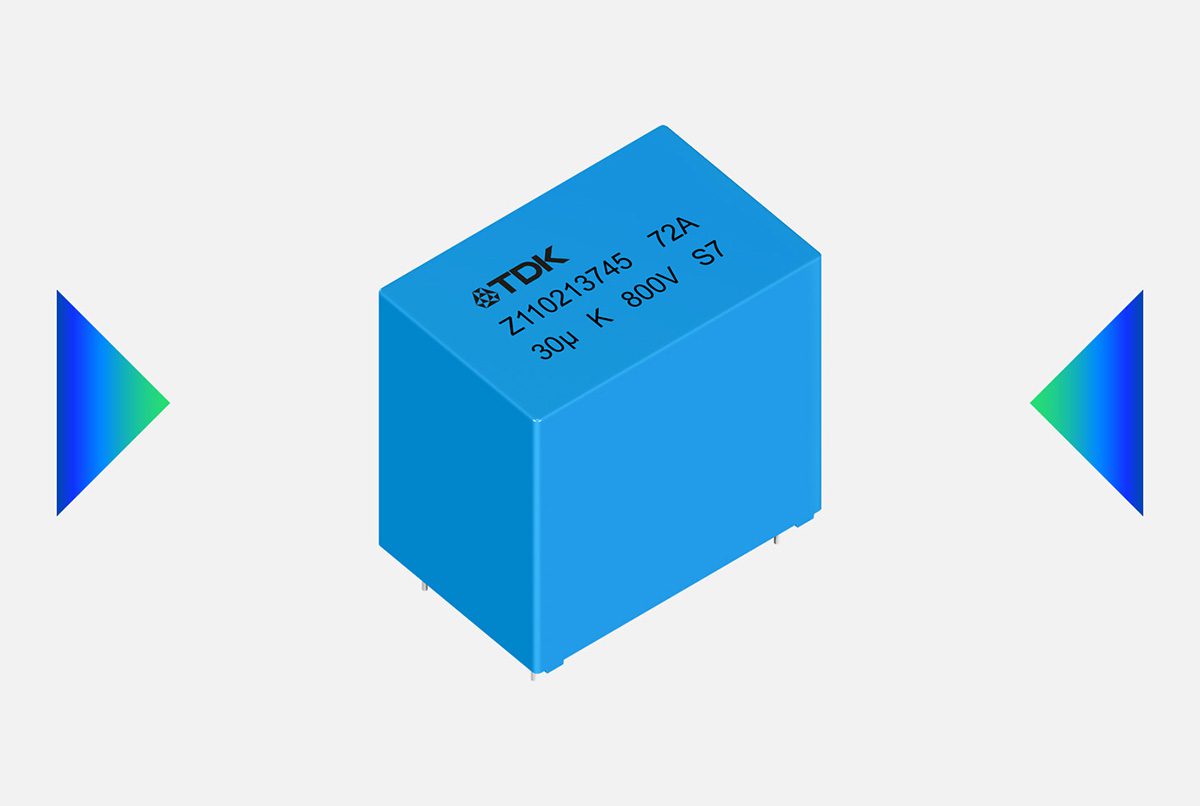
TDK has expanded its component catalog with the B3272*A/G/T family of DC-link film capacitors, a lineup engineered to keep working continuously even when case temperatures climb as high as 135° C. According to the company, the components hold their full ratings without any derating until temperatures reach 105° C, giving designers extra thermal headroom in tight, heat-generating assemblies.
The intended destinations for these parts are squarely in the electrified drivetrain space. TDK points to traction inverters used in xEVs, onboard charging units, and automotive DC-DC conversion hardware as leading use cases. Beyond vehicles, the capacitors are also positioned for industrial drive systems and premium-grade power supply designs where stable performance under load matters.
DC-link capacitors sit at a critical junction in power electronics, smoothing voltage fluctuations on the DC bus that links a battery pack to an inverter. Because they operate in environments where heat is a constant companion, the ability to run at elevated temperatures without derating can translate into simpler thermal management strategies and potentially more compact packaging. Engineers often have to oversize or actively cool components that lose capacity as they warm up; parts that maintain specifications to higher thresholds reduce that burden.
TDK’s move reflects a broader trend among component suppliers chasing the demanding requirements of electric vehicle power electronics, where efficiency, durability, and space savings are perpetually in tension. The company has not disclosed pricing or detailed availability timelines for the new series. For now, the headline figure is the 135° C continuous rating, a specification that could appeal to designers working on densely packed inverter and charger architectures where every degree of thermal margin counts.
What do you think?