
Swiss Startup Puts Induction Coils Inside Bus Tires to Charge on the Move
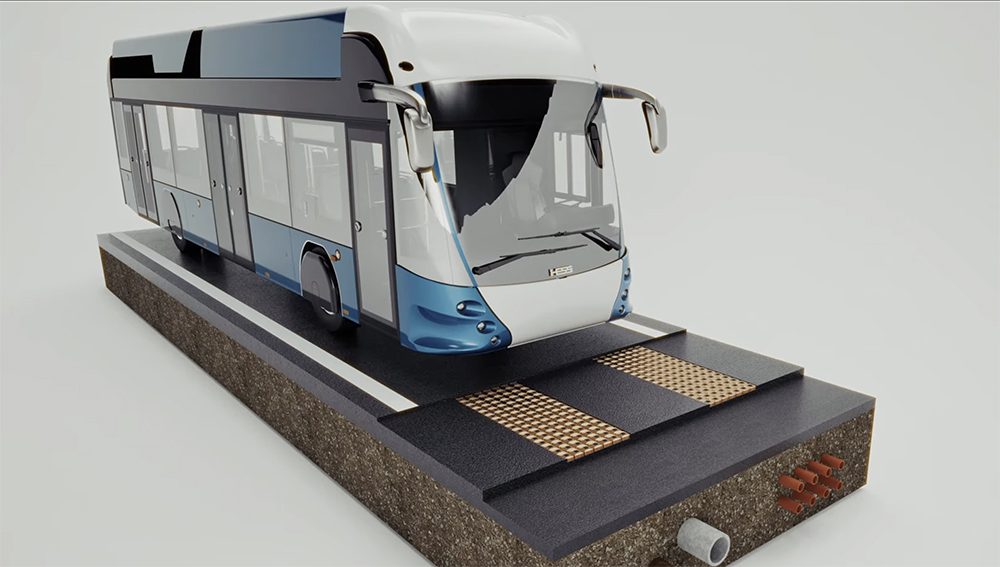
Inductive charging for electric buses has always meant burying coils in the road and fitting a matching coil underneath the vehicle. A young Swiss company thinks that geometry is the wrong place to start.
Winduction, an ETH Zurich spin-off, has redesigned the receiver so that the induction coils sit inside the tire itself. Because the wheel is the only part of a bus that stays in constant contact with the road, moving the coil there shortens the air gap that wireless power has to cross — a distance that normally varies from one bus model to another and that directly limits how efficiently energy can be transferred. According to co-founder and CTO Sylvain Fricker, the company’s setup pushes more than 90 percent of the energy from the road surface into the vehicle, and it works well enough during brief stops that buses can run with smaller, cheaper battery packs.
The concept forced an unusual engineering compromise. Standard bus tires are built with steel belts, which would interact with the magnetic field and turn a large share of the incoming power into waste heat. Winduction therefore had to work with partners to develop an entirely new steel-free tire before the system could function as intended.
The pitch is not only about convenience. Wireless opportunity charging lets operators shrink battery capacity, extend pack life by avoiding deep charge cycles, and serve the same fleet with fewer charging stations. Winduction has already demonstrated the idea on the line linking Zurich Airport with the city’s Oerlikon district. On that route, only two of the 24 stops would need charging plates, adding up to roughly three hours of top-up charging across 16 runs — a stark contrast with the current practice of plugging buses in simultaneously overnight in the garage for about five hours, at far higher power levels.
Real-world testing infrastructure is now going up in Winterthur, including a test lab and a purpose-built bus stop. CEO Laurin Schwitter says the next step is to assemble every component in an industry-ready form and build a fully converted electric bus able to operate beyond the company’s own test site. A first pilot is planned for 2028, and talks are already under way with several Swiss transport operators.
What do you think?