
Specifying High-Voltage EV Wire Harnesses: What Buyers Must Nail Down First
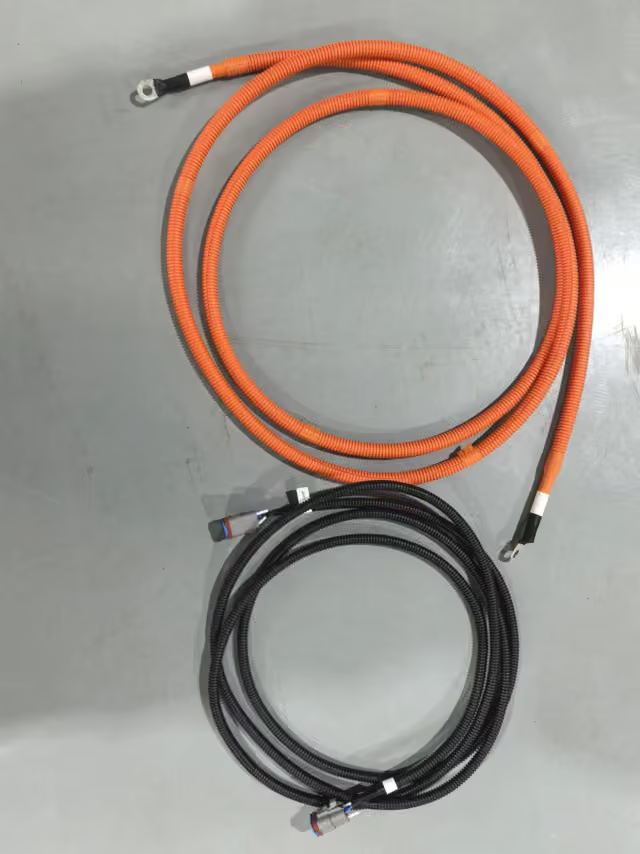
Ordering a high-voltage wiring harness for an electric vehicle is less about picking a connector from a catalog and more about documenting the operating reality the part will face. A useful specification ties together three things: the circuit itself, the physical path the harness travels through the vehicle, and the test evidence needed before sign-off. Crucially, the electrical safety requirements should be written by the vehicle program’s own engineering team — not left to the harness supplier to interpret.
Load Profile, Not Just Voltage — Naming a system voltage and showing a connector photo is not enough. The battery feed, traction motor supply and charging circuit may each behave differently inside the same vehicle. Specify the operating voltage range including maximum expected values, state whether the circuit is DC or AC, and flag transients for engineering review. Current must be described over time — continuous draw, peak magnitude, peak duration and how frequently peaks recur — covering both charging and driving patterns where they apply. Temperature in Context — Ambient surroundings, nearby heat sources and any bundling or enclosure all change what a cable and connector can handle. A connector’s current rating is meaningless without temperature context; IEC 60512-5-2 addresses current-carrying capacity testing at elevated ambient temperature. If a proposed part falls short, the limitation should be called out in the quotation rather than buried in a catalog figure. A Fully Defined Connector Interface — A connector family name leaves too much open. Approved part numbers should cover both mating halves, contacts, seals and locking hardware, along with the wire size and cable diameter they accept. Pin assignment, keying features and the high-voltage interlock loop (HVIL) wiring and interface behavior must come from the vehicle design — the harness supplier should not be left to infer them. Shielding, if needed, requires its own decisions: where it terminates and what evidence proves noise control. Route Drawings Over Finished Length — A harness drawing should show connector orientation, branches, mounting points and protective coverings, backed by a route model identifying nearby edges, heat sources and moving parts. Bend restrictions should follow from the actual components, not a single radius applied to every high-voltage cable. Where a connection spans assemblies that move relative to each other, a flat bench sample tells you nothing useful. Exposure and Sealing Boundaries — Name the specific fluids and conditions that matter — road splash, dust, cleaning agents, salt, vehicle fluids — instead of asking for a generically rugged harness. For ingress protection, the IP rating per IEC 60529 should be tied to defined test conditions and a precise assembly state: mated connector, capped connector or something else. Fluid compatibility, thermal exposure and mechanical wear deserve separate review; a sealing claim covers none of them on its own.
The gap between a catalog rating and real installed performance is where high-voltage programs get into trouble. Validation should be split into per-unit checks on every manufactured harness and qualification testing of the design itself, with the engineering team defining which electrical, environmental and mechanical checks apply. Insulation resistance and dielectric withstand testing each address different questions and neither alone proves vehicle safety.
Methods, conditions, sample counts and acceptance limits should be agreed before work starts, with IEC 60512-1 tying connector testing to product specifications. Results should reference the tested drawing revision and component list, and any production change in cable, connector, seal or assembly process should trigger a fresh assessment. Resolving mismatches between the requested specification and the quoted build before the order is placed is the cheapest validation step available.
Source: Clean Fleet Report
Curious how this compares to other EVs? Try our comparison tool →What do you think?