
SpaceX Dragon Sets New NASA Docking Record With Sub-8-Hour ISS Flight
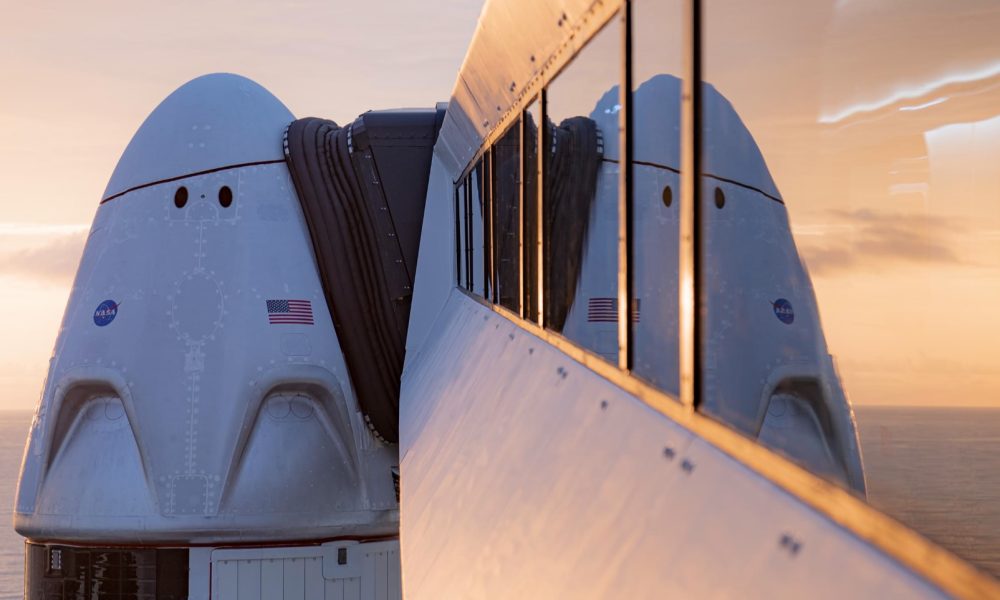
SpaceX has tightened its grip on the record books for the fastest trips to the International Space Station, and the latest entry reshuffled the entire top five. According to NASA, the Crew Dragon capsule named Grace docked with the station’s Harmony module at 7:05 p.m. ET on October 1, only 7 hours and 55 minutes after launching from Space Launch Complex 40 at Cape Canaveral. NASA’s station blog confirmed the flight as the quickest launch-to-docking ever achieved by a U.S. spacecraft.
The margin of improvement was striking: the previous American record, set by SpaceX’s uncrewed CRS-31 cargo flight in November 2024, stood at a little over 12 hours. Before Grace’s arrival, the fastest crewed transit had been Crew-11 in August 2025 at 14 hours and 43 minutes. A widely circulated ranking that Elon Musk amplified this week shows that SpaceX’s Dragon now occupies all five of the quickest U.S. station arrivals, with Axiom’s Ax-2 at 15 hours and 35 minutes and NASA’s Crew-4 at 15 hours and 44 minutes rounding out the list.
Crew-13 carried NASA astronauts Jessica Watkins and Luke Delaney, Canadian Space Agency astronaut Joshua Kutryk, and Roscosmos cosmonaut Sergey Teteryatnikov. NASA had projected a docking near 8 p.m. ET, so Dragon beat expectations by roughly an hour. SpaceX’s Julianna Scheiman credited orbital geometry as much as technology, noting the station happened to sit in a favorable position that allowed Dragon to begin closing the distance almost immediately after reaching orbit, a scenario she described as close to the fastest possible. Most Crew Dragon missions still require nearly a full day of thruster burns to raise and phase their orbits before rendezvous.
Attention at the station now shifts to departures and arrivals. NASA is targeting 8:05 a.m. ET on Wednesday, October 7, for Crew-12 to undock, with a splashdown off the California coast expected around 11:34 a.m. Thursday. Freeing that port opens the way for CRS-35, a cargo Dragon hauling the final set of iROSA solar arrays. Dragon remains NASA’s only operational crew transport to the station while Boeing’s Starliner stays grounded, and the agency recently added Crew-15, Crew-16 and Crew-17 to SpaceX’s contract through a $946 million modification.
What do you think?