
Google Expands Android Auto Certification Network With P3 Approval
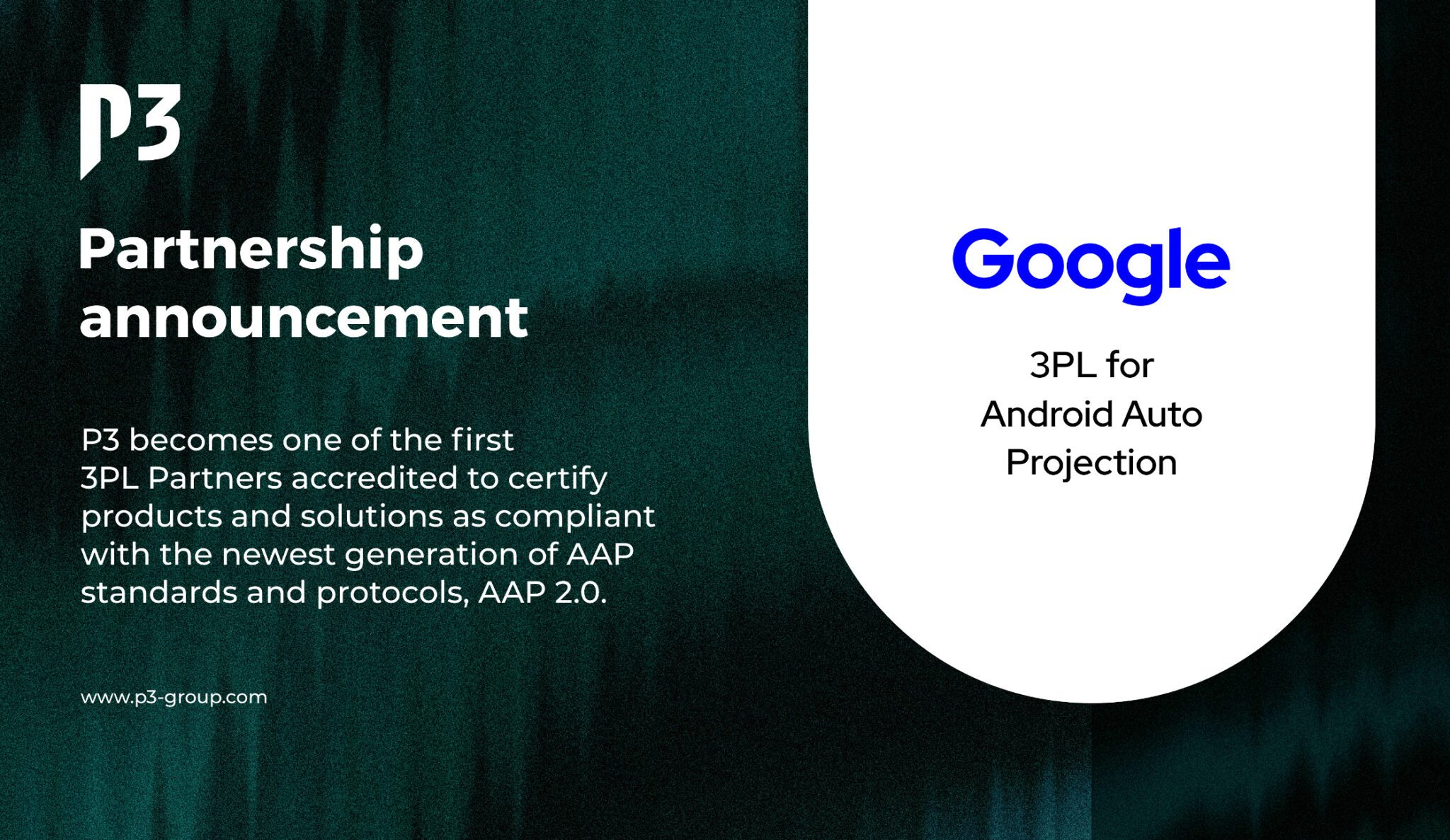
Google is broadening the circle of companies authorized to approve in-car software, naming Stuttgart-based consultancy P3 as an accredited third-party laboratory for Android Auto Projection. The designation makes P3 one of the earliest labs cleared under AAP 2.0, the revised version of Google’s certification framework, and effectively positions the firm as a gatekeeper for phone-mirroring systems headed into vehicles.
The approval builds on P3’s earlier appointment in October 2024, when it was cleared to certify infotainment platforms running on Android Automotive OS. With the new credential, P3 now covers both of Google’s software routes into the cabin: Projection, which mirrors a paired smartphone’s apps onto the dashboard display, and Automotive OS, which runs natively on the vehicle’s own hardware without needing a phone at all.
Certification carries real commercial weight. Google requires automakers and their suppliers to clear third-party laboratory checks before a system can launch, so the speed and availability of accredited labs directly shapes product timelines. P3 says the AAP 2.0 programme should shorten approval cycles while trimming both development and deployment expenses.
P3 chief technology officer Marius Mailat framed the expanded accreditation as a significant step for the consultancy, describing the work as supporting both Google and the wider automotive industry in bringing Android Auto Projection systems to market. He emphasized that consumers increasingly expect continuous connectivity and rich in-cabin experiences, and that OEMs and their specialist partners are responding with new solutions. In his view, the accreditation helps ensure drivers and passengers worldwide encounter consistent, high-quality Android Auto functionality.
The arrangement reflects a broader pattern in the software-defined vehicle era, where platform owners delegate compliance verification to specialist labs rather than handling every assessment internally. For automakers, that means certification throughput and lab availability become practical constraints on how quickly new infotainment features reach showrooms.
What do you think?