
Skyworks Qualifies Si829x Gate Driver, Opening EV Inverter Prototyping
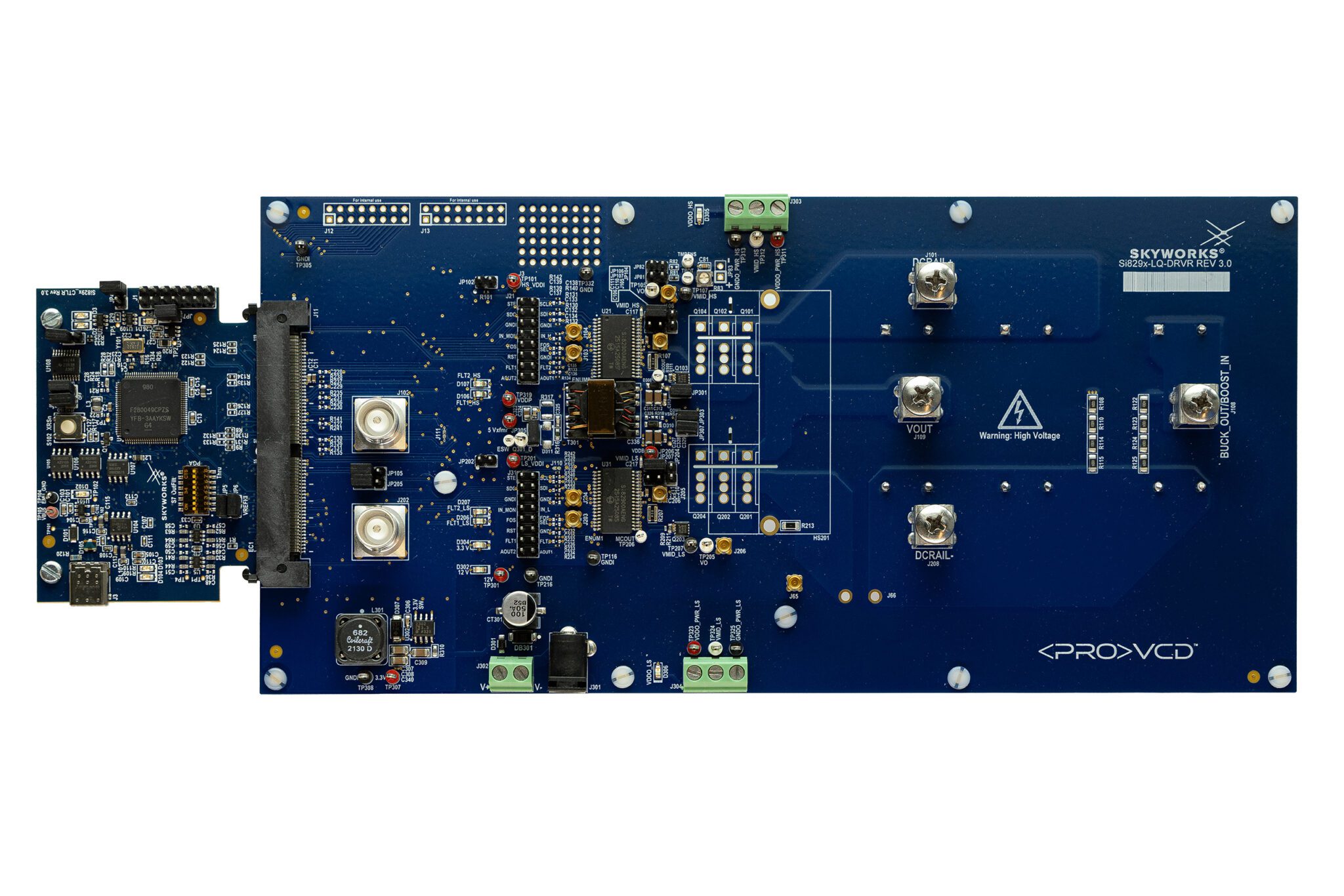
Skyworks Solutions has moved its Si829x isolated gate driver past automotive qualification and into pre-production, a step that gives inverter developers a configurable building block for traction systems. The part, designed specifically for electric vehicle traction inverters, has cleared AEC-Q100 testing, and Skyworks is now shipping samples, evaluation kits and companion driver software so automakers and inverter suppliers can begin advanced prototyping.
The headline technical claim centers on ProVCD, a second-generation variable current drive scheme that adjusts gate waveforms on a cycle-by-cycle basis through a digital interface. Skyworks reports that this approach trimmed switching losses by as much as 44% compared with voltage-mode drive in its own testing. If that figure holds up in real inverter designs, it points to meaningful efficiency gains in the power stage, where losses translate directly into heat, packaging demands and range.
Perhaps the more commercially significant angle is flexibility. The Si829x works with both silicon carbide and silicon power switches, and its parameters are configured in software rather than fixed by hardware. That means a single design can be adapted across multiple vehicle platforms and different chip suppliers — a compelling pitch for manufacturers trying to standardize inverter architectures while their supply chains shift.
Safety is part of the offering as well. Skyworks says the device supports functional safety designs up to ASIL D, the highest automotive safety integrity level, though that depends on system-level validation. A functional safety manual and other documentation are available to customers under a non-disclosure agreement.
Mario Battello, Vice President of Product Line Management at Skyworks, framed the launch around a qualified route from evaluation to advanced prototyping. According to Battello, the ProVCD platform pairs software-configurable performance with the isolation, safety and design flexibility needed to standardize inverter designs not only for EVs but also for eVTOL aircraft and electric agriculture equipment, while speeding development for high-power motor applications such as datacenter cooling and AI power supplies. The subtext is that control logic is migrating deeper into power electronics, down to the level of how each individual switch turns on.
What do you think?