
RWTH Aachen Launches ProMeBa Project to Scale Multi-Layer Battery Electrodes
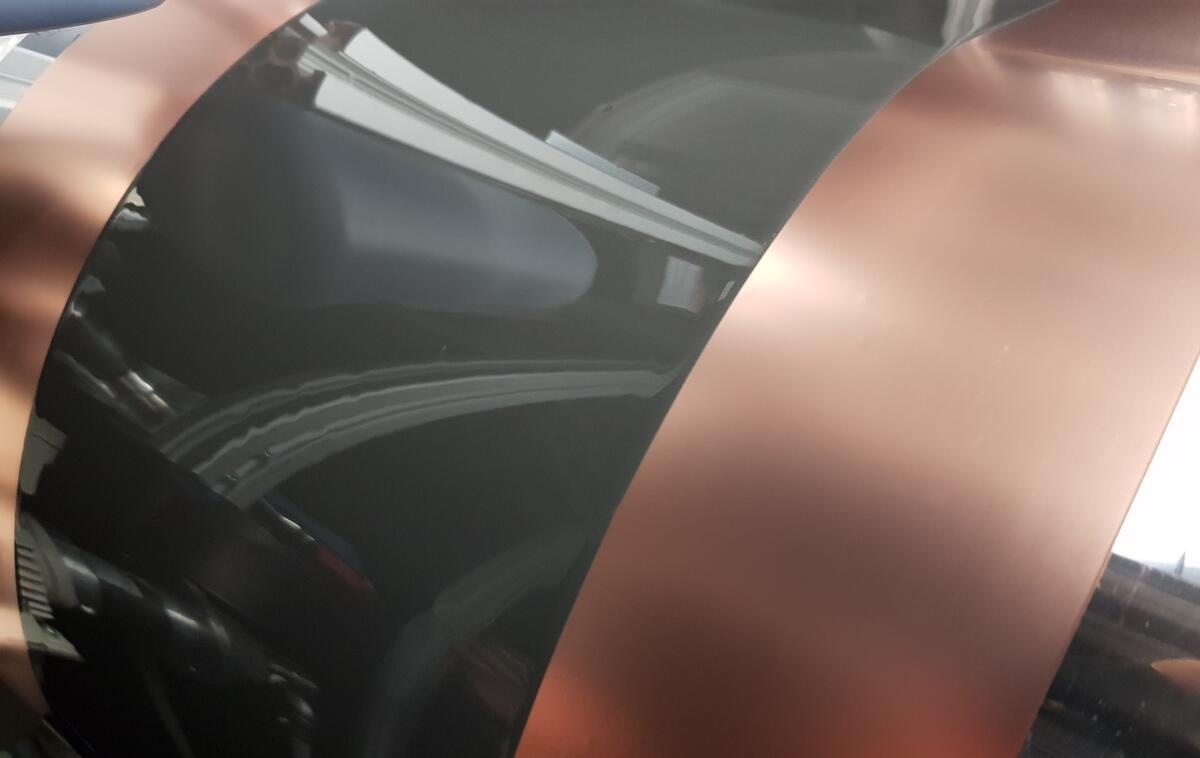
A German research consortium is setting out to make multi-layer battery electrodes manufacturable at industrial scale. The Chair of Production Engineering of E-Mobility Components (PEM) at RWTH Aachen University is leading work on scalable production methods for multi-layer electrodes within the ProMeBa project, which began in June 2026 and is scheduled to run until May 2029 alongside partners from research and industry.
The central idea behind multi-layer electrodes is to combine different material and structural properties inside a single electrode. By stacking layers with varying characteristics, the project aims to improve ion transport, mechanical stability and electrochemical performance at the same time. Researchers are therefore examining materials and layer architectures for both anodes and cathodes, with the number of layers, their thickness and changes in material composition between layers all treated as key variables. PEM’s specific role covers the development and laboratory characterization of multi-layer anodes, including adjustments to coating suspension formulations as well as coating and drying conditions.
The project’s goal is not just laboratory results but a route to pilot-scale production. A modular coating unit is being designed so that it can be integrated into existing manufacturing equipment, allowing the findings to be transferred to pilot lines. Under industrially relevant roll-to-roll conditions, the team will compare two-layer slot-die coating with multi-layer curtain coating, judging each approach on coating quality, process stability and scalability. Because electrode quality depends heavily on consistent slurries, an inline measurement system for continuously determining the viscosity of coating suspensions is being further developed in parallel, with the aim of detecting deviations early during production and supporting reproducible electrode quality.
Electrochemical testing on electrodes and experimental cells is expected to provide evidence on the performance and stability of the multi-layer structures. NETZSCH-Gerätebau coordinates the project under the B@TS announcement of the German Federal Ministry for Research, Technology and Space (BMFTR). The other participants are RWTH’s PEM and ISEA chairs, the Fraunhofer Institute for Ceramic Technologies and Systems IKTS, the iPAT institute at TU Braunschweig and 8inks Deutschland.
The work touches on a persistent challenge for battery makers: electrodes are typically limited by a trade-off between energy density and fast charging or cycle life. Thicker, more heavily loaded electrodes store more energy per unit of area but tend to suffer from slower ion transport and mechanical degradation. Multi-layer designs are one proposed answer, pairing, for example, a high-capacity layer with a more conductive or mechanically robust one. Turning that concept into a repeatable roll-to-roll process, with the metrology to keep quality in check, is the hurdle ProMeBa is built to address over its nearly three-year runtime.
What do you think?