
Roof Glass and Torque: A 1967 Buick SportWagon Hits the Market
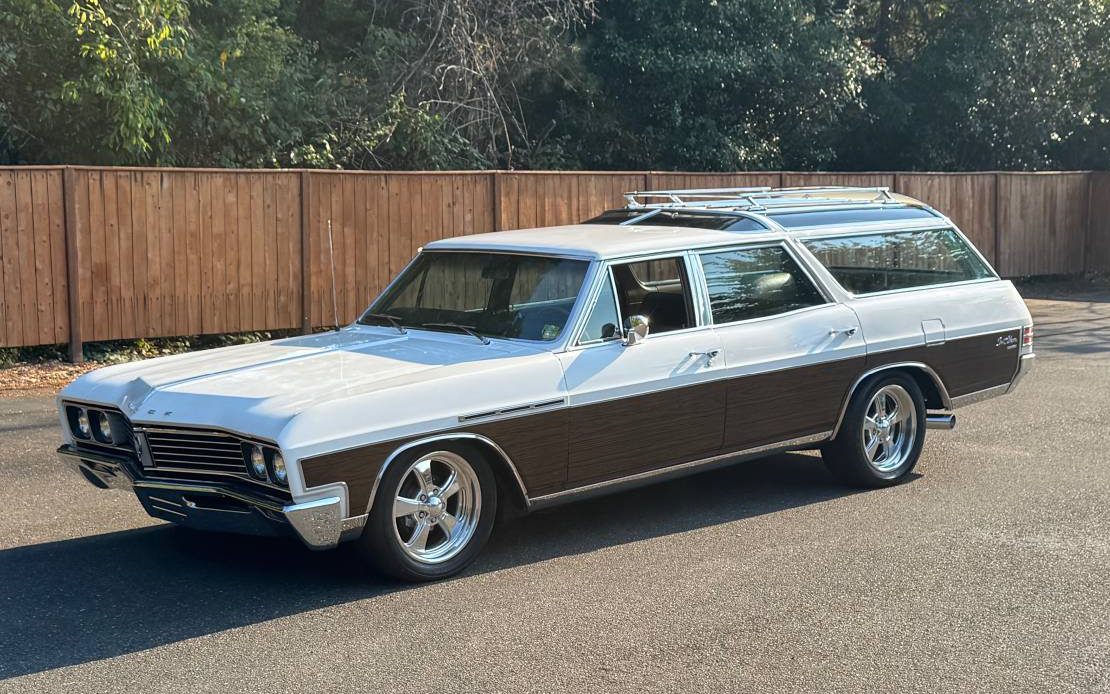
Buick’s mid-sixties wagon lineup gave buyers a choice between the practical and the peculiar, and the SportWagon sat firmly in the second camp. Its party trick was a raised glass panel over the cargo area, a feature that let rear-seat passengers look at the sky and gave the car a silhouette unlike anything else on an American driveway. A 1967 example finished in a gold-toned cabin is now up for sale outside Seattle, Washington, listed at $25,500.
The roof treatment is the detail that separates this wagon from a standard steel-topped family hauler. The seam where the glass panel meets the body follows the line of the C-pillar, which creates a visual sense of forward motion even when the car is parked. A slight forward rake to the stance reinforces that impression, and according to the listing it should also help the car sit closer to level once it is loaded for a long trip.
The interior is described as tidy and correct rather than flawless, trimmed in a gold color scheme that would pair especially well with one of the era’s iridescent gold or bronze exterior paints. Photos are limited, but the seller is said to offer video walkarounds to serious buyers. The wagon rides on aftermarket wheels, and lowering springs have been fitted, a change that will not appeal to every purist even though returning to stock hardware should be straightforward. The imitation woodgrain trim reads well in the images provided. Up front, three elongated ventiports on the fender carry one of Buick’s signature styling cues of the period.
Under the hood, the original two-barrel 340 has been swapped for the optional four-barrel version of the same 340 cubic-inch V8, displacing 5.6 liters. The upgrade was more than a carburetor change: compression rose from 9.0:1 to 10.25:1, which means premium fuel is now a requirement rather than a suggestion. Output is quoted at 260 horsepower with 365 lb-ft of gross torque, figures that reflect the smooth, low-end-rich character Buick V8s of this era were known for. Backed by 3.23:1 rear gears, the wagon should feel strong in traffic, though highway cruising at 70 mph puts the engine at roughly 2,600 rpm.
The seller reports that the car runs great, drives well, and that everything works, which matters for a vehicle being pitched as ready for shows, cruising, and long-distance road trips alike. For a buyer who wants a 1960s people mover with a bit of architectural curiosity built in, this SportWagon makes a case for itself.
FAQ: What makes the SportWagon’s roof different? It uses a raised glass panel over the cargo area rather than a conventional steel roof. Does it need premium fuel? Yes, the higher-compression 340-4 requires it.
What do you think?