
Renault Brings LFP Batteries Across Its EV Lineup, Teases E-Space Concept for Paris
Renault is pushing lithium iron phosphate (LFP) chemistry into every electric passenger car it sells, a shift the company frames as a way to sharpen the price-to-range equation for buyers. The rollout now reaches the Scenic and Renault 5, following the Twingo and Megane, with the Renault 4 set to join the group shortly after.
The battery packs rely on cell-to-pack construction, a layout that trims weight and cost by skipping intermediate module housings. Capacities differ by model: the Twingo carries 27.5 kWh, the Renault 5 gets 37 kWh, while the Megane and Scenic each use a 67 kWh pack. Choosing LFP over pricier nickel-based cells is central to Renault’s affordability push, even though the chemistry traditionally trails on energy density.
The refreshed Megane E-Tech Electric shows what that trade-off looks like in practice. Renault says its 67 kWh LFP battery delivers up to 500 km of range and can go from 15% to 80% state of charge in 24 minutes, a 25% improvement in fast-charging speed over the previous setup.
Renault is also reaching back into cars already on the road. Owners with the OpenR Link infotainment system will gain access to Google’s Gemini assistant through an optional over-the-air software update, meaning no trip to a dealer is required to add the feature.
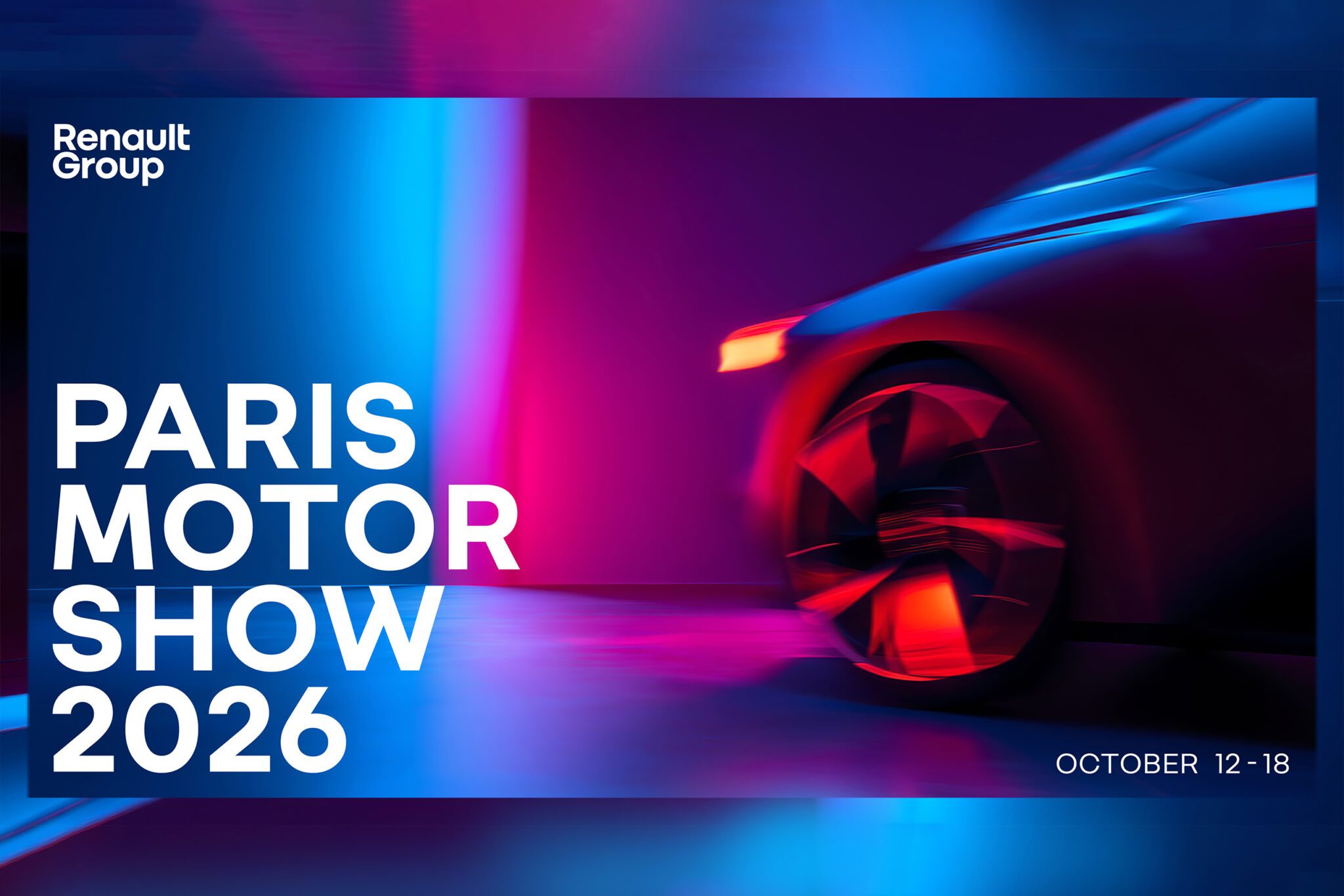
At the centre of Renault’s Paris Motor Show presence is the E-Space Concept, an electric family car that revives the spirit of the 1984 Espace. Renault has confirmed only that it measures 4.70 metres long and wears a black rubé finish, keeping most specifications under wraps until the 12 October 2026 debut. The stand will round out its display with the Renault 8 Gordini and Renault 4 JP4x4 concepts, the 555 hp Renault 5 Turbo 3E prototype, and the Trafic Van E-Tech Electric, which holds the International Van of the Year 2027 title.
What do you think?