
Renault's E-Space Concept Reinvents the Minivan With a Retro-Futurist Edge
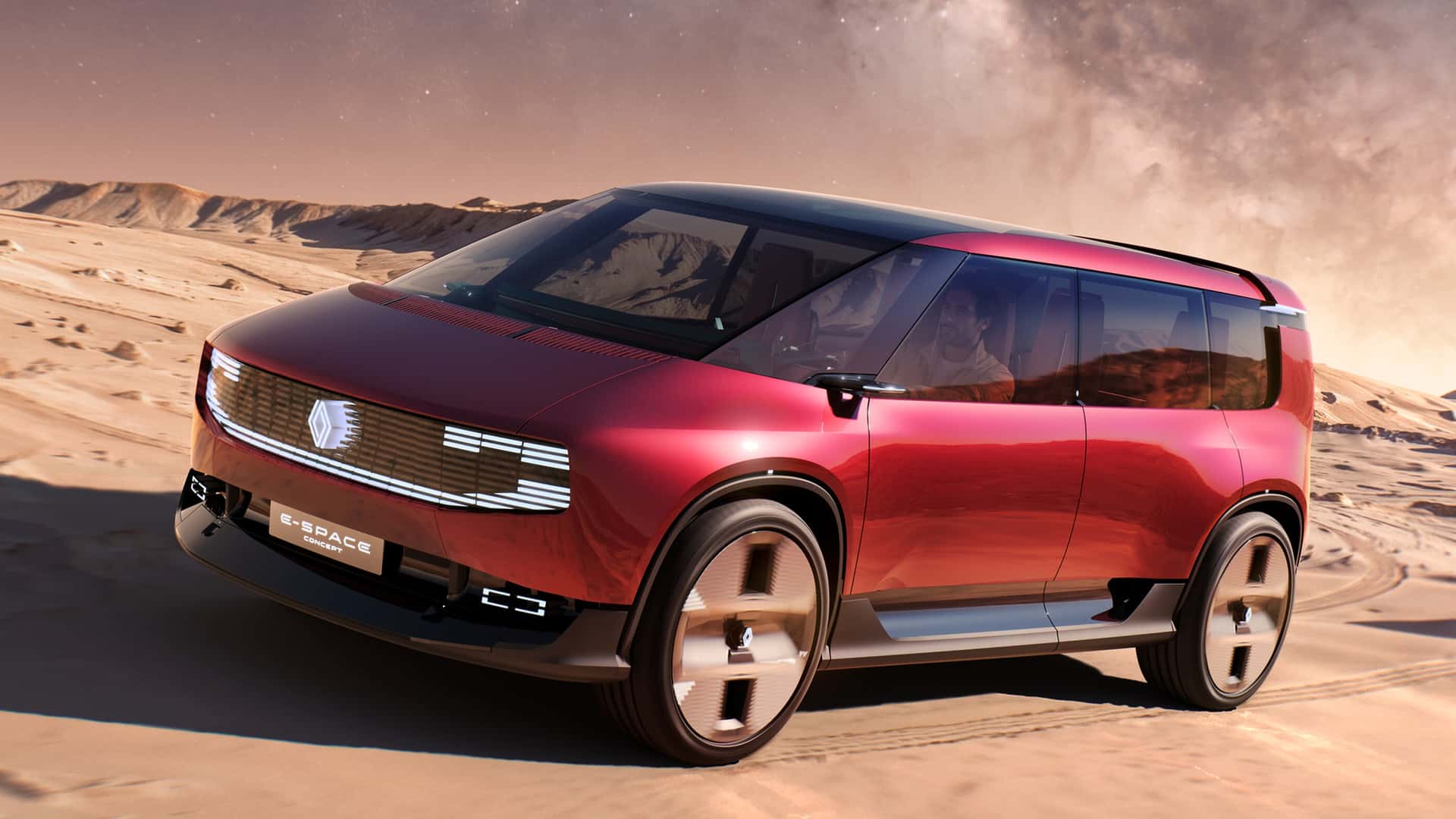
Renault is betting that the humble family hauler deserves a second act. The French automaker has pulled the wraps off the E-Space Concept, a battery-electric people carrier that deliberately echoes the boxy proportions of the original 1984 Espace — the van that once shuttled generations of European families to football pitches, dance recitals and ski slopes. Renault’s message is blunt: SUVs may have won over parents, but the minivan isn’t ready for the history books just yet.
Visually, the E-Space leans hard into nostalgia without abandoning modern design language. A digitized nose bookended by a wide, U-shaped lighting band nods to the squared-off face of its 1984 ancestor, while the glasshouse stretches in near-360-degree fashion. A raked quarter window ahead of the A-pillar mirrors the original’s layout, and the D-pillar wraps over the roof in a way that makes the rear appear to float free of the body. Conventional mirrors are gone, replaced by cameras, and the door handles have been shaved away entirely. Chunky wheels wrapped in low-profile rubber fill the arches, giving the concept a stance closer to a sports car than a school-run van.
At 4,700 millimeters long (about 185 inches), the E-Space is sized for real-world family duty rather than show-floor spectacle alone. Renault is keeping specifics close to its chest — no cabin images or technical figures have surfaced — promising a fuller reveal when the concept takes the spotlight at the Paris Motor Show on October 12. The company stresses the vehicle remains a design study, though it admits it is weighing “possible futures,” and notes that a production people carrier would slot neatly into its Futuready product strategy.
The original Espace, co-developed with Matra, was celebrated for wringing maximum space out of a compact footprint. It could seat as many as seven, its rear chairs could be removed outright, and its front seats pivoted — turning the cabin into a cargo hold or a makeshift dining spot on a camping trip. Renault hasn’t detailed how the E-Space’s interior might be arranged, but a fully flat electric skateboard platform would give designers far more freedom than the combustion-era packaging ever allowed.
The concept also fits a broader pattern at Renault, which has been mining its back catalogue for electrified reinterpretations. Recent showcase efforts include a revived 8 Gordini with rear-wheel drive and an R17 restomod, suggesting the brand sees heritage as a useful hook for its EV ambitions. Whether the E-Space stays a Paris talking point or becomes a showroom reality is now the open question — and the answer will say a lot about whether Europe’s families are willing to give the minivan another look.
What do you think?