
Proterial and FEV Tout a 300 kW Motor That Skips Heavy Rare Earths Entirely
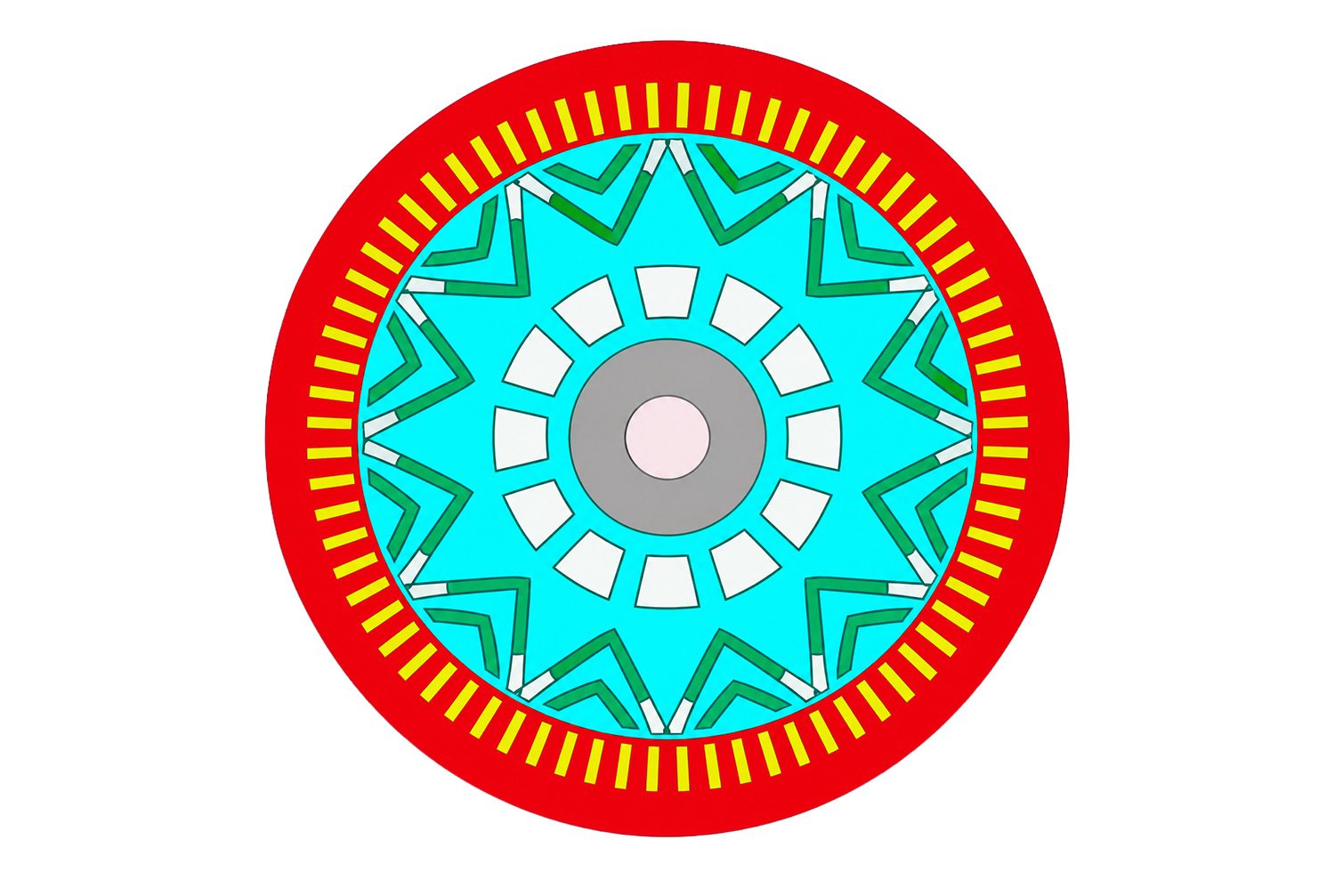
A simulation study from materials maker Proterial and engineering consultancy FEV points to a traction motor that hits harder, weighs less and leans on no terbium or dysprosium at all. The two firms modeled a 230 kW drive unit — roughly the kind of hardware found in today’s mainstream passenger EVs — and then swapped its conventional silicon steel core for Proterial’s amorphous alloy.
Amorphous alloy is produced by chilling molten metal so fast that no crystal lattice forms. The payoff is lower iron loss than the electrical steel laminations that normally make up a motor core. Proterial’s contribution here is a way to laminate and bond the alloy ribbon continuously, which finally makes it punchable into core shapes at production scale.
Key Specs: 230 kW reference → 300 kW simulated peak · 20,000 rpm vs 14,900 rpm · 27% lighter motor · 97.9% WLTP Class 3 efficiency
What Changes Inside the Motor
The concept is tuned to exploit the alloy’s low-loss behavior at far higher revs. Where the baseline spins to 14,900 rpm, the amorphous version is built for 20,000 rpm. To keep wheel-level torque and speed matched to the reference unit, the reduction ratio climbs from 10.8 to 14.4.
Pole count rises from eight to 12, while slot count (72) and stator outer diameter (200 mm) stay put. The stack is shorter, too — active length comes in at 77.1% of the reference motor’s.
The Numbers From the Simulation
- Peak power: up from 230 kW to 300 kW
- Motor mass: down 27%
- WLTP Class 3 efficiency: 95.5% → 97.9%
- ARTEMIS MW 150 efficiency: 95.3% → 97.4%
FEV’s reference build used a silicon steel core, so every gain above is measured against the same 230 kW package rather than a clean-sheet design. That makes the deltas easier to read — and harder to dismiss.
Why the Magnet Choice Matters
Proterial’s neodymium sintered magnets for traction duty are formulated without heavy rare earths such as terbium and dysprosium. Those elements carry well-known supply and procurement headaches, and cutting them out of a motor bill of materials is a recurring goal across the industry. Proterial claims its magnets pair high remanence flux density with high coercivity, which is the balance that keeps a motor performing under heat without leaning on HRE doping.
Worth keeping in perspective: these are simulation results, not dyno data from a built unit. A 70 kW jump in peak output alongside a 27% weight cut would be a notable combination if it survives hardware testing — and that next step is the one to watch.
Source: Charged EVs
Curious how this compares to other EVs? Try our comparison tool →What do you think?