
Peugeot Brings Back the RCZ as an Electric Coupe Concept With Solid-State Power
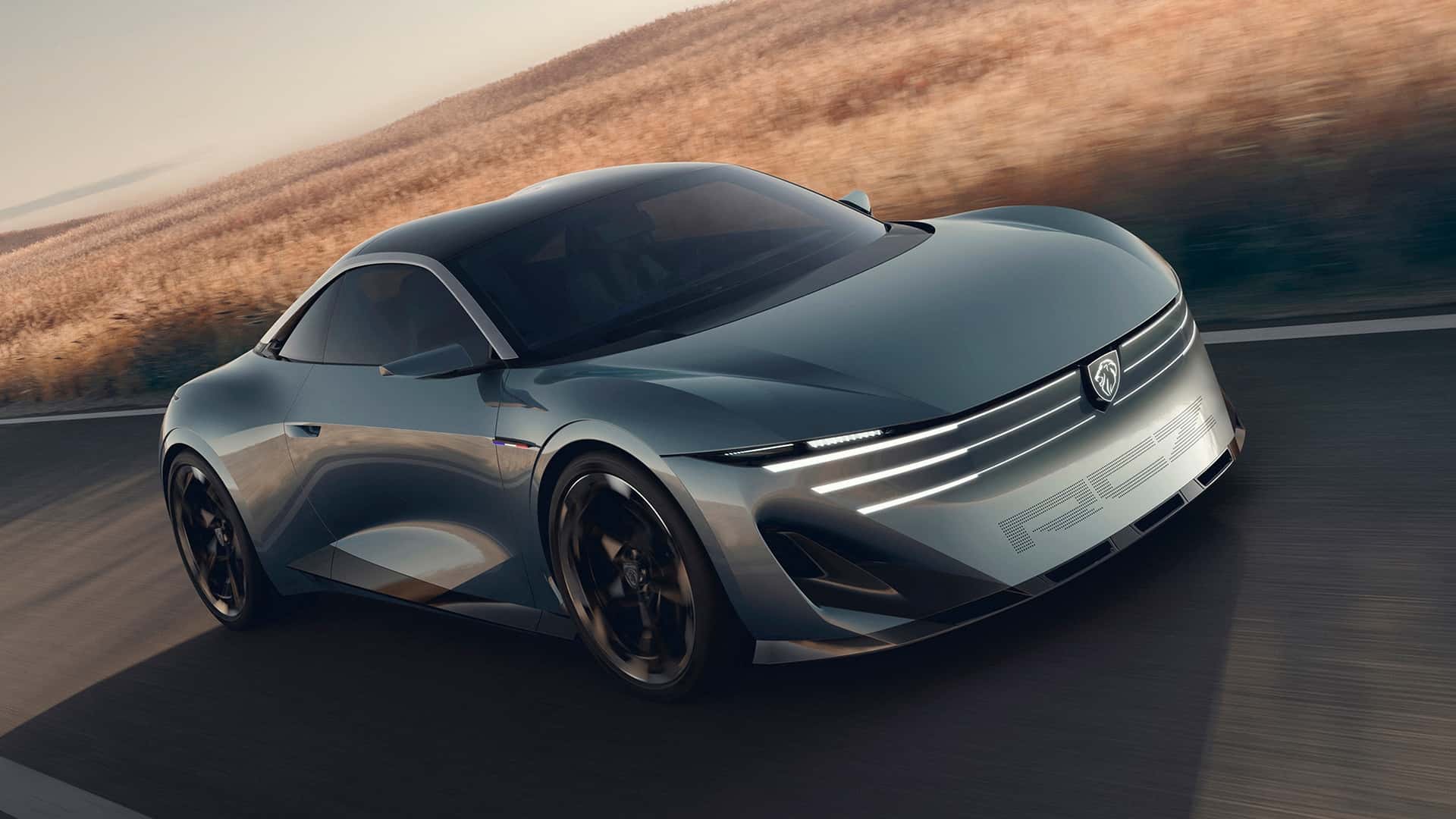
Peugeot has dusted off one of its most fondly remembered nameplates. The RCZ Vision, unveiled as a concept, reimagines the French brand’s rakish two-door coupe as a fully electric sports car, and it arrives carrying technology that goes well beyond nostalgia.
The original RCZ was a purpose-built coupe that Peugeot produced between 2009 and 2015, prized for its distinctive double-bubble glass roof and muscular haunches. The new concept clearly channels that silhouette: a low, planted body with broad shoulders, sculpted flanks and a roofline that tapers toward the rear, keeping the visual link to its predecessor intact. Yet the mechanical story is entirely modern. Beneath the skin sits an architecture derived from Stellantis’ STLA One platform, paired with a solid-state battery developed by Factorial and a 1,000-volt electrical system.
Peugeot’s numbers are ambitious. The concept is claimed to produce 500 horsepower, travel up to 373 miles (600 kilometers) on a charge, and recover from 10 to 80 percent in roughly 10 minutes. The company also targets provisional WLTP consumption of 11.5 kWh/100 km, which works out to around 5.4 miles per kWh — a frugal figure for a performance-oriented machine. The battery itself is remarkably thin at just 110 millimeters, a packaging choice that helps explain the car’s low stance. Notably, that approach differs from the strategy used by Porsche and Alpine, which keep cells out of the floor to achieve a similar seating position.
Design details point forward as much as backward. Horizontal “three-claw” lighting signals a new styling language Peugeot calls “Feline Future,” and an active rear spoiler tucks away when the car is parked. The concept rides on forged wheels — 21 inches at the front and 22 at the rear — a staggered arrangement that hints at rear-wheel drive, though Peugeot has not confirmed the drivetrain layout.
Inside, the talking point is the Hypersquare controller, a rectangular steer-by-wire device that replaces a conventional round wheel and eliminates the mechanical connection to the front axle. Peugeot says the production version of this controller is destined for the next-generation 208, the fully electric B-segment hatchback expected next year, which will also introduce the brand’s new family face. For all its appeal, the RCZ Vision itself carries no confirmed production plans — it serves primarily as a statement of intent about where Peugeot’s design and electric ambitions are heading.
What do you think?