
Škoda Gives Octavia Its First Full Hybrid, No Plug Required
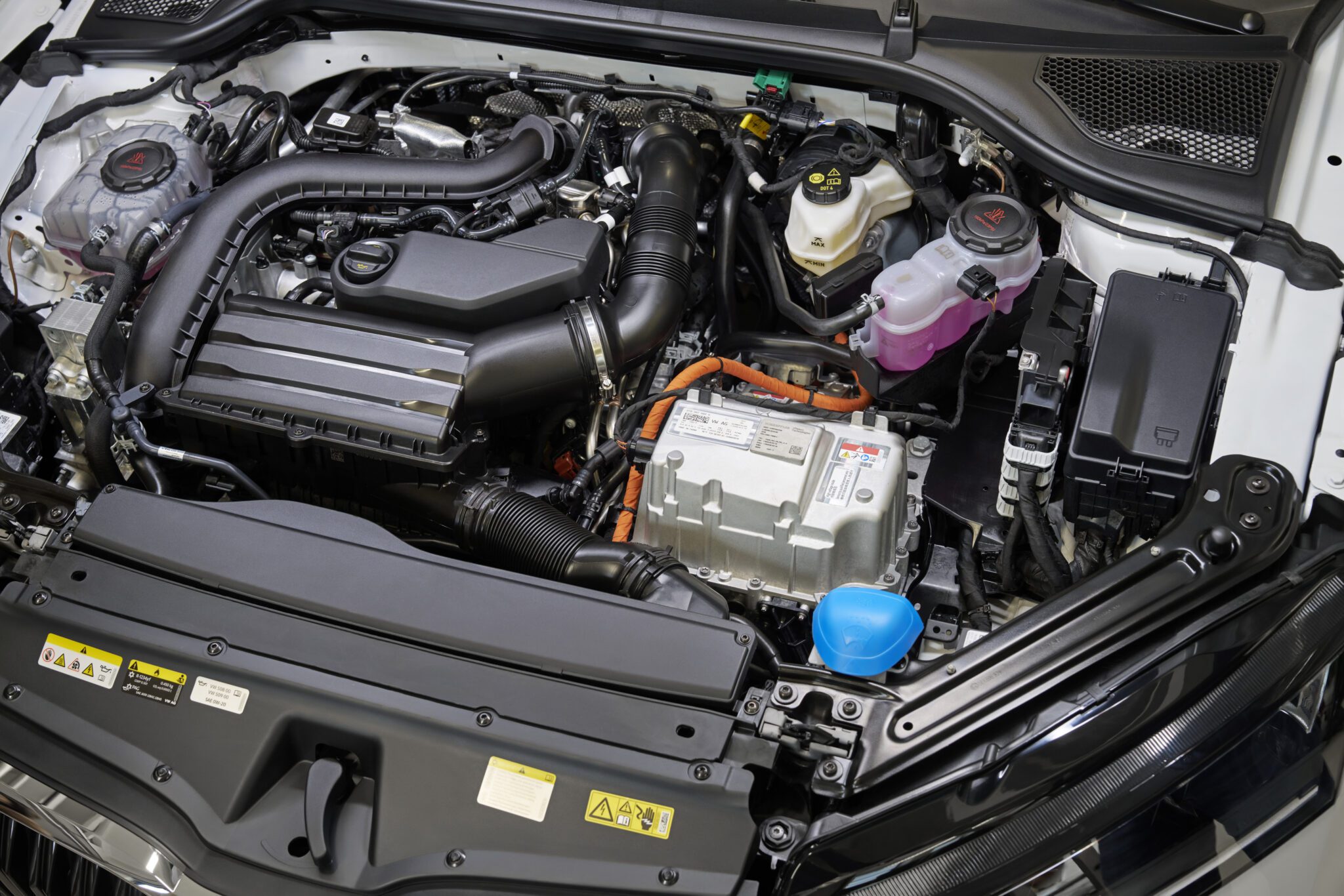
Škoda has slotted a self-charging full hybrid into its line-up for the first time, and the recipient is none other than the Octavia. The Czech brand’s staple family car will offer the new powertrain in both hatchback and estate body styles, with buyers choosing between Selection and Sportline trims. Order books open in October, and the first customer cars are expected to reach driveways in December 2026.
Two power levels are on offer, rated at 100 kW and 125 kW. Under the skin, a 1.5 TSI evo2 gasoline engine is paired with a pair of electric motors and an automatic clutch that ties the combustion unit to the front axle once speed climbs past roughly 60 km/h. Below that threshold, the engine largely acts as a generator feeding the traction motor, while a modest 1.6 kWh battery can propel the car on electricity alone for around two kilometres. The engine itself is listed at 96 kW and 110 kW, and both variants share the same motors and a 180 km/h top speed.
Packaging has been handled without much sacrifice. The traction battery is stowed beneath the rear seats, which leaves 460 litres of luggage room in the hatchback and 485 litres in the estate. Crucially, there is no charging cable involved — the battery tops itself up through the combustion engine and regenerative braking, making the Octavia a proposition for drivers who want electrified running costs without committing to a plug.
Škoda’s chief development officer, Johannes Neft, framed the move as a widening of the brand’s powertrain menu. In his words, the Octavia is the first Škoda to carry a full hybrid, built around a series-parallel layout that blends combustion power with the flexibility of electric driving. The system decides on its own which mode is most efficient for the conditions at hand, Neft added, and the traction battery is replenished on the move either by the engine or through recuperation. With two outputs available across both body styles, the set-up gives customers another technically versatile option alongside the existing combustion and battery-electric offerings.
The significance reaches beyond one model. Volkswagen Group has been slower than some rivals to put self-charging hybrids on European roads, leaving a gap between mild hybrids and plug-ins that Toyota, Renault and Hyundai have mined for years. Positioning the technology on the Octavia — among the brand’s highest-volume nameplates — signals that the group now views that middle ground as worth contesting.
The engineering direction is also telling. A series-parallel system with a single fixed gear echoes layouts such as Honda’s e:HEV and BYD’s DM-i, hinting that manufacturers are converging on simpler architectures in which the electric motor takes the lead at low speeds. And with pump prices still high across much of Europe and many households unable to charge at home, a hybrid that never needs an external socket may prove an easier sell to motorists edging away from pure combustion but not yet ready to go fully electric.
What do you think?