
IIHS Debuts Commercial Vehicle Crash Ratings: Vans and Heavy Pickups Fall Behind
The Insurance Institute for Highway Safety (IIHS) has published its first-ever crash avoidance ratings specifically for commercial vehicles, and the initial results expose a significant safety gap between everyday passenger cars and the heavy-duty pickups and cargo vans that share US roads. While modern passenger vehicles have faced increasingly stringent federal mandates and independent testing for years, many commercial models have operated under a lighter regulatory framework, making these new ratings a critical new benchmark for fleet operators and manufacturers alike.
According to the IIHS findings, the Mercedes-Benz Sprinter 2500 was the only vehicle in the group to earn a “good” rating for front crash prevention when avoiding other vehicles. In the pedestrian protection category, the Chevrolet BrightDrop 400 and the Rivian RCV-Delivery 500 set the pace, demonstrating that electric commercial platforms can integrate advanced sensor suites effectively. Conversely, the Chevrolet Express 2500 and GMC Savana 2500 received “poor” ratings across both tests, largely because automatic emergency braking (AEB) is not available on these models at all, leaving them without even the most basic level of modern collision mitigation.
The safety stakes are considerable. Data cited by the IIHS shows that crashes involving light vans and medium- or heavy-duty vehicles resulted in 6,215 fatalities in the US during 2024, accounting for 16% of all road deaths that year. Because many passenger car safety standards—including airbag regulations—do not currently apply to these heavier commercial vehicles, the IIHS ratings fill a crucial informational void. “These results are a wake-up call for commercial vehicle makers,” said David Harkey, President of the IIHS. “Front crash prevention is especially important for these larger, heavier vans and trucks because of the danger they pose to other road users.”
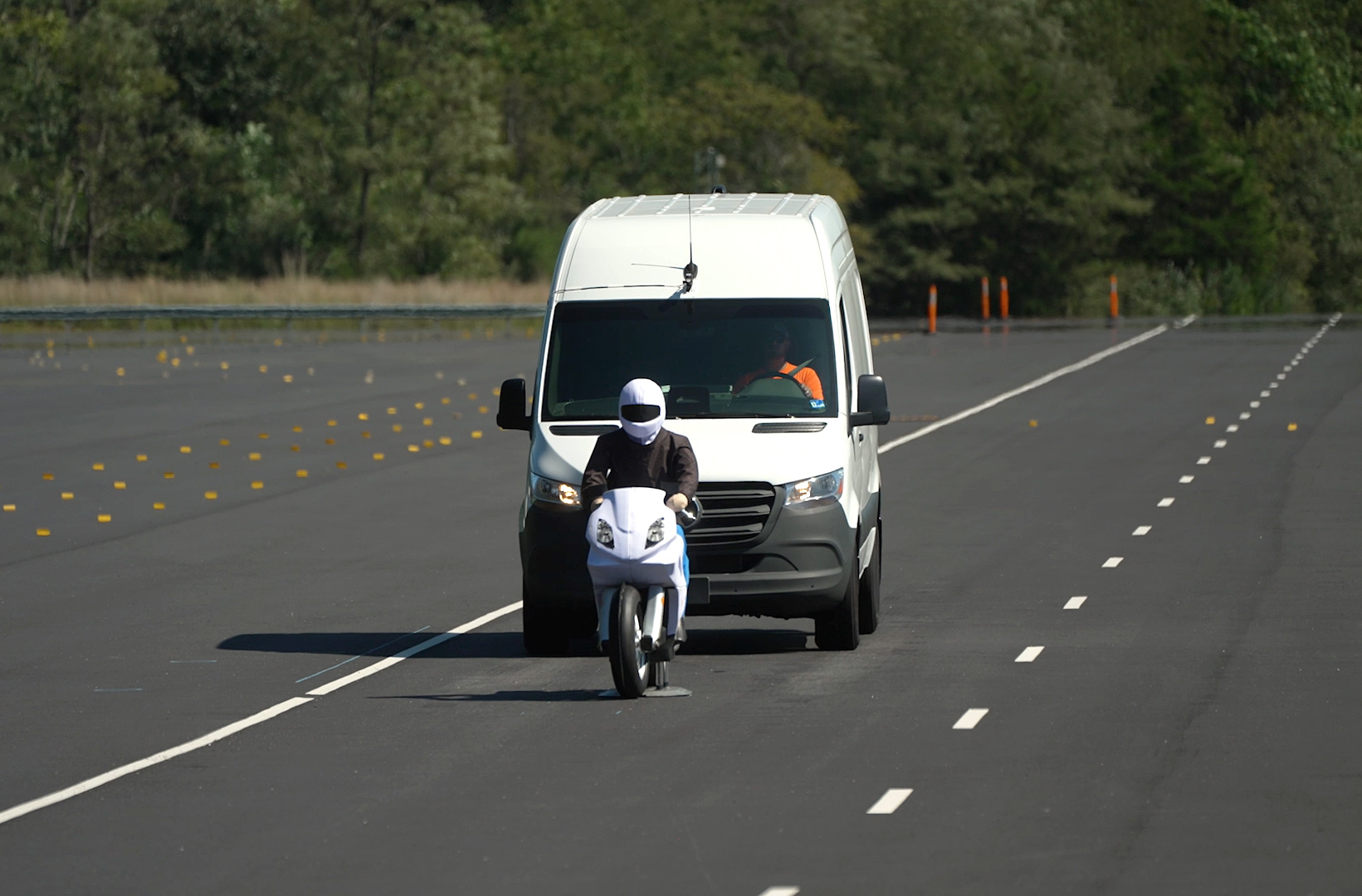
The testing also revealed specific technical hurdles. Motorcycle targets proved to be the most difficult challenge, with several systems failing to provide either a warning or braking response in the majority of trials. Other systems managed to brake effectively but were penalized for issuing alerts too late to be useful. In pedestrian detection scenarios, the news was slightly better overall, yet even the “acceptable”-rated Ford F-350 and Ram 3500 struggled to detect a child in daylight as reliably as they detected an adult at night. The IIHS attributes this discrepancy to the tall front ends of these trucks and the placement of sensors near the rear-view mirror, which can lose track of the smaller child dummy at close range.
For fleet buyers, these independent ratings add a new layer of due diligence beyond sticker price and payload capacity. With federal rules for commercial vehicles remaining weaker than those for passenger cars, the IIHS scores are likely to become a key differentiator in procurement decisions, pushing automakers to reconsider how they equip their heavier lineups.
What do you think?