
Honda's 1982 Motocompo: The Foldable Scooter Designed to Live in a Trunk
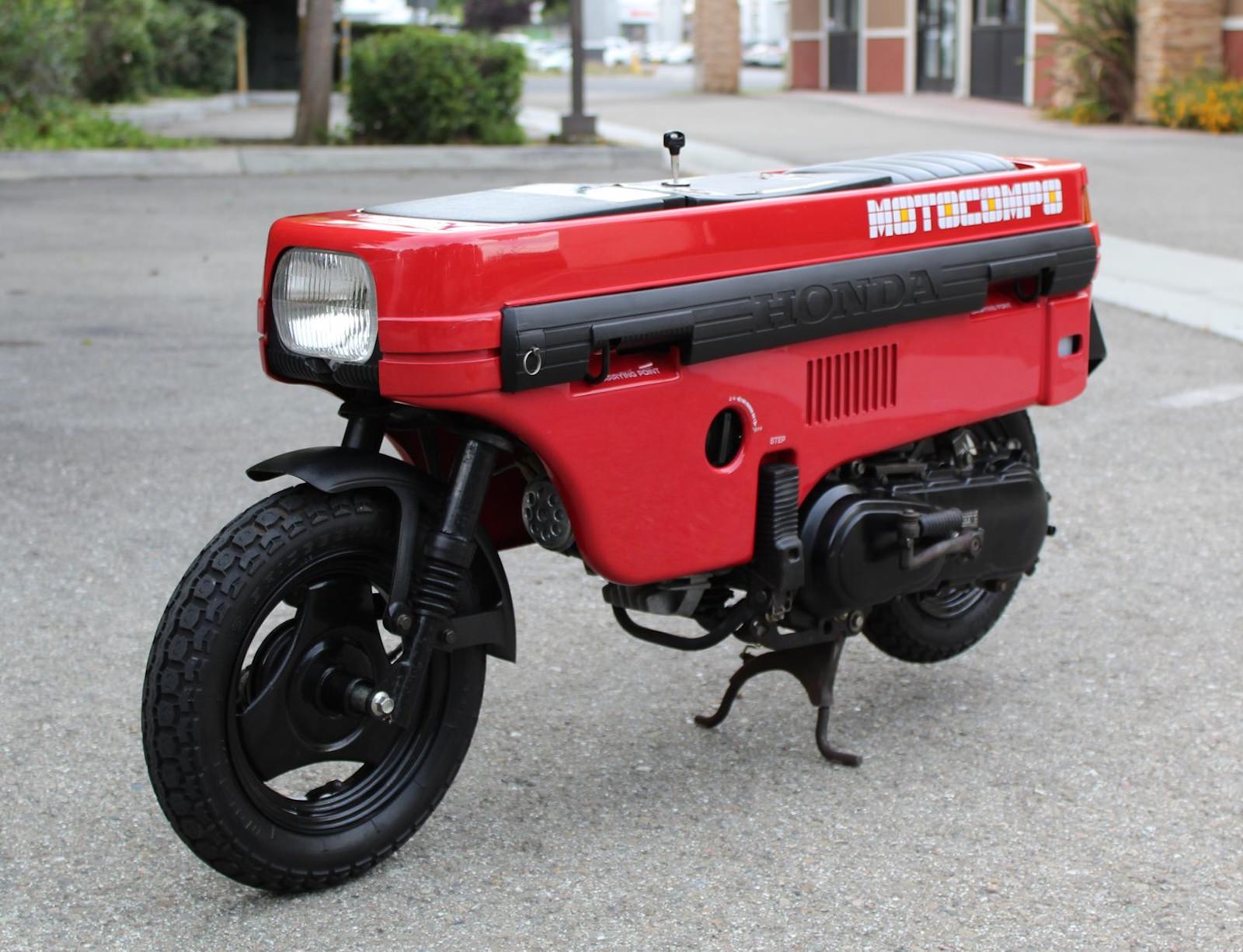
Long before electric kick scooters cluttered city sidewalks, Honda had a stranger idea: a petrol-powered two-wheeler that collapsed into a tidy bundle and disappeared into the boot of a subcompact car. The 1982 Motocompo is that machine — a tiny, quirky footnote in Honda’s history that somehow became a design icon.
The pitch was pure last-mile logic. Japanese commuters would drive to the edge of town, park, then unfold the scooter for the final stretch to the office. Fewer cars downtown, less congestion, shorter walks. Honda’s engineers were convinced it would work.
It didn’t. Buyers shrugged, and dealers sat on stock. But the Motocompo still found 53,369 owners between 1981 and 1983 — a commercial flop against projections of up to 10,000 units a month, yet enough to keep the little Honda alive in the collective memory of gearheads ever since.
Where the Idea Came From
The folding-scooter concept wasn’t born in Tokyo. During the Second World War, British engineers at the secretive Station IX developed the Welbike — a collapsible motorcycle small enough to fit inside a standard parachute container dropped to airborne troops. More than 3,000 were built.
Station IX, based at a country house called The Frythe outside London, is often cited as one of the inspirations for Ian Fleming’s Q Branch. Fleming, of course, was the man behind James Bond and his gadget-laden Aston Martins. Honda’s designers took that wartime pragmatism and gave it a coat of 1980s Japanese flair. To sell it, Honda even enlisted British ska band Madness, who turned up in TV spots, print campaigns and the official spec sheets.
Small Wheels, Smaller Packaging
Mechanically, the Motocompo is refreshingly simple. A 49cc air-cooled two-stroke single sits beneath the fiberglass bodywork, rated at 2.5 bhp and 2.75 lb ft of torque, mated to a single-speed transmission with an automatic clutch. There’s oil injection, a kickstarter, a manual choke and a 0.58-gallon tank built into the frame.
Key Specs: 49cc air-cooled two-stroke single · 2.5 bhp · 2.75 lb ft torque · 45 kg (99 lbs) curb weight · 8-inch steel wheels · 50 km/h speedometer
Folding the seat and bars flat creates a squared-off package that slides into the trunk of a car like the Honda City or Today. At 45 kg it was light for a scooter, though hauling it around single-handedly was still a chore — possibly one more reason buyers stayed away.
Running gear is period-typical: drum brakes front and rear, a telescopic fork up front, a monoshock at the back, and black 8-inch steel wheels. Road-legal kit included lights, indicators, a horn and a fuel gauge.
The One Up For Grabs
The example here is a 1982 model finished in Caribbean Red with white and yellow graphics, black rubber side strips and a black vinyl seat. It was purchased in Japan in 2025 and imported to the US, with carburetor servicing, a new battery and a fresh spark plug carried out before it left.
Because the factory never fitted an odometer, total mileage is unknown. The bike is now offered for sale out of Los Gatos, California, with no reserve and a bill of sale.
And the little Honda’s afterlife? It refuses to die. Honda has nodded to it repeatedly with concepts including the electric e-Dax and e-NSR, plus the 2011 Motor Compo. Nearly 45 years on, the foldable scooter that nobody bought is the one everyone remembers.
Photo: Honda / Silodrome · Official Press Kit / Editorial (Editorial / Press Kit)
Source: Silodrome
What do you think?