
H.Essers Adds 20 Electric Trucks from MAN and Mercedes-Benz to Belgian Fleet
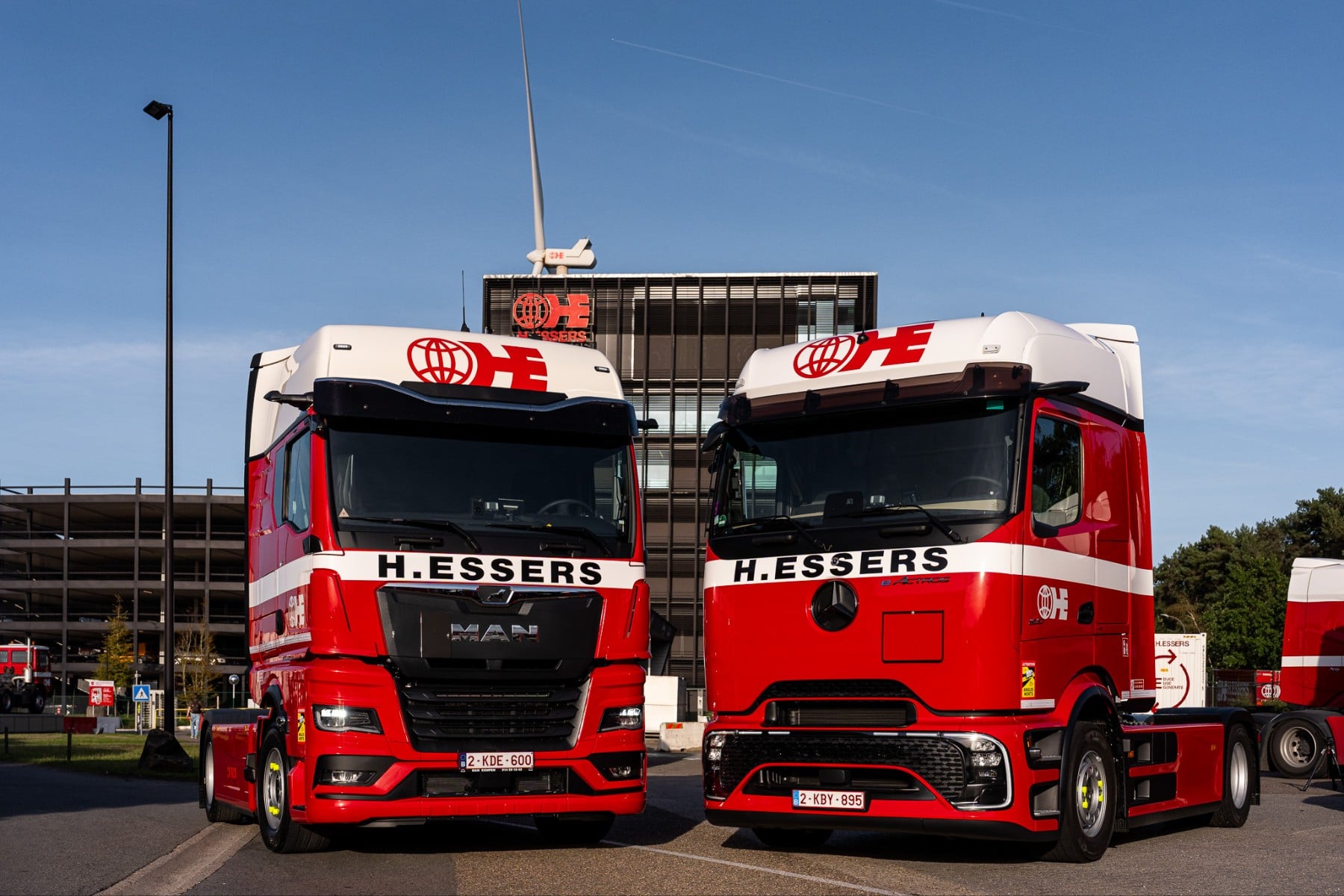
Belgian logistics operator H.Essers has taken delivery of 20 battery-electric trucks, split evenly between MAN and Mercedes-Benz Trucks. The vehicles, supplied from Germany, will mostly serve routes out of the company’s home base in Genk and its other Belgian depots. With this batch in service, the carrier now runs 31 electric trucks in total.
The order follows a year-long trial in which six electric trucks from three different manufacturers were put through daily operations. That hands-on experience gave H.Essers a clearer view of both the practical benefits and the operational hurdles of battery-powered haulage, and management says the lessons learned directly shaped the decision to scale up. Range differs by brand: the Mercedes-Benz units are quoted at 525 to 575 kilometres, while the MAN trucks cover 400 to 450 kilometres. Both rely on DC fast charging, which can top them up in roughly 90 minutes under favourable conditions.
Emission goals sit at the centre of the strategy. H.Essers wants to cut greenhouse gas output from its own transport fleet by 42 per cent by 2030, a target it plans to reach through a mix of operational efficiency, synchromodal transport, renewable energy and alternative fuels. Electrification carries much of that load: the ambition is for roughly 15 per cent of the fleet — around 200 vehicles — to be electric by the end of the decade. Based on figures from early 2025, the company operated about 1,420 trucks at the time, so the current 31-unit electric count remains a small but growing slice.
Charging capacity is expanding in parallel. H.Essers is raising installed charging power at its Genk and Bergen op Zoom sites to 2.7 MW, and is also investing in electrifying forklifts, passenger cars, and the heating and cooling systems of its office and warehouse buildings. A company-wide energy ecosystem called Synchro Grid has been introduced to coordinate generation, consumption and storage across locations, with the longer-term goal of turning individual sites into flexible energy hubs.
COO Transport Christopher Van den Daele framed the investment as the start of a new growth phase. While the electric fleet currently operates mainly from Belgium and the Netherlands, the company is now studying how to scale the approach into other countries and business segments, with operational data from the existing trucks expected to guide that expansion.
What do you think?