
Germany's Record-Setting Wind Turbine Tops Out at 1,197 Feet
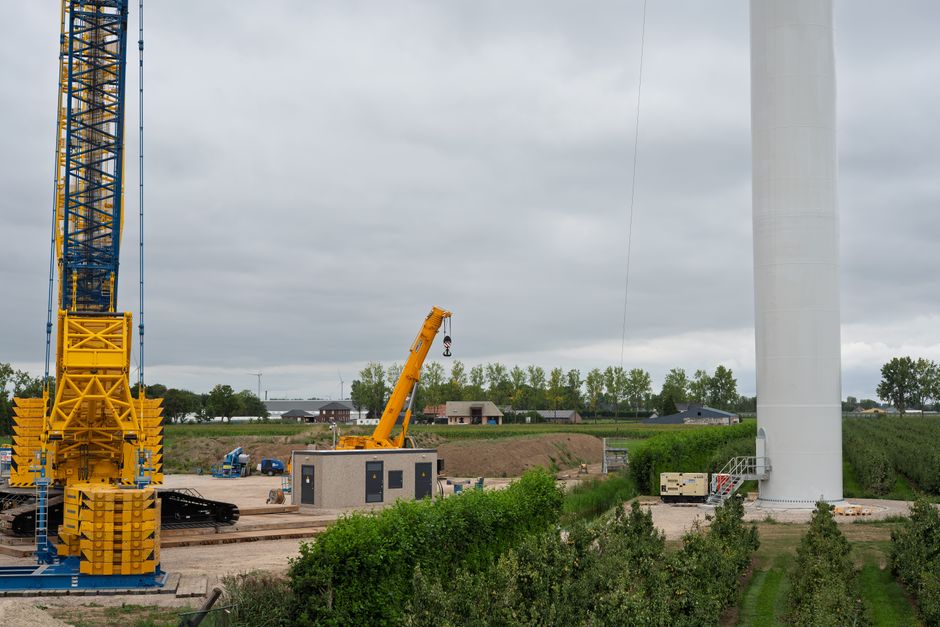
A pilot wind turbine in eastern Germany has officially hit its full height, and its designers believe the extreme altitude will translate into far more electricity than a standard machine of the same rotor size could ever manage. The unit, developed by GICON and located in Schipkau, now measures 365 meters (1,197 feet) from the ground to the tip of its blades, making it the tallest wind turbine anywhere in the world.
To put that in perspective, only Berlin’s TV tower rises higher among German structures. The rotor hub alone sits 300 meters (984 feet) above the ground. The logic behind the design is simple: winds get stronger and steadier the higher you go, so a taller turbine spends more of its time spinning and producing power. GICON estimates that its configuration can generate roughly double the energy over time compared with a conventional turbine sharing the same rotor diameter — a distinction about energy output, not rated capacity.
The current machine carries a rated capacity of 3.8 megawatts, but GICON is already planning successors that would push past 7 MW. Because reaching those heights with a single crane isn’t practical, the company turned to a telescoping tower instead. An inner structure was lifted upward through an outer lattice framework using a specialized hoisting system, then locked into place once fully extended. “365 meters – this is an overwhelming moment for our entire team,” said GICON founder and CEO Jochen Großmann, describing the project as a globally unique installation in Schipkau.
The turbine was built for SPRIND, Germany’s Federal Agency for Disruptive Innovation. Commissioning is scheduled for November, with some finishing work still outstanding. Beyond this single prototype, GICON and SPRIND see a larger opportunity: stacking these high-altitude turbines as a “second tier” above the rotors of existing wind farms. Their preliminary assessment suggests Germany’s current wind farm footprint could potentially host as many as 4,000 of these taller machines, boosting generation without opening new land to development. That figure is an estimate of what might be feasible rather than a confirmed build plan.
For now, the Schipkau turbine remains a pilot, and its projected yield has yet to be proven in real operation. GICON and SPRIND are preparing to scale the concept and are in talks with wind energy companies about commercialization, aiming to move toward series production as quickly as possible. The next milestone is straightforward: switch it on and measure what it actually produces.
What do you think?