
From Six-Cylinder Commuter to 440 Muscle: A 1970 Dodge Challenger Project
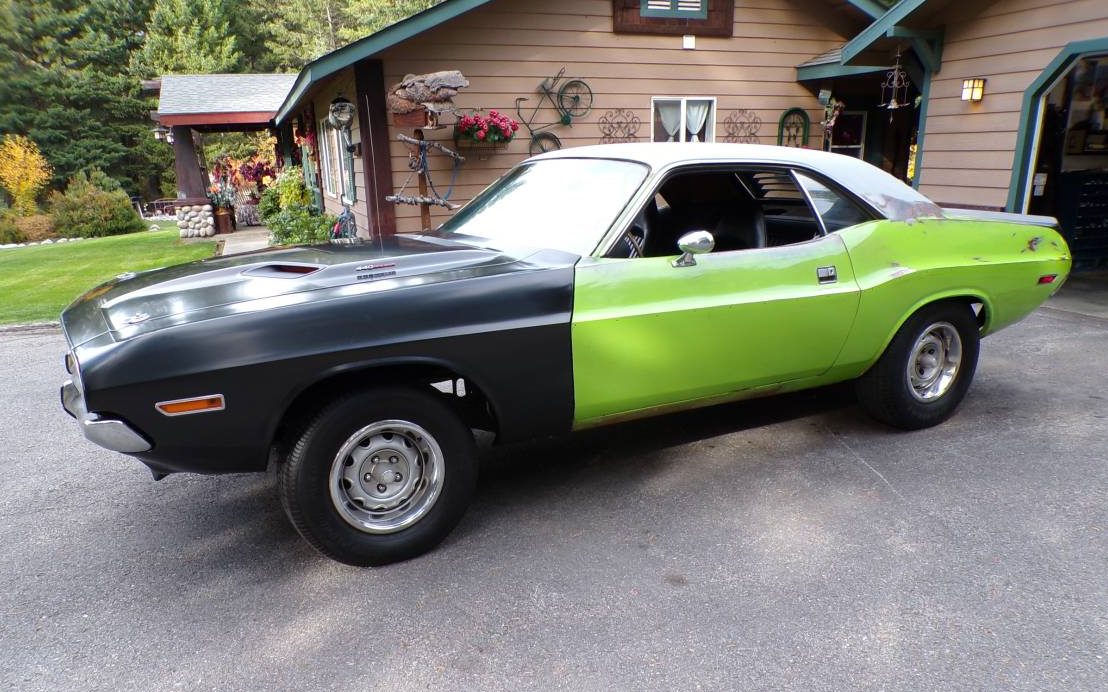
Few American muscle cars carry as much cinematic weight as the 1970 Dodge Challenger, largely thanks to its starring role in the cult 1971 road film Vanishing Point. For enthusiasts who have dreamed of building their own version of that white-knuckle cross-country chase car, a project example has surfaced for sale in Hayden, Indiana, listed at $25,000 with a clean Idaho title.
Introduced for 1969 as Dodge’s E-body answer to the Ford Mustang and Pontiac Firebird, the Challenger stood out for the sheer breadth of its options list. Buyers could order anything from a frugal inline-six to Chrysler’s fearsome 426 Hemi. This particular car originally left the factory with the smallest choice available: a 225 cubic-inch slant-six rated at just 145 horsepower. The seller has since removed that engine and is instead including a date-correct, factory four-barrel 440 V8, along with a 727 automatic transmission. Both are described as turning freely, though the listing notes that each will need a rebuild — a detail that should be weighed against the asking price. Notably, no photographs of the 440 or the transmission accompany the ad, something a serious buyer would want to request before committing.
Structurally, the Challenger has clearly spent time exposed to the elements, and rust damage prompted a partial restoration effort. The seller reports replacing all the front-end sheetmetal, including the hood, fitting a new full trunk pan, reupholstering the front buckets and rear bench, and installing fresh door panels front and rear. Much of the original Sublime green paint — factory code FJ5 — is said to remain, and the original floor pans still carry their factory finish. A V8 K-member with new torsion and sway bars is also included, a necessary piece for anyone completing the engine swap.
For a mechanically capable Mopar fan, this looks like a substantial winter project: plenty of work remains, but most of the hard-to-source components appear to come with the car. Context matters here — a fully restored, genuine R/T 440 Magnum example can command figures approaching $100,000 at auction, which puts this builder in a very different pricing tier. Whether that gap justifies the investment depends on how firm the seller is on the number, and on how much of the reassembly a buyer can handle personally.
What do you think?