
Fraunhofer: Shared Charging Could Make Electric Truck Fleets Cheaper
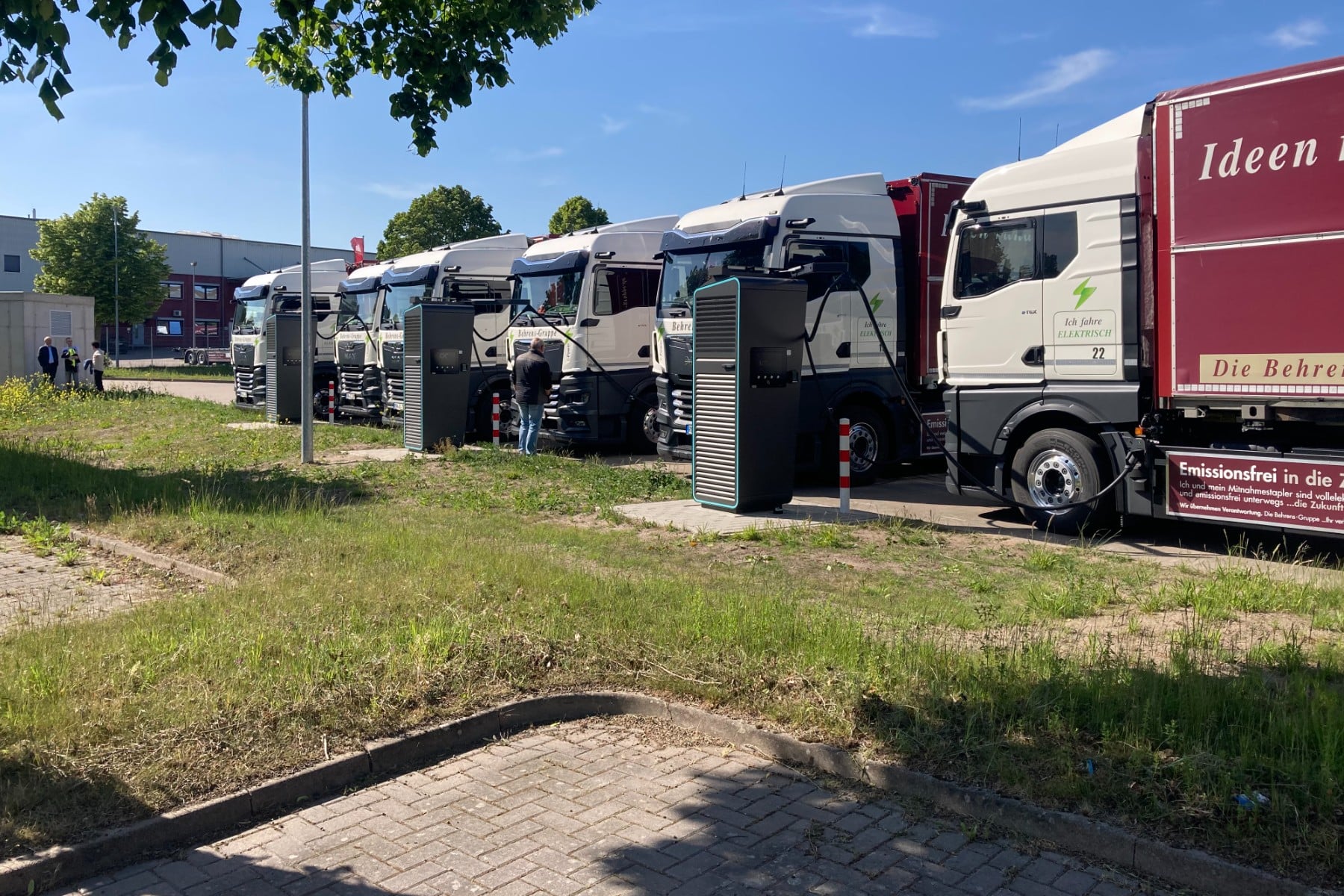
A three-year German research initiative has concluded that letting outside companies tap into a logistics depot’s chargers can meaningfully improve the business case for battery-electric freight vehicles. The ‘Transportation in Charge’ (TiC) project, led by Fraunhofer IFAM and backed by the Federal Ministry for Economic Affairs and Climate Action, wrapped up after tracking the earliest wave of heavy-duty electric trucks built in Germany.
When the project began in April 2023, the market looked nothing like it does today. Neither the Mercedes-Benz eActros 600 nor the MAN eTGX had reached customers, and no German manufacturer was producing a long-haul battery-electric truck. With roughly 600 kWh of battery capacity per vehicle, there was hardly any demand for truck-specific charging hardware. Over the following years, the researchers accompanied the ramp-up of both the vehicles and the infrastructure, working alongside practical partners such as the Behrens Group and Rhenus Home Delivery.
The core argument is that industrial estates and freight hubs are the natural engine room for electrifying road freight. These sites already house logistics depots, distribution centres and production plants, so installing chargers there lets electric trucks top up overnight or during loading and unloading rather than depending on public networks. The catch is the grid: without a medium-voltage connection, ultra-fast charging generally only works with dedicated solar generation and battery storage on site. The project’s final recommendations therefore put grid operators at the centre, noting that fleet electrification can only scale if commercial and logistics areas have sufficient connection capacity. As project lead Sönke Stührmann puts it, large truck fleets will only go electric if industrial estates are treated as a whole system, with companies, grid operators and municipalities coordinating early.
The team also stresses that no single charging blueprint fits every operator. Power needs should follow vehicle usage and idle time: overnight depot charging often calls for 50 to 100 kW, while tightly scheduled shuttle duty can require 200 to 350 kW. In the cases studied, medium-voltage connections and flexibly expandable DC chargers proved necessary. Beyond hardware, the project examined how to spread the hefty capital costs of grid upgrades and charging equipment across several parties, and shared charging emerged as a decisive lever — one that depends on clear legal rules, transparent roles and trust between participants.
The financial modelling shows the effect. For a fleet of ten e-trucks held for five years and driven 60,000 km annually per vehicle, total costs come to about €352,859, against €367,974 for diesel. Once revenue from selling charging electricity to third parties is factored in, that figure falls to €336,903, pulling the break-even point forward. Fraunhofer IFAM adds that a charging price of roughly 30 cents/kWh is generally enough to match diesel costs even without sharing. Its verdict from real operational data: electric trucks are reliable today and can pay off, provided charging infrastructure, energy management and fleet strategy are planned together.
What do you think?