
Fraunhofer Opens New Battery and Hydrogen Research Center in Braunschweig
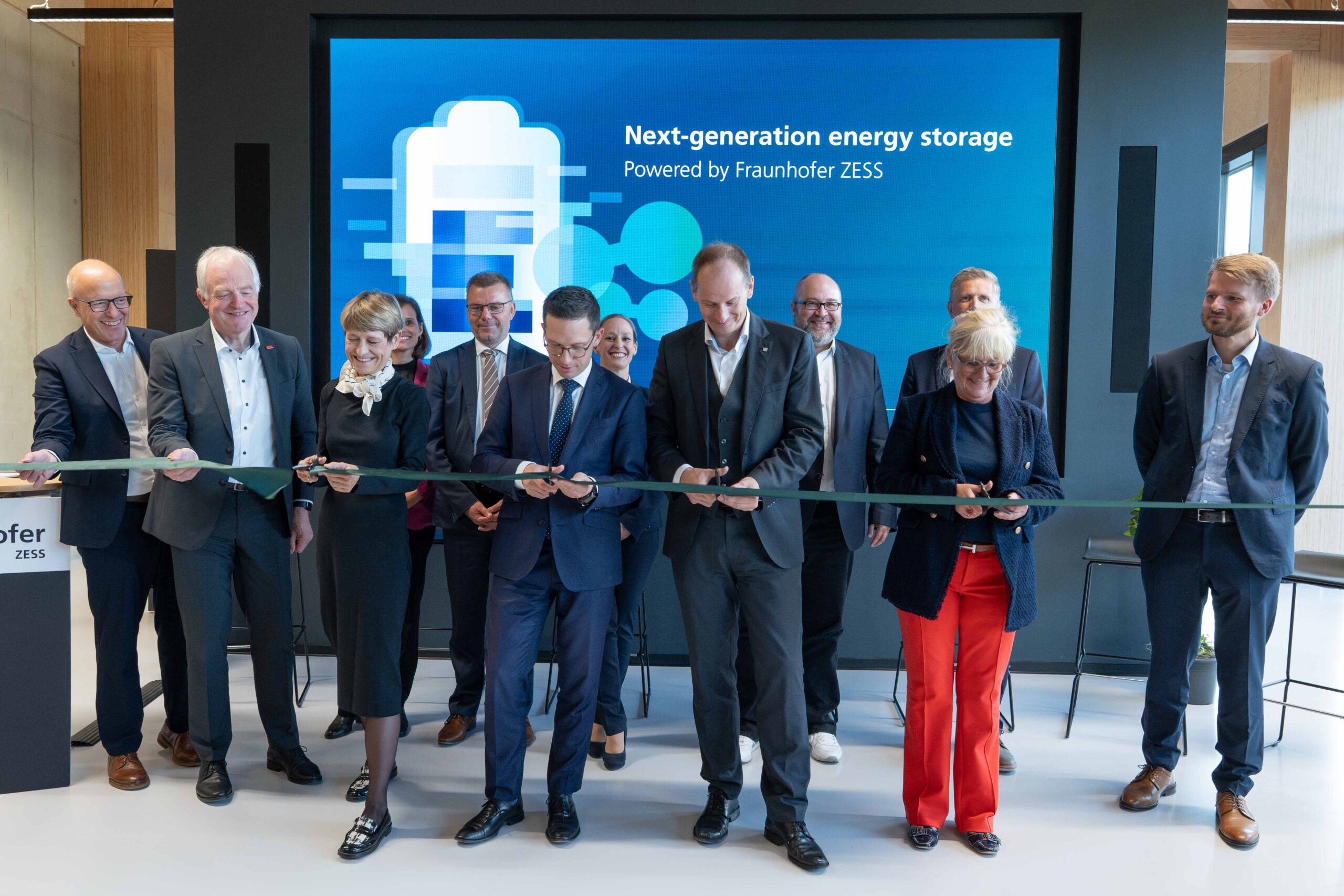
The Fraunhofer Society has inaugurated a new research building for its Center for Energy Storage and Systems (ZESS) in Braunschweig, marking a significant expansion of Germany’s applied research capacity in energy storage. The opening took place on October 5, 2026, following an investment of roughly 49.85 million euros shared between the federal government and the state of Lower Saxony. The facility offers around 3,300 square meters of total space, including approximately 1,750 square meters of laboratory area and a 450-square-meter dry room, a critical asset for handling moisture-sensitive battery materials.
The research agenda at ZESS centers on solid-state batteries and hydrogen technologies intended for industrial deployment. Work on solid-state cells spans the full process chain, from novel material development through production methods and on to industrial scale-up. Sustainability and circular economy principles are embedded in the research approach rather than treated as an afterthought, with the stated aim of producing battery technologies that are both safe and environmentally sound. The dry room infrastructure is particularly relevant here, since next-generation cell chemistries demand tightly controlled manufacturing environments.
Three Fraunhofer institutes are pooling their expertise in the new building: the Institute for Surface Engineering and Thin Films (IST), the Institute for Manufacturing Technology and Advanced Materials (IFAM), and the Institute for Ceramic Technologies and Systems (IKTS). Their combined competencies are complemented by partnerships with industry and with the Technical University of Braunschweig. The university’s Battery LabFactory and its research center focused on circular production of next-generation batteries and fuel cells extend the surrounding research ecosystem, creating a cluster that links academic science with applied engineering.
Beyond battery development, ZESS also pursues hydrogen technologies, with materials and production processes being refined for industrial use under both economic and ecological criteria. The new infrastructure is designed to accelerate technology transfer, helping laboratory breakthroughs reach commercial applications more quickly. For Germany’s energy storage sector, the opening signals a continued public commitment to domestic research capacity at a time when global competition in battery and hydrogen technology is intensifying.
What do you think?