
FORVIA HELLA's iConF Platform Reinvents the Humble Fuse for Zonal Vehicle Architecture
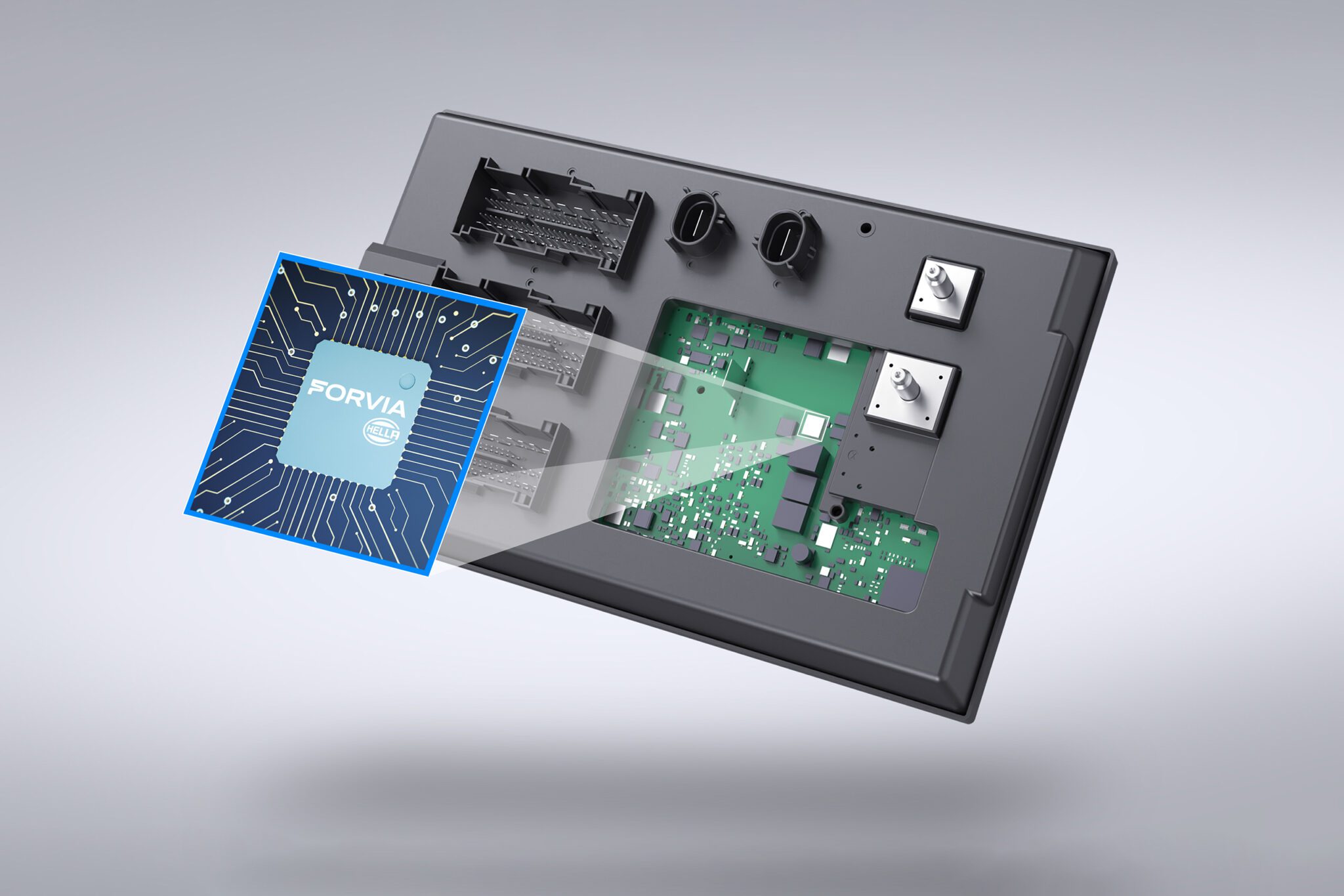
For roughly a century, circuit protection in cars has followed the same basic logic: too much current flows, the fuse element melts, and the circuit is cut. FORVIA HELLA argues that this passive, one-way relationship with the electrical system is no longer adequate for vehicles that are increasingly defined by software. Through its iConF platform, the supplier is replacing the conventional fuse with a semiconductor-based electronic fuse capable of monitoring, switching, protecting and reporting on individual electrical loads.
According to Juan Carlos Lara, who heads program management at FORVIA HELLA, the contrast with legacy hardware is stark. A traditional fuse simply sits in the circuit until it fails, he notes, whereas iConF actively observes a load, manages its behaviour and communicates diagnostic data back to the wider vehicle. That shift from a passive component to a connected, software-configurable one is the platform’s core proposition.
The timing reflects a broader architectural transition across the industry. Automakers are moving away from sprawling networks of function-specific electronic control units toward zonal designs, where electronics are grouped by physical region of the vehicle and coordinated by zone controllers and central high-performance computers. Placing intelligent power management close to each load fits naturally into that structure. FORVIA HELLA also consolidates functions that traditionally demanded separate parts — fuses for protection, relays or semiconductor drivers for switching, sensors for current measurement and a controller with its own software — into a single configurable eFuse.
The practical payoff extends to fault behaviour. In conventional layouts, a fault often forces a wider section of the electrical system offline. Because iConF tracks loads individually, it can identify the specific circuit at fault and isolate just that load while the rest of the vehicle continues operating — an attribute the supplier sees as foundational for fail-operational architectures covering steering, braking and central vehicle control. The company also cites a potential 25% cut in wiring harness weight when intelligent power distribution is paired with a zonal layout, a figure with obvious relevance for electric vehicles, where mass directly affects energy consumption and range.
Perhaps the most consequential departure from tradition is that protection thresholds, response behaviour and load-management strategies can be defined in software rather than baked into hardware. That allows one hardware platform to serve different vehicle programmes and OEM requirements without reworking the electrical architecture, and opens the door to adjusting power-management behaviour after production — a capability that sits at the heart of the software-defined vehicle concept.
What do you think?