
Ford Shelved the 'Dark Horse Boss' Name Because It Just Sounded Off
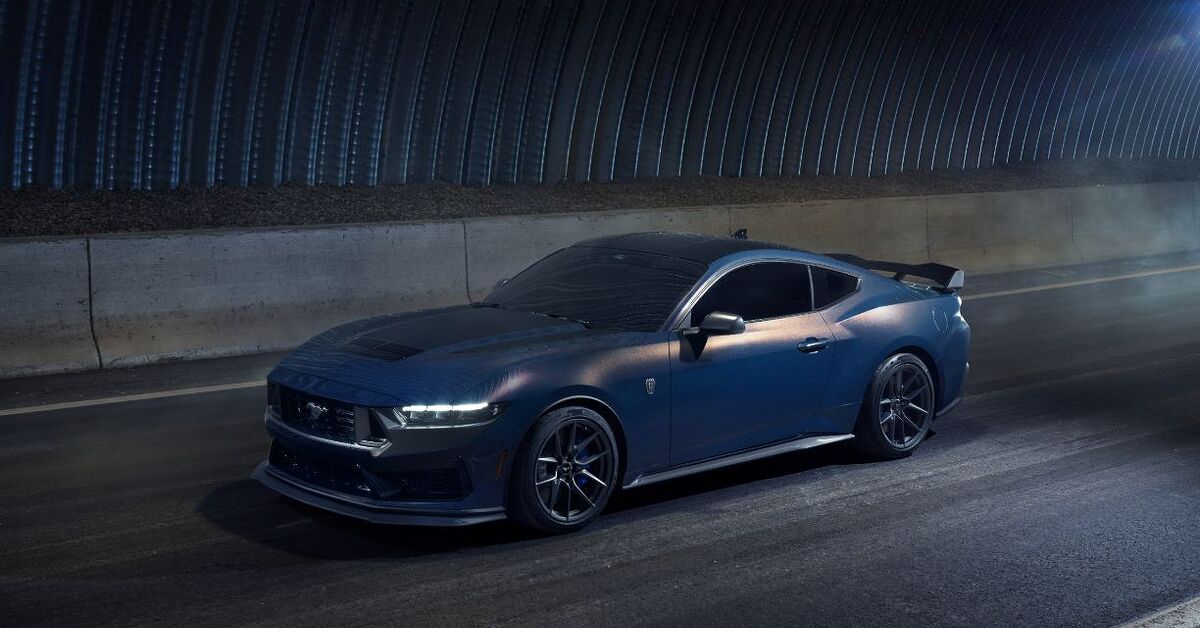
Ford flirted with a heritage-flavored nameplate for its supercharged Mustang flagship, then thought better of it. Trademark paperwork filed in both the United States and Europe back in January for “Dark Horse Boss” had pointed toward the automaker’s forthcoming top-rung pony car, but the badge never made it onto a body panel. Instead, buyers will find the model wearing Mustang Dark Horse SC, with the letters acknowledging the blown engine under the hood.
The reasoning, as reported by Ford Authority and attributed to people with knowledge of the discussions, was phonetic rather than strategic. When spoken aloud, “Horse Boss” simply landed strangely on the ear. A name that reads well on a trademark filing can fall flat in a showroom, and someone at Ford apparently said it out loud once too often.
That is a somewhat humbling finish for a word with genuine Blue Oval DNA. Boss stretches back to the late 1960s, when Ford built the Boss 302 to go Trans Am racing, followed by the Boss 429 for NASCAR, and the Boss 302 returned decades later. None of that history carried enough weight once the phrase was tested in conversation.
The call fits the posture of CEO Jim Farley, who has been explicit about his reluctance to mine the company’s back catalog for badges like Boss or Cobra. At the Detroit Auto Show in January, he framed the Mustang’s future as forward-looking rather than a nostalgia exercise. The same instinct explains why the top Mustang, GTD aside, doesn’t wear Shelby branding. A Ford spokesperson’s explanation was blunt: Shelby doesn’t race, and this is Ford Racing, so Dark Horse Racing follows naturally. Sources familiar with the decision added that Shelby also didn’t match the customer Ford is courting with the Dark Horse SC. For enthusiasts, the takeaway is that Ford’s naming decisions increasingly hinge on how a badge sits in the current lineup rather than on the weight of its history.
Speculation had swirled around the January filings because the trademark seemed ready-made for the supercharged car. Trademarks, however, are cheap insurance rather than commitments, and Ford ultimately decided the safer route was the one that described the hardware.
Source: The Truth About Cars
What do you think?