
Field-Find 1959 Chevrolet Impala Bubbletop Seeks a Restorer
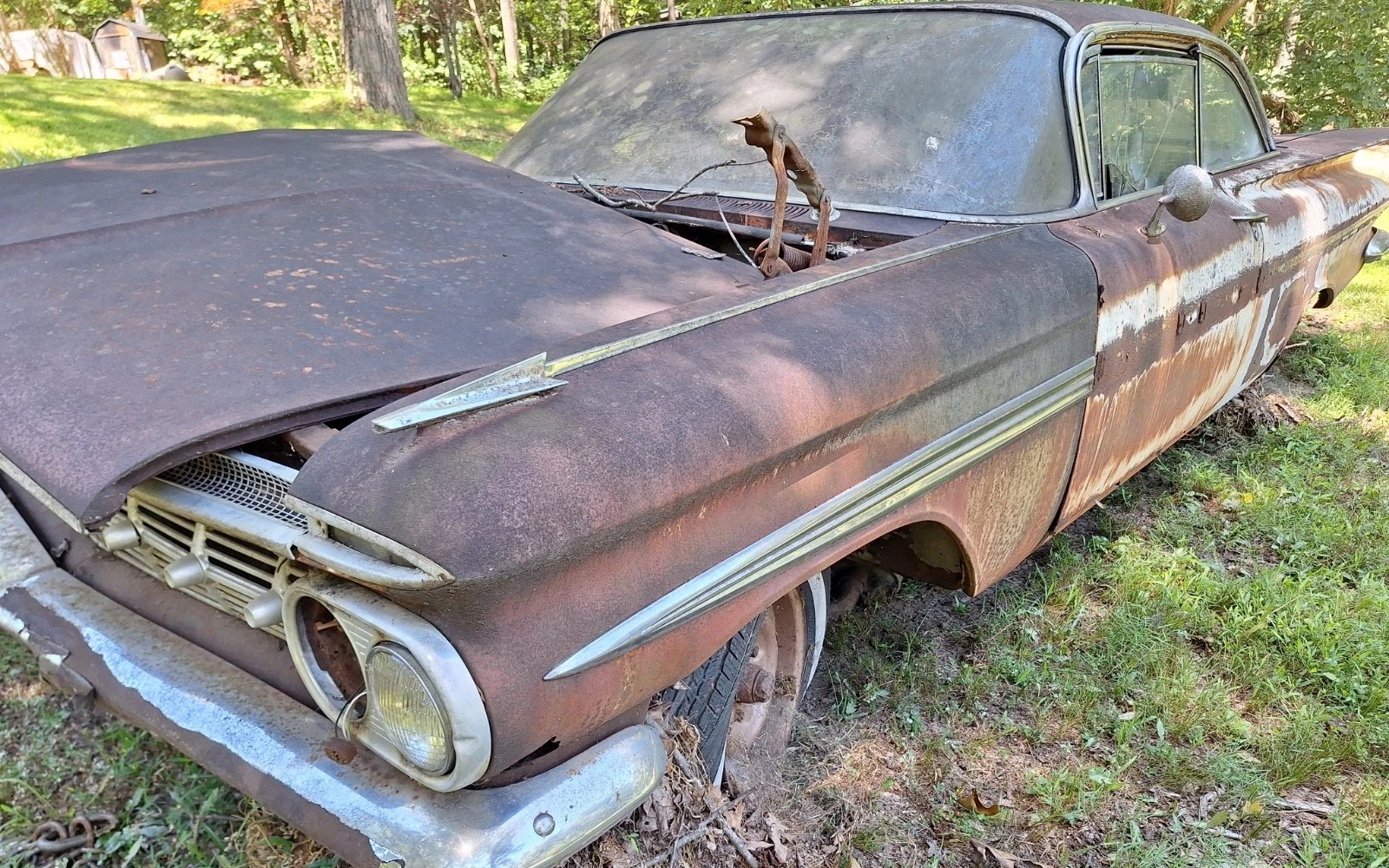
A 1959 Chevrolet Impala Sport Coupe — the rakish hardtop enthusiasts know as a “bubbletop” — has surfaced for sale out of Edinburg, Virginia, and it carries all the hallmarks of a long-neglected field car. Offered through an online listing with an asking price of $7,800 or best offer, the two-door is being pitched as either an ambitious restoration candidate or a donor for a healthier project.
The car’s backstory is essentially a blank. The listing provides no ownership history, and the Impala comes without a title, though the seller notes the VIN and cowl tags are still attached — a meaningful detail for anyone weighing a rebuild, since those tags help establish the car’s identity. Under the hood, a factory 283 cubic-inch V8 is said to remain in place, paired with a two-speed Powerglide automatic, a drivetrain combination that was commonplace in 1959 Chevrolets. No engine photos accompany the ad, a gap the seller attributes to a hood that no longer sits straight.
Buyers will have to lean heavily on their own judgment. The seller describes the frame as being in great shape for a rebuild, but the sheet metal visible in the photos looks questionable, and the absence of wide interior shots suggests the cabin is largely incomplete. In short, this is a car that demands an in-person inspection rather than a long-distance purchase on faith.
The 1959 model year was a pivotal one for Chevrolet. The division had restyled its full-size lineup for a second consecutive year, a move widely read as a response to the styling momentum Chrysler had generated with its 1957 “Forward Look” designs. There was a practical motive as well: sharing bodies with lower-priced offerings from other GM divisions helped contain costs.
Positioning shifted too. The Impala had launched in 1958 as an upscale trim within the Bel Air line, and by 1959 it stood as Chevrolet’s flagship, pushing the Bel Air down to the middle rung above the Biscayne. Generous glass area on the hardtops was a signature of the design, and the formula clearly worked — Impala sales would eventually crest one million units in a single year by the mid-1960s. For a restorer, the open question is simple: at this price, is this rough bubbletop worth saving, or does a better starting point exist elsewhere?
What do you think?