
Electric Trucks Hit Half of China's Heavy Truck Sales — and the West Is Still at 2.5%
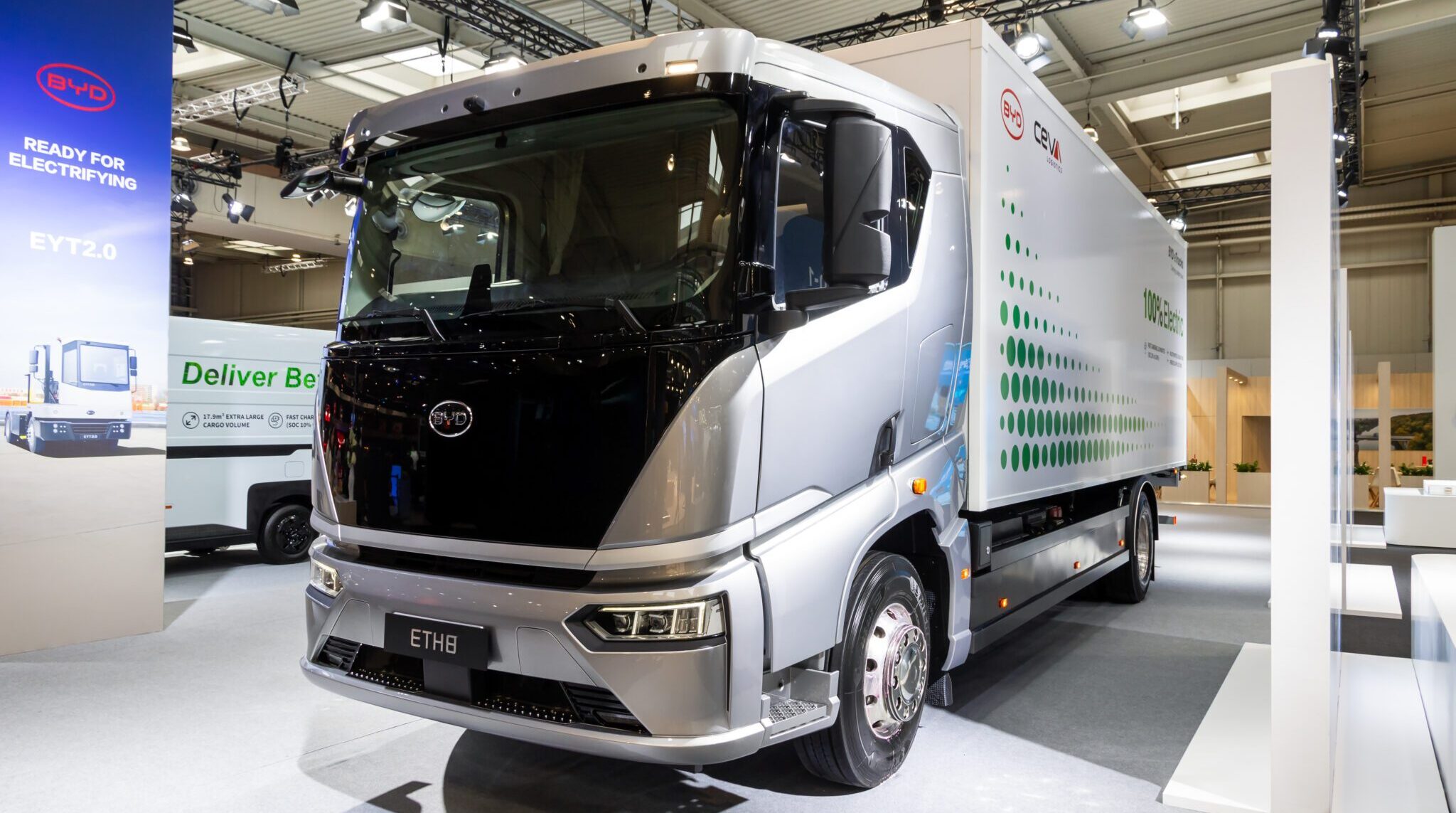
China’s heavy truck market just crossed a line that was not supposed to be reached for years. In September, battery-electric models accounted for 50.3% of heavy trucks sold, moving 33,100 units — a 37% jump compared with a year earlier — while the wider heavy truck market contracted by 21% over the same period.
That is a striking split. One slice of the market is booming while the rest of it shrinks.
And the effects are already visible well beyond the dealership. Kpler projects China’s diesel consumption will drop by roughly 230,000 barrels a day in 2026, about a tenth of current demand, as electric and LNG fleets eat into the fuel business.
Running Costs Won the Argument
The economics are the whole story here. An electric heavy truck is still a costly piece of kit — up to CN¥450,000 (about US$64,000) more than a comparable diesel rig. Trade-in subsidies of as much as CN¥140,000 (US$20,000), topped up by some city-level programmes, make the difference manageable.
But subsidies alone don’t explain the surge. Battery swapping, a technology that barely exists in Western fleets, has erased the charging-time objection: CATL’s standardised packs can be changed out in roughly five minutes. The battery giant plans 900 heavy truck swap stations by the end of this year and 2,000 by 2027, and in August it agreed to acquire close to a quarter of Qiyuan Green Power, China’s biggest swap operator.
- September EV share: 50.3% of heavy truck sales
- Units sold: 33,100, up 37% year-on-year
- Total market: down 21%
- Price gap vs diesel: up to CN¥450,000 (US$64,000)
- Subsidy support: up to CN¥140,000 (US$20,000)
Key Specs: 50.3% BEV share in September · 33,100 units · +37% YoY · 900 CATL swap stations by year end
Beijing’s Own Target Got Left in the Dust
The speed caught policymakers off guard. In June, the government set a goal of 40% new-energy heavy truck sales by 2030 — a monthly figure that has already been left behind. CATL now reckons new-energy trucks will make up half of China’s annual truck sales by 2028, no longer confined to a single strong month.
Subsidies have also shown how fragile the momentum can be. Last December buyers piled in ahead of expiring incentives and the electric share briefly touched 53.9%, then slid back to around 23% by March. The swap network is what is meant to make those numbers stick this time.
LNG, once treated as the natural bridge away from diesel, is being squeezed from both sides. Kpler figures show LNG’s share of heavy-duty registrations dropping from 37% in March to 11% in July, while electric moved from 23% to 47%. Together the two are displacing roughly 680,000 barrels of diesel a day — yet electric trucks will still be only about 8% of China’s heavy truck fleet by the end of the year.
Europe and the US Are Playing a Different Game
Outside China, the picture is stubborn. Electric models hold just 2.5% of EU heavy truck registrations and comfortably under 1% of US Class 8 sales. A few markets — Switzerland, Norway, the Netherlands and Sweden — have pushed past 10%, but they are the exception.
In the US, an electric Class 8 tractor costs about 2.4 times its diesel counterpart, federal tax credits for electrified commercial vehicles ran out in 2025, and California has set aside its zero-emission fleet rule under pressure from the Trump administration.
China’s advantage may owe as much to timing as to technology. Subsidies covered the sticker price first; swap stations then made the operating case stand on its own. Fleet operators did what they always do — bought the cheapest truck to run. Western OEMs now face a cost gap and a technology gap at the same time, and BYD is among the Chinese manufacturers preparing a European entry that could make both harder to close.
Photo: BYD / Automotive World · Official Press Kit / Editorial (Editorial / Press Kit)
Source: Automotive World
What do you think?