
Electric School Bus Coalition Backs Bipartisan Push to Extend EPA Clean School Bus Program
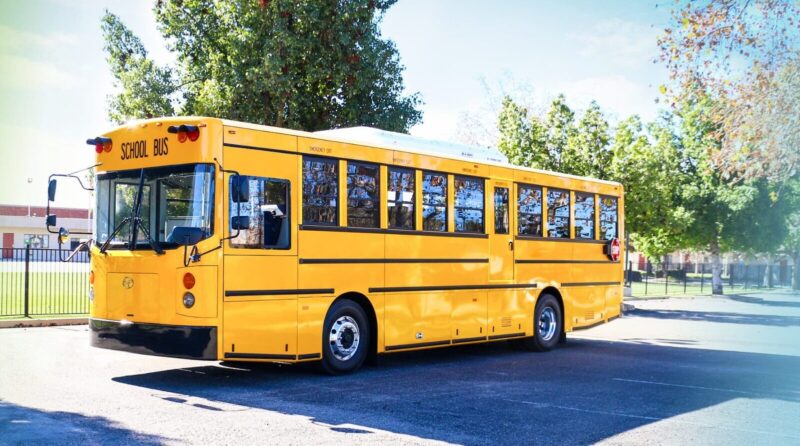
A coalition of environmental, health, and community advocacy groups is throwing its weight behind a new bipartisan effort in the U.S. House of Representatives to keep federal funding flowing for electric school buses. The Alliance for Electric School Buses (AESB) voiced its support after Representatives Jahana Hayes of Connecticut, Buddy Carter of Georgia, and Greg Landsman of Ohio introduced legislation that would renew the Environmental Protection Agency’s Clean School Bus Program for a further five years.
The program’s track record is the centerpiece of the coalition’s argument. Since its creation under the 2021 Infrastructure Investment and Jobs Act, it has directed $2.6 billion toward more than 1,100 school districts spanning 49 states, along with several Tribes and territories, financing the replacement of older diesel buses with over 8,000 low- or zero-emission vehicles. Originally funded at $5 billion over five years and set to expire at the end of Fiscal Year 2026, the program would now run through Fiscal Year 2031 under the proposed extension.
Demand has consistently outpaced available money, a signal the alliance points to as proof of the program’s appeal. School districts have submitted applications totaling more than $7.7 billion to modernize their fleets — far above what has been on offer. In response, the EPA has roughly doubled the funding available in each successive round, yet interest from districts has not cooled.
The coalition frames the issue primarily as one of student health and equity. Diesel exhaust, it notes, is linked to asthma attacks, impaired brain development, lower academic performance, and higher absenteeism — burdens that fall hardest on students in overburdened communities. Electric buses, by contrast, cut both emissions and operating costs, and their quieter, smoother ride is credited with improving behavior on board, a benefit the group says is especially noticeable for students with special needs.
The alliance also highlights vehicle-to-grid technology as an added advantage, allowing bus batteries to feed electricity back to the grid and potentially ease broader energy costs. Beyond its health and cost case, the group casts the buses as a resilience tool for schools and the communities they serve. Members of the coalition include Chispa, Earthjustice Action, the Environmental Law & Policy Center, Moms Clean Air Force, Mothers Out Front, the Sierra Club, the Southern Alliance for Clean Energy, WE ACT for Environmental Justice, and several state-level conservation leagues. The groups are now pressing Congress to act on the reauthorization so that more districts can participate.
What do you think?