
DP World Taps Oxa to Push Driverless Cargo Handling at Jebel Ali
DP World is taking autonomous logistics out of the test yard and into one of the busiest cargo hubs on the planet. The Dubai-based ports and terminals giant has signed on as the first strategic partner of Shifft, a joint venture between the Dubai Future Foundation and UK self-driving software firm Oxa.
The work starts at the Port of Jebel Ali — the largest man-made harbour in the world and the Middle East’s busiest seaport — where DP World already runs more than 900 vehicles. If the pilot holds up, the model could travel to a network of 60 ports and terminals in over 80 countries, where thousands more machines move boxes every day.
What Shifft actually brings to the quay
Jebel Ali is a dense web of movement: containers shuttling between quay cranes, yard stacks and terminal gates, often across shared roads with people and conventional trucks in the mix. Shifft’s remit covers the full stack needed to make that flow driverless — vehicle integration, safety assurance, fleet and traffic control, routing in mixed-use spaces, plus digital twin modelling and performance tuning.
Oxa is supplying what it calls a complete autonomy system, built from three parts:
- Oxa Ware: bolt-on autonomy hardware designed to slot into vehicles already in service
- Oxa Driver: the self-driving software stack
- Oxa Hub: cloud-based fleet management and orchestration
Rebecca Marsden, Oxa’s Senior Vice President of Commercial and Strategic Partnerships, framed the shift as a commercial one rather than a research exercise. “The partnership transitions autonomous logistics from experimental testing to practical, commercially viable execution,” she told Zag Daily.
The Bigger Play: First scalable commercial deployment targeted for Dubai by the end of 2027, with initial autonomous vehicles already in transit.
Why a port operator of this size matters
DP World’s reach spans six continents, and its terminals give Oxa something money struggles to buy: a live, high-throughput environment to prove the software under real cargo pressure. Ibrahim Al Najjar, Senior Vice President of Information Technology at DP World GCC, said the technology gives customers and partners supply chains that are easier to predict and more resilient.
For Dubai, the timing fits a wider plan — positioning the emirate as a global centre for industrial autonomy while pushing to double foreign trade volume by 2033. Marsden echoed that ambition, arguing the initiative sets fresh operational benchmarks for ports worldwide.
Oxa has been building toward this. Earlier this year the company closed the first $103 million tranche of its Series D round, cash earmarked for scaling its self-driving software under an ‘Industrial Mobility Automation’ strategy. A partner anchored in Gulf trade flows is a credible first showcase for it.
Questions remain. Marsden declined to share a detailed schedule for the opening phase at Jebel Ali, so it is unclear how quickly the 900-plus vehicles on site will actually run without drivers — or how many of them will be converted at all. Ports are unforgiving environments, and mixed traffic is where autonomy tends to meet its hardest edge cases.
Still, the direction is set. Shifft wants its first scalable commercial deployment live in Dubai before 2027 is out, and the first autonomous vehicles are, in Marsden’s words, already on their way.
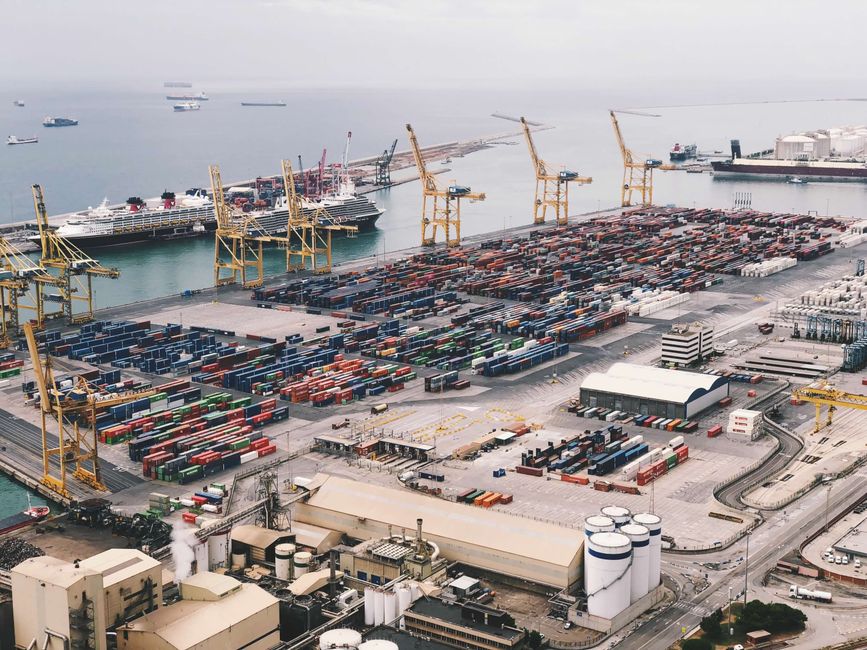
Photo: J · Pexels (Pexels License)
Source: Mikro-mobilite Sektörü (Zag Daily)
What do you think?