
Daimler Buses Pushes Battery-Electric Coach Closer to Reality With ELCH Demonstrator
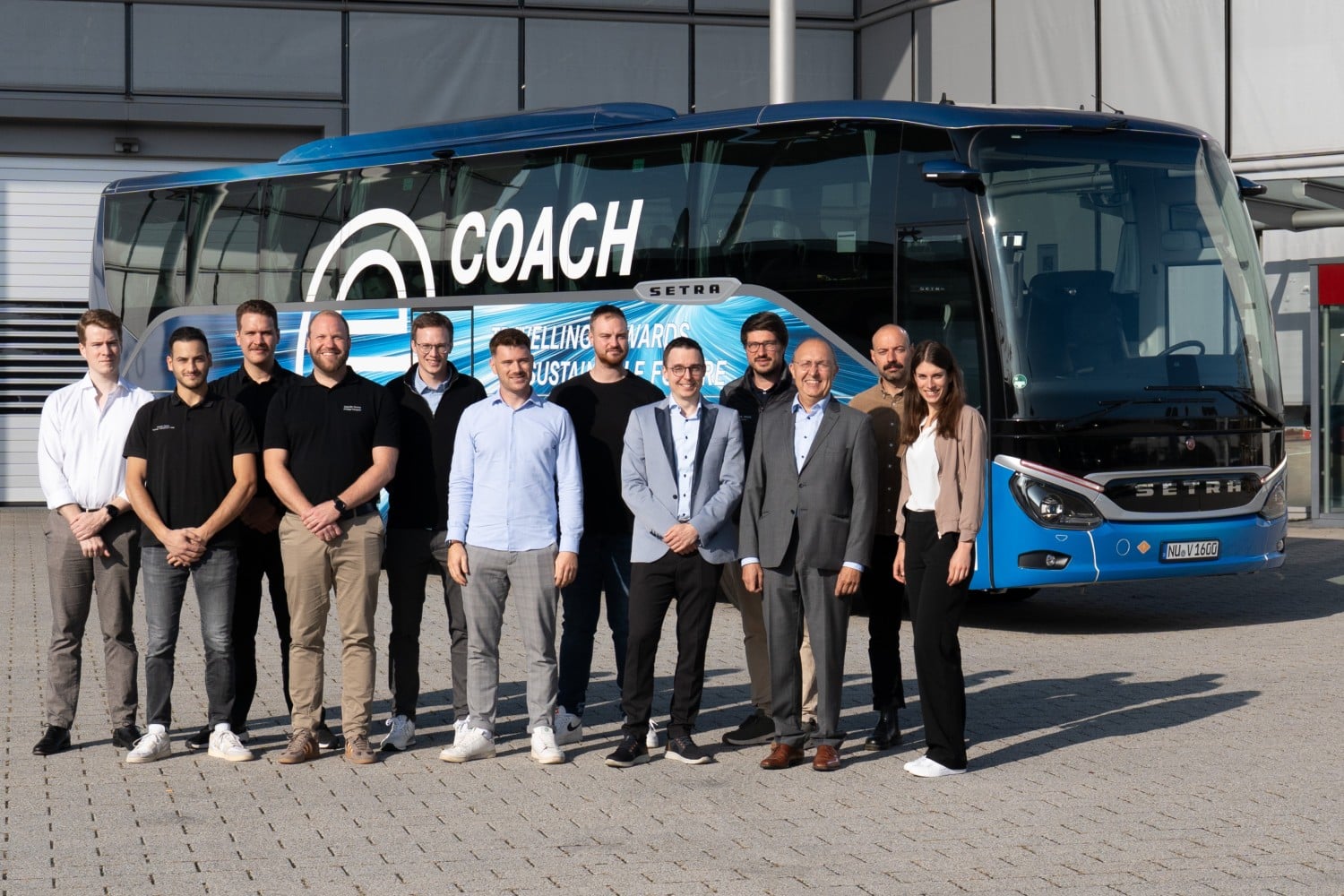
Daimler Buses and its research partners have taken a meaningful step toward putting long-distance battery-electric coaches on European roads. Meeting in the German district of Neu-Ulm, the team behind the Electrified Coach (ELCH) funding project put a jointly built technology demonstrator through a test drive that covered more than 500 kilometers on a single charge scenario. That figure matters because range anxiety has long been the central obstacle for electrifying intercity and long-haul coach travel, where vehicles can clock hundreds of kilometers in a single shift.
The ELCH initiative dates back to 2022, when Daimler Buses assembled a consortium of academic institutes and industry players to accelerate electric coach development. Since its founding, the government-backed program has centered on a modular powertrain concept, with the analogue demonstration vehicles serving as a proving ground for ideas intended for eventual series production. The latest Neu-Ulm gathering doubled as a working session, letting partners review progress so far and map out the remaining steps before the project concludes at the end of 2026.
Daimler Buses says it is looking well beyond the drivetrain itself. The company notes that its teams are also examining energy consumption, aerodynamics, lightweight construction, economic viability and day-to-day practicality for long-distance routes. Findings from these workstreams, according to the Stuttgart-based manufacturer, will form a key foundation for electrifying the coach segment across its Mercedes-Benz and Setra brands.
The consortium’s division of labor reflects that breadth. The Karlsruhe Institute of Technology’s ITIV institute handles vehicle data analysis and processing, with a focus on fine-tuning the operating strategy of an electric coach. Researchers at the Rhineland-Palatinate Technical University of Kaiserslautern-Landau, through its iMAD and SAM institutes, are investigating lightweight design and aerodynamic improvements to squeeze more efficiency and range out of each kilowatt-hour. The University of Mannheim’s MISES unit evaluates the business case, assessing how battery-electric coaches stack up economically across different use cases. Flix SE, meanwhile, supplies real operational and usage data from its long-distance bus network and helps shape realistic application and driving cycles.
For Daimler Truck, the parent group, ELCH feeds directly into the broader electrification strategy for its bus division. The stated aim is to bring battery-electric coaches to market before the end of the decade, and the company describes the project’s insights as an important basis for developing the corresponding vehicle concepts and technologies. With the demonstrator now validated under real-world conditions and the program running until late 2026, the next phase will determine how quickly that ambition translates into showroom-ready coaches.
What do you think?