
China's September NEV Retail Sales Slip 12% as Late-Month Rush Softens the Fall
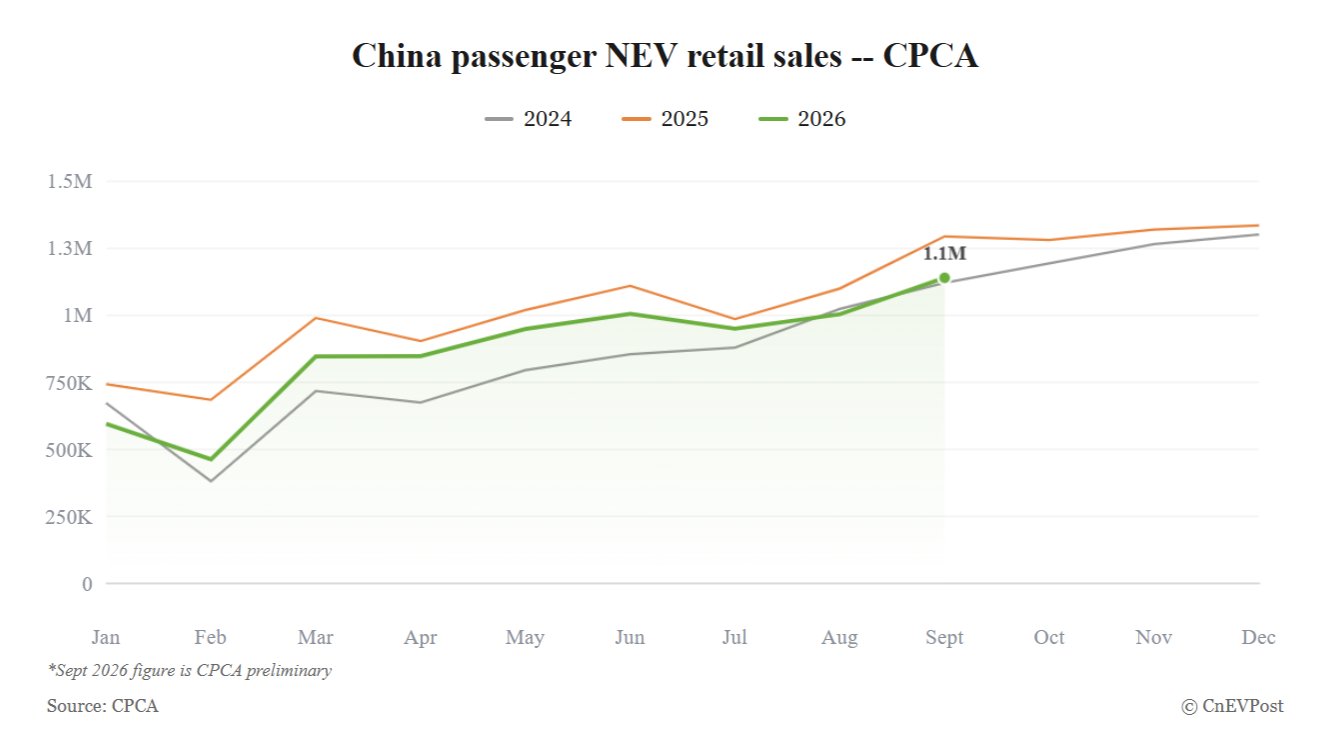
China’s passenger new energy vehicle (NEV) retail market closed September at 1.141 million units, a 12 percent drop compared with the same month a year earlier, according to preliminary figures from the China Passenger Car Association (CPCA). The month still ended higher than August, with volumes climbing 14 percent month-on-month.
The shape of the month matters as much as the headline number. Through September 27, NEV retail sales stood at 827,000 units and were running 20 percent below the prior-year level. A burst of activity in the last three days added roughly 310,000 vehicles — close to 28 percent of the entire month’s volume — and cut the year-on-year decline nearly in half. NEVs also widened their footprint, taking 67.1 percent of all passenger vehicle retail sales, up from 65.7 percent over the first 27 days of the month. For the year to date, NEV retail sales total 7.816 million units, down 12 percent.
Wholesale told a more upbeat story. Passenger NEV wholesale volumes hit 1.672 million units in September, the strongest monthly showing of 2026 and an 11 percent gain both year-on-year and versus August. Year-to-date wholesale sales reached 11.45 million units, up 9 percent, with NEVs representing 66.1 percent of passenger vehicle wholesale shipments.
The wider passenger vehicle market fared far worse. Total retail sales came to 1.702 million units, down 24 percent year-on-year, though up 10 percent from August. Year-to-date retail sales of 13.42 million units are down 21 percent. Wholesale across the market totaled 2.528 million units, down 10 percent year-on-year and up 7 percent from August. Gasoline vehicle wholesale sales plunged 41 percent, while domestic-market production of those models fell 52 percent during the first three weeks of September.
The CPCA points to a structural shift rather than a simple demand slump. September has traditionally delivered broad growth across both fuel types, but this year manufacturers are fighting over a largely static pool of buyers, with gains landing almost entirely on the NEV side. Domestic gasoline prices had risen by more than 830 yuan per metric ton by late July, weighing on purchase intent. At the same time, few NEV brands have genuine hit models, yet factories keep output steady to meet targets — keeping the NEV share artificially high. Dealers, meanwhile, are under growing strain: cheaper upstream raw materials and a widening industry push against destructive price competition have pushed profits toward suppliers, adding friction along the supply chain.
China’s global position continues to strengthen. CPCA data shows the country captured 62 percent of worldwide passenger NEV sales in the first eight months of 2026, rising to 65.3 percent across July and August. Its share of the global plug-in hybrid market hit 71 percent over those eight months and 74 percent in August alone. Chinese brands also accounted for 29 percent of overseas NEV sales in August, a sharp jump from 15.8 percent for all of 2025.
What do you think?