
Chevy Bolt EUV Tows 2,000 Pounds Without a Tow Rating, Then a Desert Storm Changes Everything
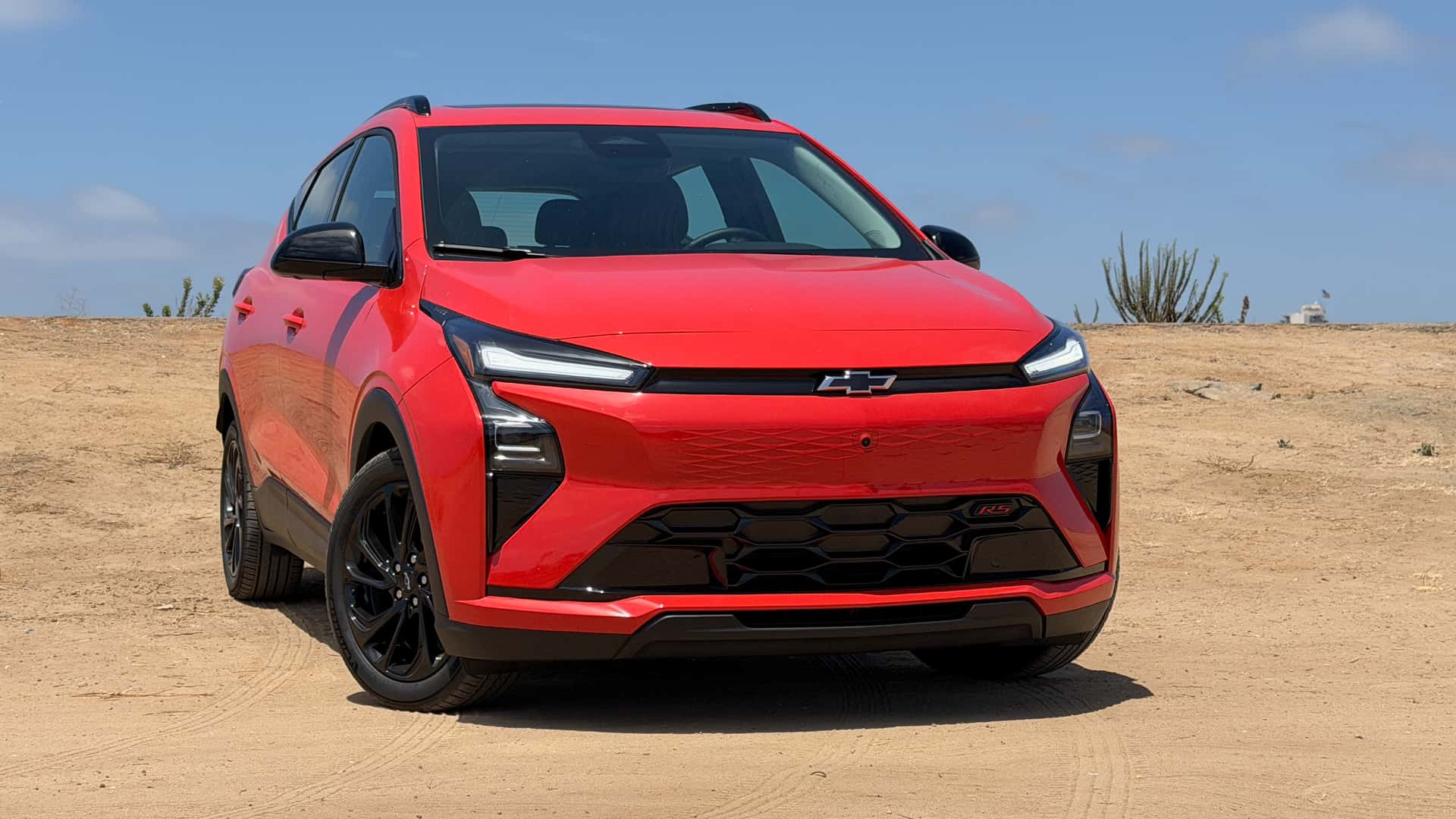
A Chevy Bolt EUV owner strapped a 1,760-pound teardrop camper to a car with an official tow rating of zero pounds. That decision — bold, questionable, and entirely unsanctioned by General Motors — set off a road trip that would test the compact EV’s limits and end with an unexpected rescue in the California desert.
The 2,000-Pound Gamble
The rig started at a commercial scale. Loaded with passengers, gear, and tongue weight, the Bolt EUV weighed in at 4,800 lbs. The trailer added another 1,760 lbs. With cargo factored in, the little front-wheel-drive hatchback was pulling roughly 2,000 lbs of total mass — a figure that sits well outside anything GM has approved.
In the owner’s manual, the message is blunt: “This vehicle is not intended or designed to tow a trailer.” North American models carry a 0-pound tow rating. GM points to suspension limits (the Bolt uses a torsion beam rear axle, not an independent setup), thermal management concerns, and the car’s modest friction brakes as key reasons.
So why go through with it? Because of torque. The Bolt’s 200-horsepower electric motor delivers 266 lb-ft of instant twist. Unlike a gas engine hunting for gears, the electric drivetrain just pulls. The car climbed to Cajon Summit at 4,190 feet without complaint, and regenerative braking kept things in check on the way back down.
Trip Metrics: 2,000 lbs total towed weight · 4,190 ft peak elevation · 55 kW peak fast-charge speed · 16% battery remaining at home
When Weather Turns the Tables
On the stretch toward Trona Pinnacles near Death Valley, conditions deteriorated fast. Heavy rain, thick fog, and brutal crosswinds slammed the rig, and aerodynamic drag — the real enemy of EV towing — went to work on the battery. Efficiency dropped sharply, pushing range estimates down by more than half.
No legacy fast chargers offer pull-through lanes, so every stop meant unhitching the trailer in pouring rain and maneuvering around crowded gas station lots. To stay ahead of the storm, the driver used weather apps to monitor wind speeds and recalculated emergency charging stops with A Better Route Planner (ABRP).
Fearing they wouldn’t reach a planned charger in Boron, they made a last-minute detour toward a ChargePoint station at Brady’s Market in Inyokern.
That detour changed the trip’s entire meaning.
On the backroad, the driver spotted a tiny, soaked shape on the shoulder — a stray kitten, alone in the storm. They pulled over, ran out into the rain, and scooped the shivering animal into the warm car. The emergency reroute forced by headwinds and battery drain ended up saving a life.
Why the Bolt Has No Tow Rating
GM’s official position rests on four practical concerns:
- Thermal limits: The cooling system is sized for the car’s own 3,600–3,700 lb curb weight, not sustained heavy towing up mountain grades.
- Rear suspension: The torsion beam axle is engineered for light passenger loads, and heavy tongue weight stresses the rear unibody.
- Braking: The Bolt leans on regenerative braking, backed by relatively small friction brakes. With most trailers under 2,000 lbs lacking their own brakes, GM declined to certify the car for the job.
- Regulatory testing: Meeting SAE J2807 towing standards requires rigorous hot-weather and sway-control testing. For a commuter EV, GM chose not to invest.
Beyond the mechanical side, there’s a real-world catch. Towing past a zero-pound factory rating can give insurers a loophole to deny claims after an accident, and dealers can void warranty coverage on drivetrain or suspension parts if they spot an aftermarket hitch.
Torque vs. Infrastructure
The story captures an odd gap in the EV market. Budget electric cars often have the low-end grunt and structural strength to haul far more than their makers officially allow. What they lack is the supporting ecosystem: boxy trailers drain batteries faster than weight alone, and public charging stops aren’t designed for vehicles with something in tow.
The Bolt EUV made it home with 16% battery to spare. It also made a 2,000-pound statement about what compact EVs can do when pushed — even if the trip required ignoring GM’s manual and rescuing a kitten along the way.
Source: Torque News
Curious how this compares to other EVs? Try our comparison tool →What do you think?