
BYD Uncovers Futuristic Cabin of Third-Gen Tang SUV Ahead of Q4 Debut
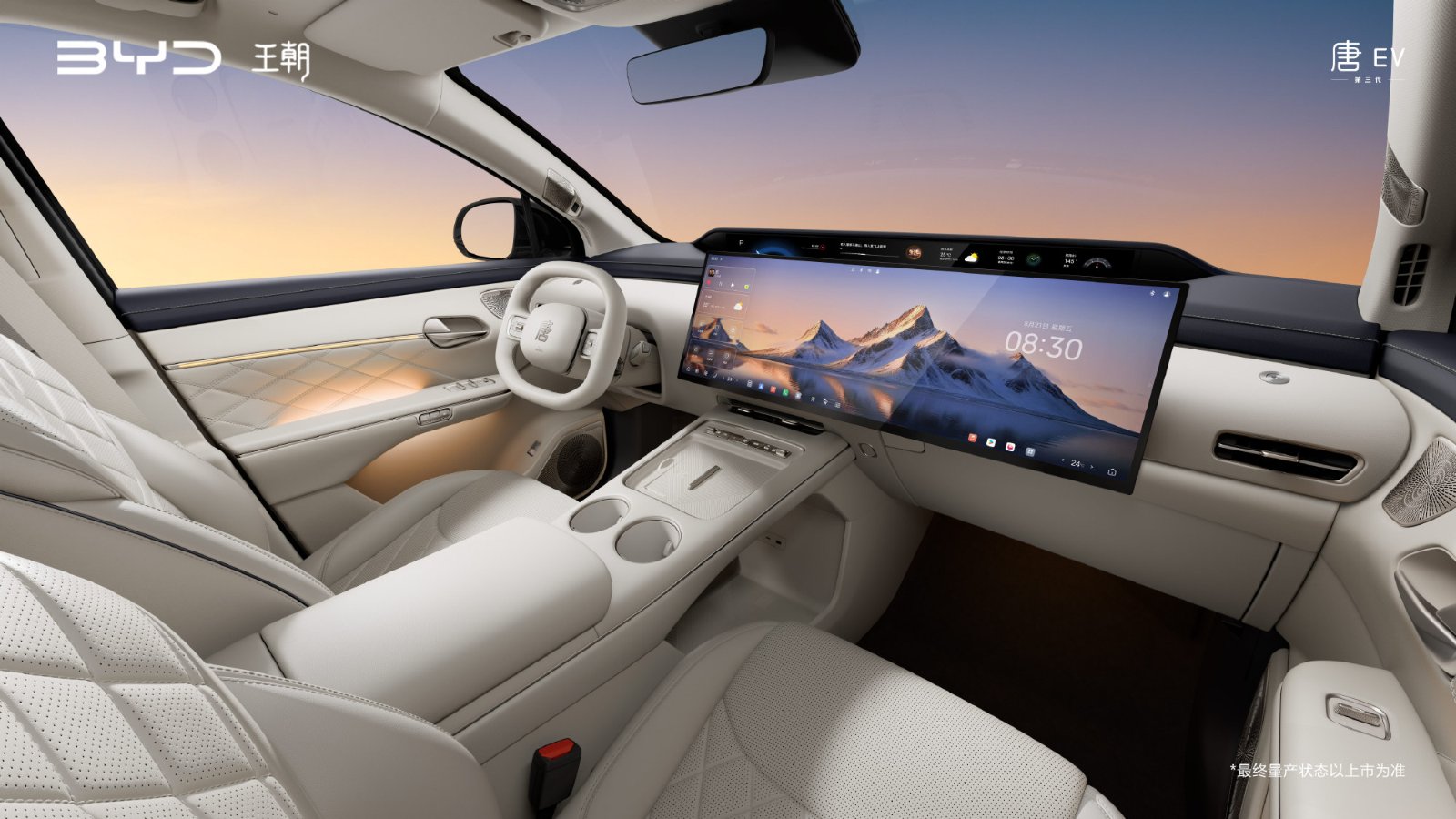
BYD has given the world a first look at the interior of its upcoming third-generation Tang, a five-seat SUV that the automaker plans to bring to market in the fourth quarter of this year. The cabin, shown in a Dune Beige colorway, swaps conventional dashboard layouts for a pair of expansive displays: a 35.4-inch integrated far-side screen and a 30-inch panoramic unit. According to Lu Tian, who oversees sales for BYD’s Dynasty series, the design draws inspiration from the control consoles seen in science-fiction films, giving the Tang a distinctly high-tech character.
Beyond the screens, the new Tang prioritizes passenger comfort in the rear. Legroom in the second row stretches beyond 1,000 mm, and the seats can recline up to 130 degrees, a clear sign that BYD is aiming at buyers who value space on longer journeys. The interior is available in two color schemes—Dune Beige and Amber Brown—and the model is billed as the technology flagship of the Dynasty line’s 8-series. This focus on a flexible, lounge-like cabin reflects a broader shift among Chinese EV makers to treat the interior as a primary selling point rather than an afterthought.
The third-generation Tang is a substantial vehicle, measuring 5,045 mm long, 1,980 mm wide and 1,760 mm tall, with a 2,950 mm wheelbase. It debuted at the Chengdu Auto Show on August 21 and will slot alongside the larger 9-series Da Tang, which launched in June, forming a two-pronged flagship SUV strategy for the Dynasty brand.
Under the skin, BYD’s latest battery and charging innovations take center stage. The vehicle carries the company’s second-generation Blade Battery and flash charging technology, delivering a CLTC range of up to 850 kilometers. At normal temperatures, the pack can go from 10% to 70% charge in roughly five minutes, and reach 97% in about nine minutes. Every variant comes with the God’s Eye B driver-assistance suite and the DiSus-A intelligent air body control system, underscoring BYD’s push to make advanced features standard rather than optional.
The reveal is part of a broader effort to rejuvenate the Tang nameplate, which has seen its sales momentum fade. Between January and August this year, the Tang series moved 81,614 units, a decline of nearly 50% compared with the same period in 2025. The arrival of the Da Tang and the third-generation Tang is intended to broaden the family’s reach across the large SUV segment and reignite buyer interest. With the interior now public, attention turns to final specifications and pricing ahead of the fourth-quarter launch.
What do you think?