
BYD Hands Malaysian Assembly to Inokom as Proton Overtakes It in EVs
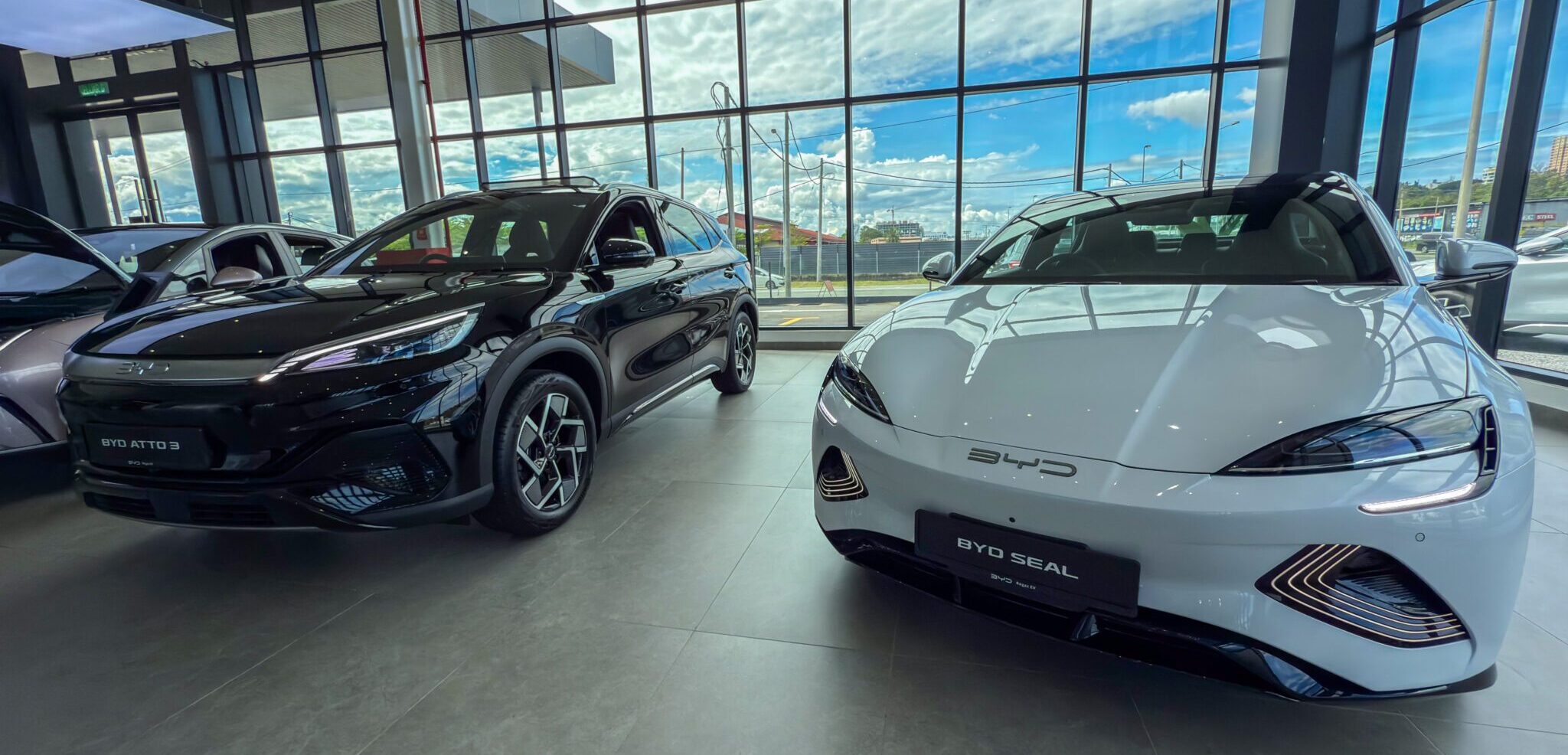
BYD has decided against building its own factory in Malaysia and will instead lean on contract manufacturing to keep its cars on local roads. The Chinese automaker has signed a memorandum of understanding with Inokom, a subsidiary of the Sime Darby conglomerate, to handle local assembly at its Kulim plant, where several other brands are already put together. Sime’s Sime Motors division already distributes BYD vehicles in the country.
The agreement was inked at BYD’s Shenzhen base, with Liu Xueliang, who runs the company’s Asia Pacific auto sales division, and Sime group chief executive Jeffri Salim Davidson representing the two sides. Neither the specific models nor a production timeline have been made public. Jacob Ma, who heads BYD’s Malaysian operation, framed the arrangement as evidence of a lasting commitment to the country.
The shift follows the collapse of BYD’s earlier plan to construct its own plant at Tanjung Malim, announced in August 2025. Talks reportedly bogged down over government demands that as much as 80% of output be exported and that the rest be sold domestically at prices above MYR 200,000. That clash exposed a mismatch of goals: Malaysia wanted an export base, while BYD was chasing access to local buyers.
Local assembly has effectively become the price of staying in the game. Malaysia’s tax break for imported EVs ran out at the end of 2025, and since 1 July fully imported electric cars must carry a declared value of at least MYR 200,000 and produce at least 180 kW — a bar that excludes several of BYD’s volume sellers. Vehicles assembled locally, by contrast, escape import duty, excise duty and sales tax through the end of 2027, provided they are priced above MYR 100,000.
That floor is a problem for BYD’s competitive standing. Proton, in which Geely holds a 49.9% stake, launched its e.Mas 5 in October 2025 at MYR 56,800 and racked up 24,857 EV registrations in the first nine months of 2026, against 8,087 for BYD. Malaysia matters because it is one of Southeast Asia’s largest auto markets — 820,752 vehicles sold in 2025, ahead of Indonesia’s 803,000 — and BYD had led the EV segment there in 2025 with 14,407 deliveries. With the CKD price floor shielding Proton, that lead now looks unlikely to return before the exemptions lapse at the end of 2027.
What do you think?