
Buick's First Subcompact: A 17,000-Mile 1976 Skyhawk S With a Five-Speed
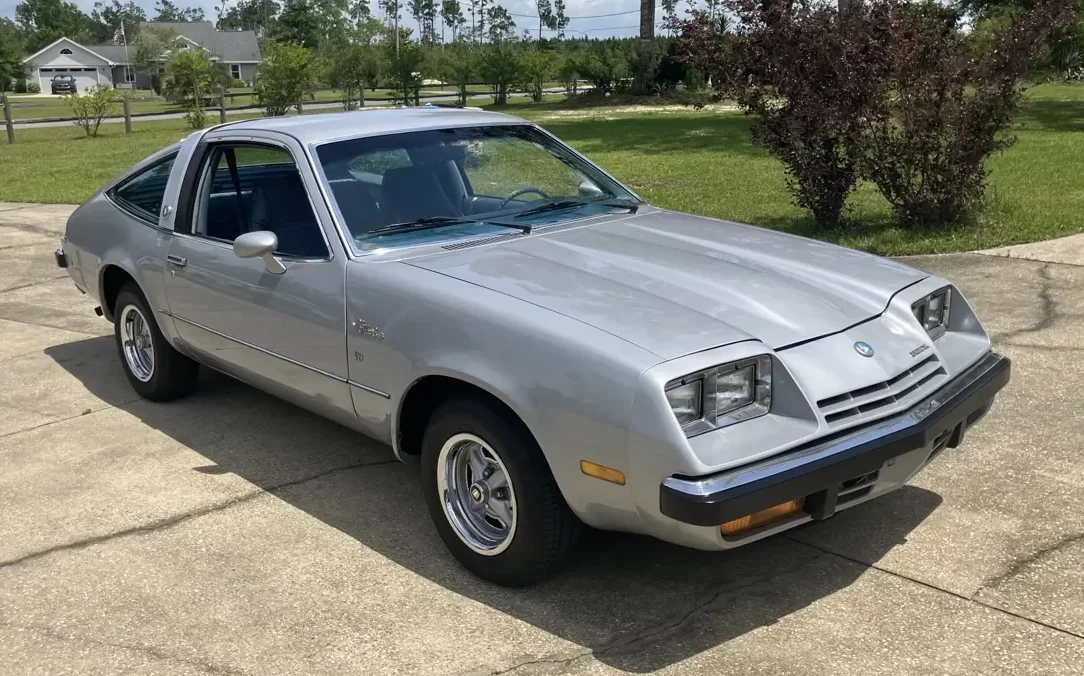
Long before Buick became synonymous with plush sedans, the brand dipped a toe into the compact end of the market with the Skyhawk. Introduced for 1975 and built through 1980, it was Buick’s first subcompact and, in practice, a badge-engineered version of the Chevrolet Monza, itself spun off the Vega. Only a hatchback body style was ever offered, and roughly 125,000 examples left showrooms across the model’s six-year run. This particular car, a 1976 Skyhawk S, is now being offered by a dealer in Manasquan, New Jersey, with an asking price of $12,900 and an odometer said to read just 17,000 miles.
The Skyhawk rode on General Motors’ H-body architecture, a platform it shared with the Pontiac Sunbird, the Oldsmobile Starfire and the Chevrolet Monza. Motivation came from a single engine option: a 231-cubic-inch V6. A four-speed manual was the standard gearbox at launch, but 1976 brought a five-speed to the options sheet, and Buick’s own marketing framed the car as a homegrown answer to the Ford Mustang II, the Toyota Celica and other small, sporty imports. Notably, this example pairs the V6 with that five-speed, making it livelier than the automatic-equipped cars that dominated the era.
The “S” designation marked the entry point of the Skyhawk range, yet this one carries a surprising amount of equipment: a handling package, power steering and brakes, and factory air conditioning. Silver paint and sheet metal are described as holding up well, and the cabin presents nicely, though the seats could reportedly use a steam cleaning. A generous stack of documentation accompanies the sale, which may help explain how a car approaching its fiftieth birthday has covered so few miles. Enthusiasts have long noted that H-body interiors and trim were typical of mid-1970s American small cars, while the Buick V6 itself earned a reputation for durability, sometimes running for hundreds of thousands of miles.
For collectors, the appeal here is twofold. The Skyhawk is rarer than its corporate siblings, and a well-kept, low-mileage car with a manual transmission is an increasingly uncommon combination. The H-body family also has a dedicated following that values the platform’s low seating position and its compact footprint for city driving. Whether this one becomes a weekend cruiser or a preservation-class survivor, it represents a distinctive chapter in Buick’s history, when the division stepped outside its comfort zone to chase younger buyers.
What do you think?