
BorgWarner's First Aluminium-Wire Motor Deal Signals a Cheaper Hybrid Era
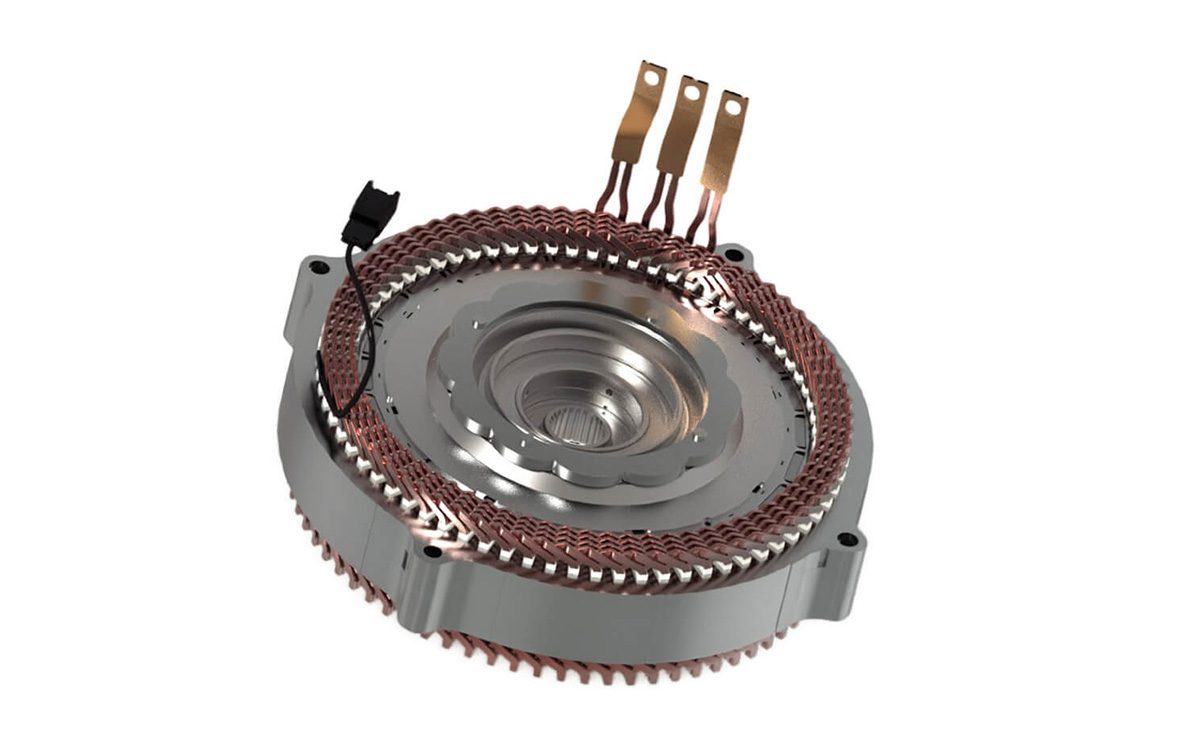
BorgWarner has landed its first production contract for an electric motor wound with aluminium rather than copper, and the customer is a major Chinese automaker. The unit goes into hybrid vehicles starting in late 2026.
The motor does double duty: it works as a hybrid generator and as a traction motor for auxiliary drive. That versatility is what makes a single component sellable across more than one function in a hybrid drivetrain.
Why Aluminium, Why Now
The headline numbers are hard to ignore. BorgWarner says the aluminium design matches the peak torque and power of an equivalent copper-wound motor while cutting wire weight by more than 60% and cost by more than 80%.
Key Specs: Aluminium hairpin windings · Over 60% less wire weight · Over 80% lower wire cost · Matches peak torque and power of copper equivalent · Production from late 2026
That matters because hybrids already carry two propulsion systems. Every euro or yuan saved on the electrical side gives engineers more room to spend where it counts — the engine, the battery, or the price tag.
The motor uses hairpin windings, a format BorgWarner already produces in copper. Adapting it meant reworking the conductors and the joining technology, not just swapping the metal. Engineering and production for this program sit in China.
A 15-Year Relationship, Extended
The order builds on a partnership with the unnamed Chinese OEM that stretches back more than 15 years and has covered several product lines. Winning a first-of-its-kind component through an existing customer is a softer landing than pitching it cold.
Isabelle McKenzie, Vice President of BorgWarner and President and General Manager of PowerDrive Systems, framed the win around local capability: the company optimized motor design, manufacturing processes and connection technologies to handle both generator and auxiliary drive duties.
What It Says About Chinese Hybrid Costs
Chinese hybrid makers are squeezing suppliers on parts that used to be considered settled — the motor among them. Aluminium windings are one lever; hairpin architectures that already exist in copper are another, since they shorten the path from concept to line.
BorgWarner has not named the OEM, the vehicle models, the volumes or the price of the unit. Whether aluminium becomes a broader standard or stays a cost play in price-sensitive hybrids is the question the next few orders will answer.
For now, the supplier has a reference customer and a technology it can pitch elsewhere. That is usually how these things start.
Photo: BorgWarner / Charged EVs · Official Press Kit / Editorial (Editorial / Press Kit)
Source: Automotive World
What do you think?