
BMW Begins Gen6 Battery Assembly in Shenyang Ahead of Long-Wheelbase iX3
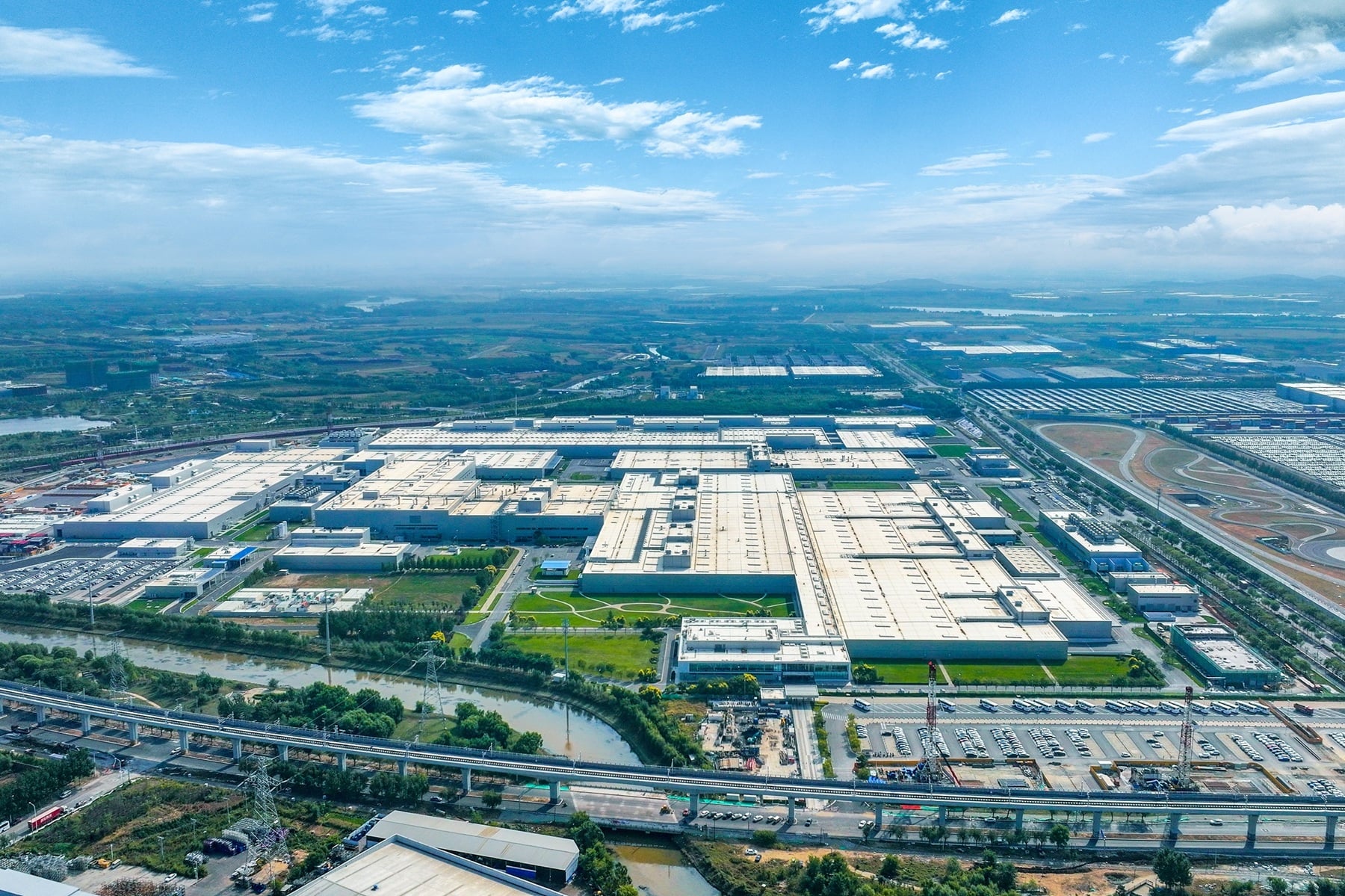
BMW has started volume production of its sixth-generation high-voltage batteries at its Shenyang complex in northeastern China, making the Chinese site the third node in the automaker’s growing in-house battery network after Debrecen in Hungary and Irlbach-Straßkirchen in Germany. The packs rolling off the line will feed the Neue Klasse vehicles BMW builds in China for Chinese buyers, a setup that keeps the single most expensive part of an electric car close to the assembly hall.
The logic behind localizing pack output is hard to argue with in China, where EV price wars are more brutal than anywhere else on earth. Shipping completed batteries across borders adds freight and warehousing costs to a component that already dominates the bill of materials. Production board member Dr. Raymond Wittmann framed the move as part of a wider philosophy: BMW intends to build where it sells, to consistent global quality standards, while trimming logistics and inventory overhead.
Technically, the Gen6 pack marks a clean break from BMW’s earlier architecture. It uses large-format round cells measuring 4.6 cm across, supplied in two heights of 9.5 cm and 12 cm. Against the preceding cell generation, energy density climbs by more than a fifth, and both charging speed and range gain as much as 30 percent. Just as significant is the cell-to-pack layout: the old module stage is gone, with cells seated directly into the housing. That frees mass and volume, and the reclaimed space is filled with more cells. A BMW-developed control unit called the Energy Master sits on top, merging power supply duties with battery management, including monitoring of charge state and cell temperatures.
On the Shenyang floor, incoming cells are inspected, then paired with coolers into clusters. Laser cleaning precedes welding of those clusters to the cell contact system that links them electrically, and a foaming step locks the assembly in place mechanically. Workers then close, seal and rivet the housing before fitting the Energy Master and running every finished pack through an end-of-line check. Because a pack contains so many individual round cells, quality assurance is unusually demanding, so BMW watches the laser seams in real time with inline inspection systems and leans on digital twins plus AI-assisted testing.
The groundwork for this moment stretches back to April 2024, when BMW and Liaoning Province signed a letter of intent covering the Neue Klasse conversion, a commitment worth roughly €2.5 billion. Shenyang, operated through the BMW Brilliance joint venture and split across the Dadong, Lydia and Tiexi plants, is the group’s biggest production base, with capacity of 830,000 vehicles a year as of 2024. Pre-series output of the first China-market Neue Klasse model, the long-wheelbase iX3, began just before Christmas 2025. That car opened pre-sales at the Chengdu auto show in August, with the iX3 30L starting at 269,900 yuan (about €36,100) and the 50L xDrive at 339,900 yuan (roughly €45,400); first deliveries are slated for November, though larger volumes may not reach customers until 2027 as new technologies clear quality testing. Beyond China, BMW plans to start series battery assembly in Woodruff, South Carolina, and San Luis Potosí, Mexico, in the coming months. CATL is among the company’s Chinese battery partners.
What do you think?