
Beta Technologies Bets on Fixed-Wing Electric Planes Before Air Taxis
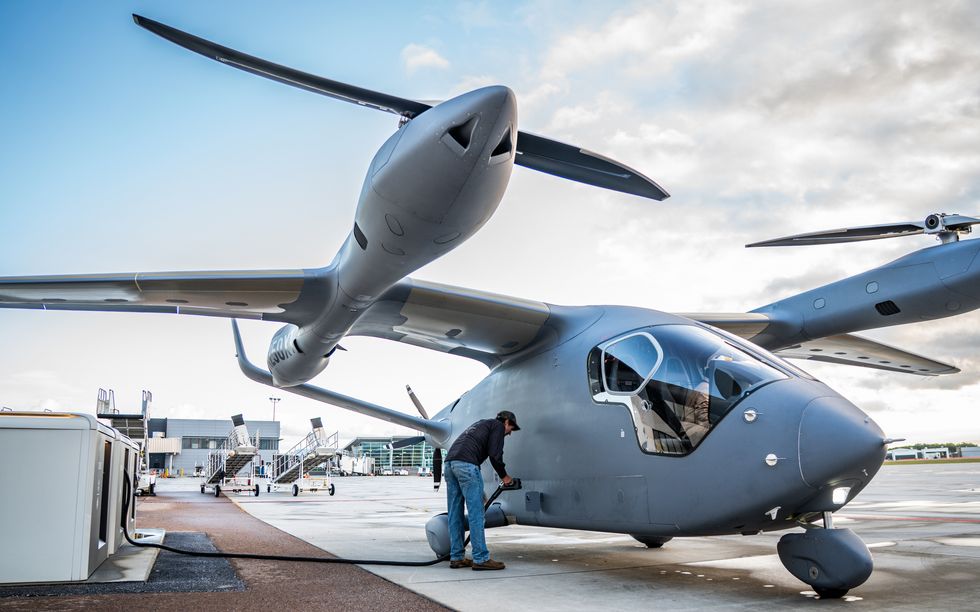
Most electric aviation startups chase the air-taxi dream. Beta Technologies is taking the airport runway instead — and it may be the smarter bet.
While Archer Aviation and Joby Aviation pour resources into piloted eVTOLs for urban hops, the Vermont company is putting its first commercial chips on the Alia CX300, a fixed-wing electric aircraft that takes off and lands like a conventional plane. Cargo and medical transport come first. Passengers come later.
A Simple Flight, a Very Different Fuel Bill
On a demonstration flight from Burlington International Airport in Vermont, a Beta test pilot released the brakes and let the rear pusher propeller do the rest. No turbine spool-up, no vibration — just the hum of an electric motor and a hard shove forward. The aircraft reached roughly 85 knots in seconds before rotating skyward over Lake Champlain.
What stuck in the mind afterward was the math. A half-hour hop consumed about **US $9 of electricity**. The same trip in a comparable Cessna 208 Caravan would gulp 25 to 30 gallons of Jet A, a bill north of $200 at recent prices.
Cost Snapshot: ~30-minute flight · about $9 in electricity for the Alia · roughly $210–$255 in Jet A for a Cessna 208 Caravan
Beta’s test fleet has now logged more than 300,000 kilometers across the Alia family, including several U.S. crossings and demonstrations abroad. The company pegs its order and option-to-buy backlog at 991 aircraft.
One Airframe, Two Personalities
The Alia comes in two forms. The CX300 is the conventional takeoff version. The A250 adds four lift propellers for vertical takeoff and landing. Both share the same fuselage, wings, pusher motor, battery pack, avionics, flight-control computer, and fixed-pitch propeller — a deliberate commonality play that keeps tooling and certification work from doubling.
That shared design has visible quirks. The CX300 carries twin booms linking wing to tail that look like dead weight on a fixed-wing plane. They exist because the A250 hangs its lift rotors on those same structures. Beta accepts the drag penalty in exchange for a simpler overall program.
- CX300: runway-based, aimed at cargo and medical runs
- A250: vertical lift added, same core systems
- Certification target: CX300 in 2027, A250 about a year later
- First markets: regional logistics, airport-to-airport freight, organ transport
Why the Fixed-Wing Route Makes Sense
CEO and founder Kyle Clark describes the plan as a stepwise march: medical and cargo aircraft flying between airports now, passenger fixed-wing aircraft next, then cargo eVTOLs, and passenger eVTOLs last. The logic is regulatory. Certifying a conventional fixed-wing design is a far shorter road than convincing the FAA to sign off on a novel multi-rotor machine that transitions between hover and cruise.
Beta was founded in 2017, and much of its hardware is built in-house — motors, inverters, batteries, software, chargers — partly because aviation-grade components simply didn’t exist when development started. That vertical integration gives engineers control over every interface, but it also means the company has to be good at several businesses at once.
Its 17,500-square-meter plant next to the Burlington airport runs on geothermal heat pumps, with a megawatt of rooftop solar planned. Backing came early from Martine Rothblatt, CEO of United Therapeutics and a SiriusXM cofounder, whose $48 million funded the first prototype with organ-transport missions in mind.
The Charging Network Nobody Asked For
Beta’s boldest move may not be an aircraft at all. The company is building an open charging network intended to serve electric aircraft broadly — including competitors’ designs. It’s an infrastructure play that treats electric aviation as a system rather than a single product.
That is a longer game than the air-taxi crowd is playing. But if Beta gets its cargo planes certified first and its chargers installed along the way, it could end up owning the plumbing of a market its rivals are still trying to enter.
Photo: Beta Technologies / IEEE Spectrum - Transportation · Official Press Kit / Editorial (Editorial / Press Kit)
Source: IEEE Spectrum - Transportation
What do you think?