
Audi Marks a Decade of OLED Taillights, and the Story Is No Longer About Looks
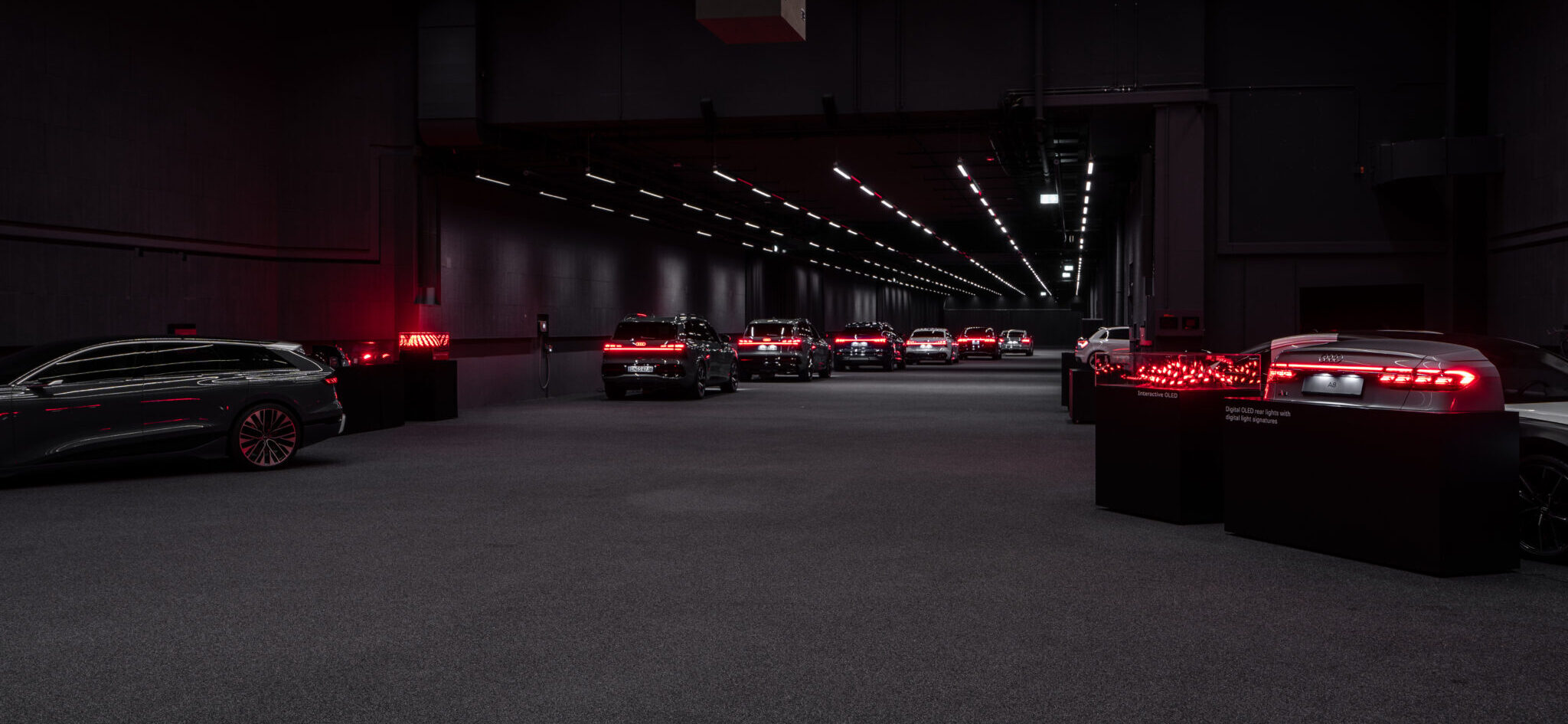
Ten years after Audi slipped the first OLED taillights onto a production car, the technology has quietly changed jobs. What launched on the TT RS back in 2016 as a styling flourish is now being pitched by Audi’s supply partners as a communications channel — a way for the car to talk to the world behind it.
The anniversary was marked at an event in Ingolstadt, where the focus was squarely on signalling and safety rather than aesthetics. Audi’s OLED hardware has travelled a fair distance since those early days: from slim, evenly glowing panels to digital arrays that can carry changeable light signatures and visibility-boosting functions.
From thin panels to a software surface
Two suppliers sit behind the system. Universal Display provides the phosphorescent OLED materials, while OLEDWorks builds the Atala lighting panels that go into the cars.
Dr Werner Thomas, who manages OLED lighting projects at Audi, framed the shift as an evolution rather than a reinvention — the technology has grown from a design statement into a platform that carries design, function and vehicle-to-surroundings communication at once.
That framing matters. Lighting is steadily becoming one more software-defined surface on the car, with the owner able to swap signatures and the vehicle able to project warnings to road users approaching from behind.
Why lighting suddenly carries weight again
There is a commercial logic underneath the technical one. As electric vehicles converge on near-identical hardware — similar batteries, similar ranges, similar screens — the few visible surfaces left for differentiation get more valuable. Lights are near the top of that list.
The supply chain: Universal Display (phosphorescent OLED materials) · OLEDWorks (Atala panels) · Audi (integration and software)
Audi’s decade-long run gives it a head start in that particular fight, though rivals have hardly stood still on lighting design. The difference now is that the argument is less about how a taillight looks and more about what it can say.
Whether buyers notice — or pay for — a car that signals with its rear lights is another question. But as the hardware under the skin becomes interchangeable, the parts you can actually see are where the branding war is being fought.
Source: Automotive World
What do you think?