
Alef Flies Its Car Over a Tesla Roadster — and Says the Flying Car Race Is Finally On
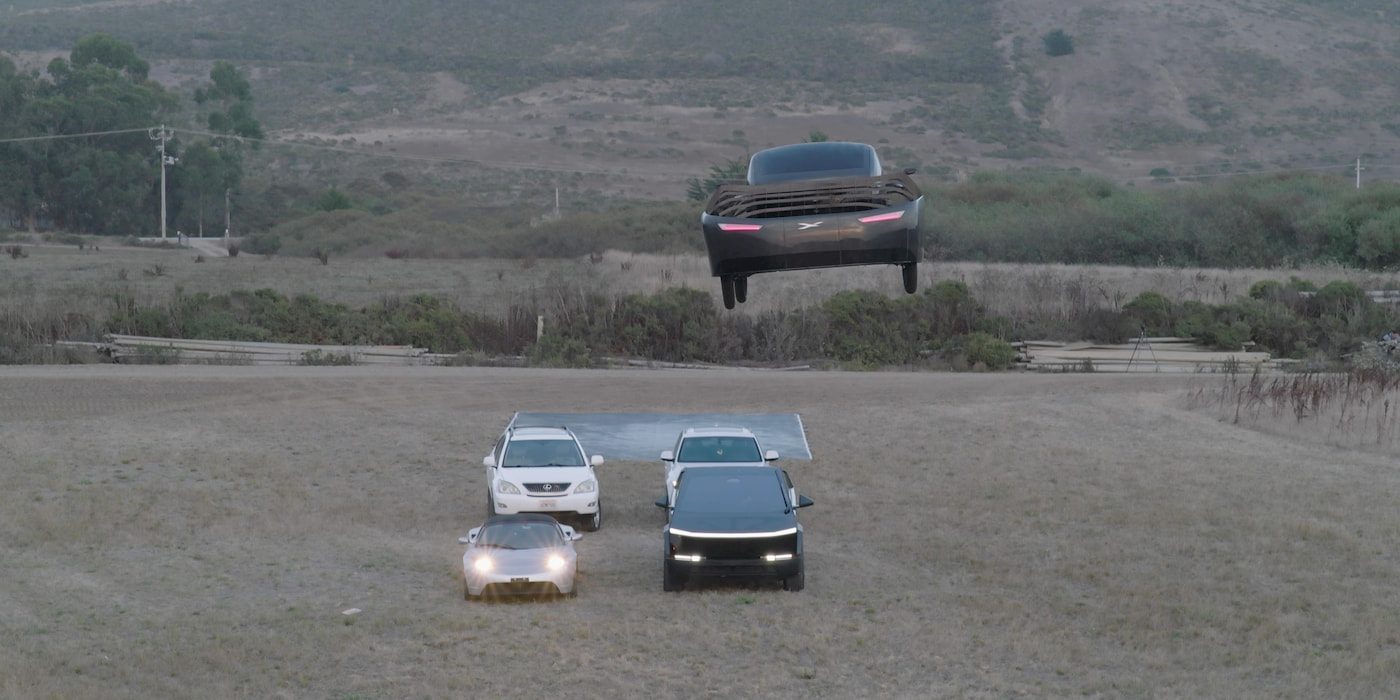
Alef Aeronautics has found a novel way to needle Tesla: by flying over one of its cars. In a video released Thursday, the California startup lifted its electric flying car above a Tesla Roadster, framing the stunt as a welcome gesture to Elon Musk’s company as it joins the airborne-vehicle contest. The company cheekily claimed the Roadster had just become the second flying car in history.
The flight also doubled as a milestone — it was Alef’s 1,000th logged flight.
- Shared roots, different approaches: The Roadster and Alef’s vehicle both run on electric powertrains, both drive all four wheels, and both count Tim Draper among their early backers. Where they split is propulsion: Alef uses distributed electric propulsion, while Tesla’s Roadster is expected to rely on thrusters.
- How the Alef vehicle flies: It pairs a wing-forming body with a rotating cabin and generates lift with air rather than stored compressed gas. Alef says the design is light enough to carry a full-vehicle ballistic parachute.
- Not an eVTOL: Alef draws a firm line between its product and electric vertical takeoff aircraft — the key distinction being that its vehicle can drive and park like an ordinary car.
- Certification lead: Alef’s aircraft received an FAA Special Airworthiness Certification back in 2023, which the company describes as the first such recognition for a real flying car. The Roadster would still need to clear FAA Type Certification, a process that can stretch over years.
- Timeline and price: Alef revealed its full-size Model A prototype in 2022, quoting a 220-mile driving range and a 110-mile flight range. First deliveries are targeted for the end of 2026 under tightly controlled real-world testing conditions, with production ramping in 2027. Pricing starts around $299,999, reservable with a $150 deposit.
Why It Matters
Alef has logged more than 3,600 pre-orders valued at roughly $1 billion, and it began hand-building its first customer vehicles late last year at its Silicon Valley facility. CEO Jim Dukhovny framed Tesla’s entry as validation rather than threat: competition, he argued, proves the market exists, establishes flying cars as their own category, gives the industry a reason to push for tailored regulation, draws investor attention, and provides a benchmark for comparing technology.
Still, the announcement lands with a dose of skepticism baked in — some readers argue the machine is closer to a large drone with wheels than a usable car. Whether regulators and buyers ultimately agree will decide if Alef’s decade-long solo run becomes a genuine race.
Source: Electrek
What do you think?