
A Brand-New Brütsch Mopetta Replica Is Up for Sale — The 'World's Smallest Car' Reborn
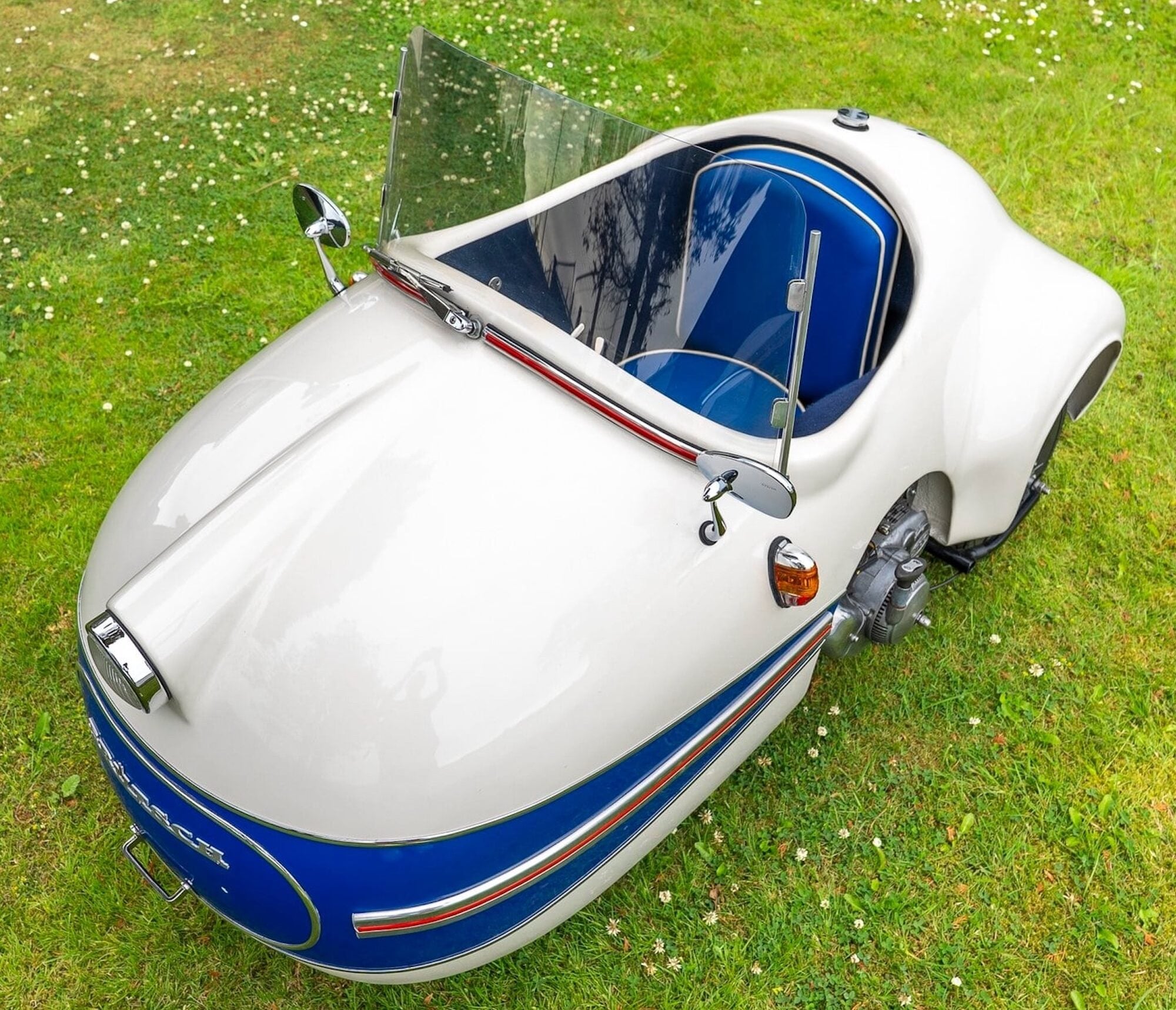
Few microcars are as delightfully odd as the Brütsch Mopetta, and fewer still can be bought in as-new condition today. A freshly completed replica of the German three-wheeler has surfaced for sale out of Millisle, United Kingdom, giving collectors a rare shot at owning a machine whose genuine counterparts are almost impossible to find.
Egon Brütsch’s tiny roadster earned its place in motoring lore as arguably the smallest car ever put into series production. Built in the mid-1950s as a single-seat, egg-shaped three-wheeler with a fiberglass body, it was engineered around a simple idea: make the world’s most compact and cheapest runabout. Just 14 originals left Brütsch’s Stuttgart operation between 1956 and 1958, which makes every surviving example a museum-grade rarity. The car’s central driving position, one front wheel and two rear wheels, and doorless cockpit make it unmistakable at a glance.
The story behind the Mopetta is almost as unusual as the car itself. Brütsch reportedly created the bodywork in a single overnight session for the 1956 IFMA exhibition in Frankfurt, propped wheels against the shell and photographed his secretary sitting inside before the mechanical components existed. At the show the car was displayed high enough that visitors couldn’t tell it was a hollow mockup. Its 50cc displacement allowed it to be classified as a moped in West Germany, sidestepping normal car taxes and licensing requirements — a clever workaround that made it accessible to almost any buyer.
Production versions used a 49cc air-cooled two-stroke single, rated at roughly 2.3 bhp and driving one rear wheel through a three-speed gearbox and chain. Weighing only 78 kilograms, the Mopetta could manage about 20 to 22 mph, while period testing recorded an extraordinary 124 mpg when driven at a steady 10 mph. The example now offered is described as a newly built replica using correct-type parts and running gear — a 49cc JLO engine and three-speed transmission — finished in white and blue with wire-spoke wheels. It is said to run and drive well, and represents a chance to experience microcar motoring without hunting down one of the irreplaceable originals.
Context matters here: against contemporaries like BMW’s Isetta and Messerschmitt’s KR200, the Mopetta was dramatically cheaper but also slower and strictly a one-seater. Its history also includes an abandoned plan by Georg von Opel to build it at the Horex motorcycle works and sell it as the ‘Opelit’ — sales literature was even printed before the scheme fell apart. That mix of ambition, improvisation and scarcity is exactly what keeps the Mopetta fascinating to collectors today, and why a faithful, drivable replica draws attention.
What do you think?