
A $650 Garage Find: 1988 Dodge Dakota Project Truck
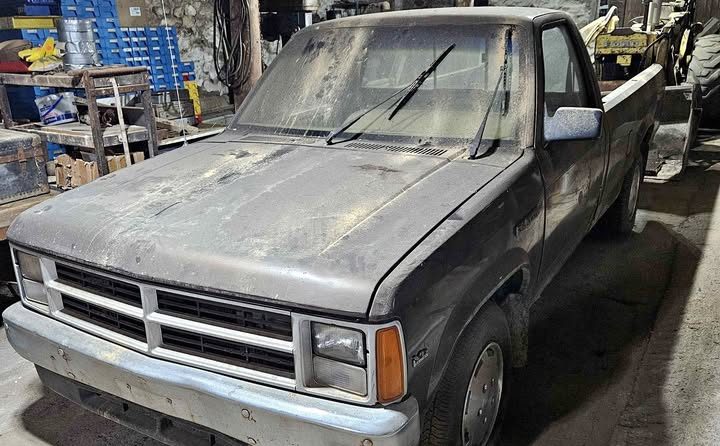
Dodge’s Dakota holds a curious spot in pickup history. Launched for 1987 and built until 2011, it was the company’s entry into the mid-size truck segment — a space domestic brands largely abandoned around the same period, with Ford and Chevrolet eventually circling back while Dodge stayed the course. A first-generation example from 1988 has now surfaced for sale in Malone, Wisconsin, advertised on Facebook Marketplace for a mere $650, or perhaps even less if a buyer negotiates.
The story behind this particular Dakota is a familiar one for anyone who follows neglected machinery: it reportedly sat in a dark garage or barn for roughly 15 years, and its odometer reads around 200,000 miles. Paint has faded, the interior looks grimy and possibly moldy, and rust is an open question — a fair concern given the truck’s Upper Midwest location. The seller claims the engine will fire if fuel is poured into the existing carburetor, though a replacement carburetor is recommended. One practical caveat: there’s no battery, so the truck will need to be trailered wherever it goes.
First-generation Dakotas, sold through 1996, came with a range of powertrains over the years. The engine believed to be under this hood is the 239 cubic-inch V6, a motor enthusiasts often describe as a V8 with two cylinders lopped off, since it shares its architecture with Dodge’s 318 V8. The Dakota borrowed heavily from the existing Dodge parts bin and rolled off the same assembly lines as the brand’s larger D/W trucks. It also earned a footnote in engineering history as the first two-wheel-drive pickup fitted with rack-and-pinion steering.
At this price, expectations should stay modest. Buyers are looking at a true project — a truck that could be coaxed back to running condition as basic transportation, used for hauling light loads, or broken up to supply parts for another needy Dakota. Longtime owners of these trucks frequently report impressive durability, with several describing original V6 engines and drivetrains exceeding 200,000 or even 300,000 miles. Whether this one has that kind of life left depends entirely on how much rust hides underneath.
For someone handy with tools and comfortable with a wrench, the appeal is easy to see. The asking price is low enough that the risk is minimal, and the parts supply — thanks to a long production run and a devoted following — remains relatively easy to navigate. It won’t be a turnkey vehicle, but as an inexpensive entry into old-truck ownership, it fits a very specific kind of buyer.
What do you think?