
2026 Audi RS3 Review: A Five-Cylinder Send-Off With a Seven-Speed Soul
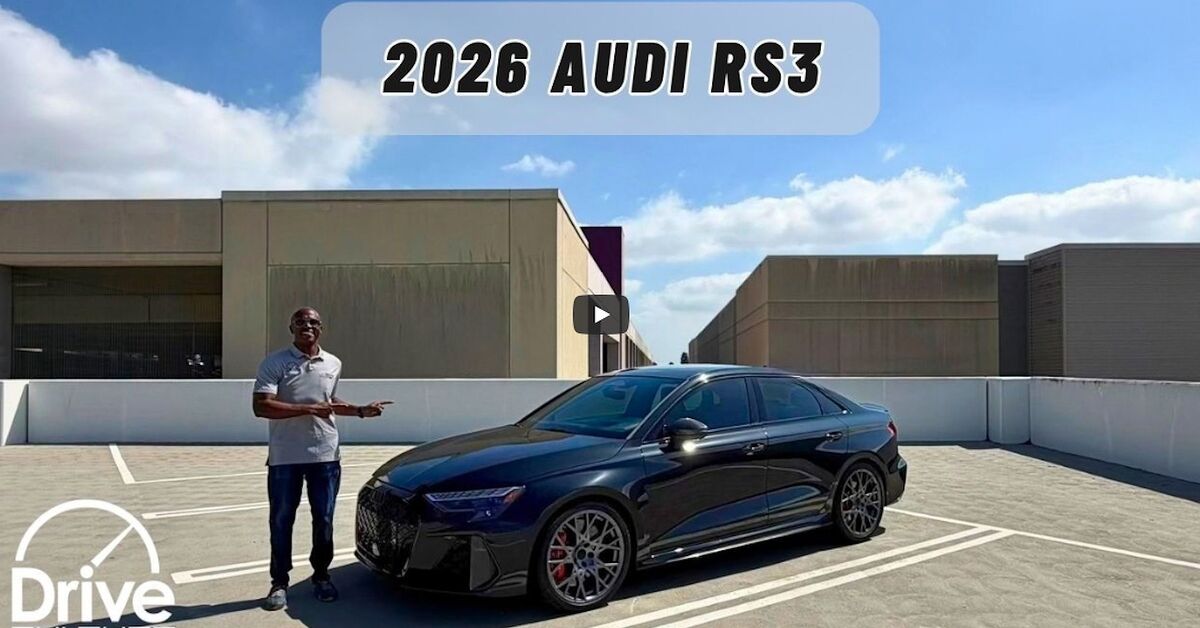
Audi’s RS3 has always played the role of the compact that punches far above its footprint, and the 2026 model keeps that tradition alive with a turbocharged 2.5-liter inline-five that now feels like a collector’s item. The engine still delivers 401 horsepower and 369 lb-ft of torque, routing power through a seven-speed dual-clutch gearbox and quattro all-wheel drive. In an era where electrification is swallowing up the small-displacement oddballs, this five-pot stands almost alone.
The sedan’s visual package is anything but subtle. Flared fenders and a deep honeycomb grille give it a stance that evokes German touring-car racing, especially when dressed in Mythos Black with the Carbon Package. Nineteen-inch wheels, carbon-ceramic front discs with six-piston calipers, and a top speed lifted to 180 mph come as part of the Dynamic Plus bundle. Staggered rubber—265-section up front, 245 at the rear—underlines that this is not simply a warmed-over economy compact.
Inside, Audi layers RS-specific hardware onto the already premium cabin. The flat-bottom steering wheel is covered in perforated leather and carries dedicated RS and performance buttons alongside shift paddles. A 12.3-inch virtual cockpit and a 10.1-inch central touchscreen handle the displays, while physical buttons remain for climate, drive modes, and traction control. Leather bucket seats with honeycomb stitching, three-stage heating, and a Sonos audio system round out the interior story.
On the road, the active RS Torque Splitter is the headline change. It can shuffle power between the rear wheels, letting the RS3 rotate in a way Audi’s traditional all-wheel-drive setup rarely allowed. Comfort mode keeps things civil for daily duty, while RS Performance unlocks the sharper side of the car’s personality. Seven figures’ worth of options push this particular example to $77,680, but the combination of sound, composure, and rarity is what buyers are really paying for—and the market for five-cylinder compacts is only getting smaller.
What do you think?