
Xpeng Opens Its Tech Stack to Rivals as He Xiaopeng Pitches Collaboration in Paris
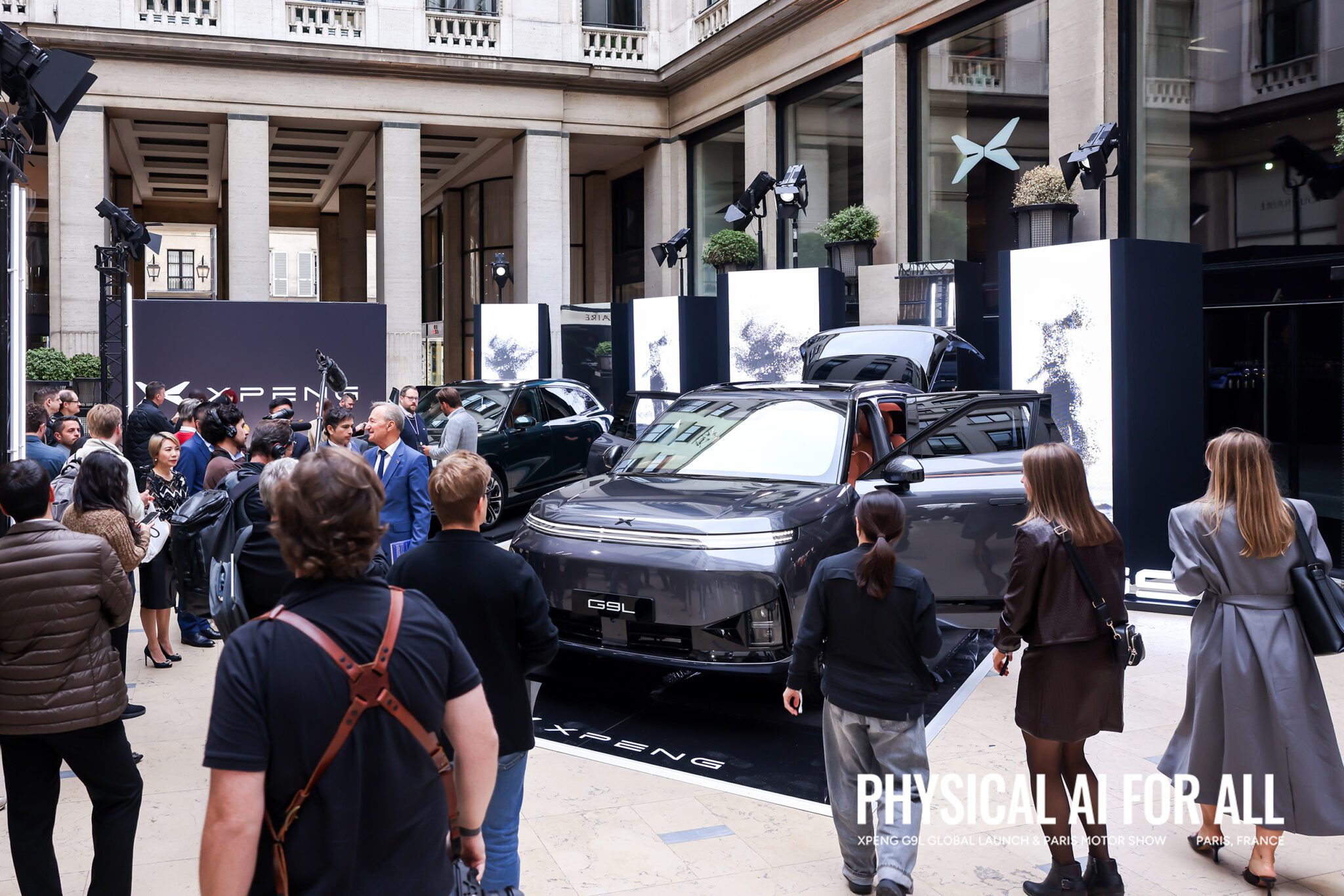
Speaking at the Paris Automotive Summit on 13 October 2026, Xpeng Chairman and Chief Executive He Xiaopeng became the first Chinese automaker boss to deliver a keynote at the gathering, using the platform to invite global manufacturers to build on his company’s technology rather than compete purely on finished vehicles. His message was straightforward: no single carmaker today holds every capability the industry requires, so sharing the load makes sense.
The offer spans a broad slice of Xpeng’s engineering portfolio, including electrical and electronic architecture, advanced driver assistance, the company’s AI Box, semiconductors, batteries, electric drive units and engineering toolchains, all channelled through Xpeng AI Engineering. Rather than simply buying off-the-shelf components, partners would develop their own products alongside Xpeng while strengthening their internal know-how — an approach the company says has already been stress-tested through its work with Volkswagen Group.
That relationship has expanded well beyond its original scope. What began as cooperation on electronics architecture has grown into driver assistance and joint vehicle development, with the first co-developed model, the ID. Unyx 08, reaching production in March 2026. Xpeng’s commitment to this kind of work is reflected in its spending: roughly €770 million (US$862 million) went into research and development during the first half of the year alone. In Europe, the carmaker has moved quickly, bringing the G6, G9, P7+ and G9L into production within a single year, supported by a regional operation handling homologation, localisation and validation of driver assistance features.
Xpeng also intends to extend its advanced driving system to global markets in 2027, claiming the same core capability will be available in China and Europe. He framed the pitch in terms of mutual benefit. “We welcome global partners to join us,” he said. “Let’s learn from each other, combine our best strengths, and face external challenges together. Let’s bring our technology to life, and create real value for every market and every user.”
Several questions hang over the strategy. Licensing technology sidesteps vehicle tariffs, since revenue from architecture, chips and driver assistance reaches markets that EU duties on imported cars cannot. At the same time, Volkswagen’s deepening reliance on Xpeng technology sits uneasily alongside European demands for protection from Chinese competition, leaving open the question of whether policymakers will view Chinese technology inside European-built cars differently from Chinese cars themselves. And the promise of identical driver assistance performance in Europe by 2027 may prove optimistic, given that UN-ECE rules such as DCAS remain stricter than Chinese approvals — meaning full parity could take longer than Xpeng suggests.
What do you think?